Skeleton Types and Functions in the Animal Kingdom
At its most basic level, a skeleton is the structural frame that supports the body of most animals. Derived from the Ancient Greek word skeletós, meaning "dried up," these systems provide the essential architecture required for an organism to maintain its shape, protect vital organs, and facilitate movement. Depending on the species and its environment, this support can take several different forms, ranging from rigid outer shells to flexible internal fluid pressure.
Skeletal systems are generally categorized by their location and composition. Some animals rely on an exoskeleton, a rigid outer shell; others use an endoskeleton, an internal frame to which soft tissues attach; and some utilize a hydroskeleton, which relies on the hydrostatic pressure of body fluids for support.
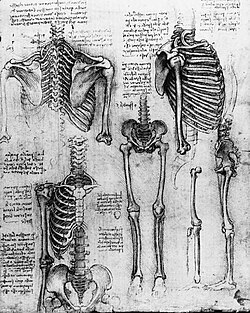
Key Facts
- Endoskeletons are internal structures found in chordates, echinoderms, and sponges.
- Exoskeletons serve as protective armor and are common in arthropods and molluscs.
- Hydrostatic skeletons use pressurized fluids to provide structure for soft-bodied organisms.
- Vertebrates are defined by an endoskeleton centered around an axial vertebral column.
- Human adults typically have 206 bones, though newborns have over 270.
Types of Skeletal Structures
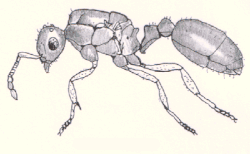
Exoskeletons
An exoskeleton is a skeletal system that covers the exterior of an animal's body. Beyond providing structural support, it acts as armor to protect the organism from predators. In arthropods, the exoskeleton is composed of chitin and must undergo periodic ecdysis (moulting) to allow the animal to grow. These structures also provide attachment points for muscles and assist in sensory perception.
Endoskeletons
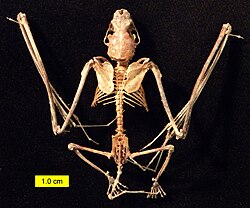
Endoskeletons are internal support structures derived from mesodermal tissue. In most vertebrates, these are composed of mineralized tissues like bone. The complexity of endoskeletons varies widely: sponges use them for basic support, while higher vertebrates use them to transmit muscular forces for complex movement.
Hydrostatic Skeletons
Found in soft-bodied organisms such as earthworms, flatworms, and jellyfish, hydrostatic skeletons consist of flexible internal cavities. The walls of these cavities are made of connective tissue and muscle. By alternating the contraction and expansion of these muscles, the animal can transmit force and move through its environment.
Rigidity and Flexibility in Skeletons
Skeletons are further classified by their level of rigidity. Pliant skeletons are elastic and can deform under stress before returning to their original shape. These are common in aquatic environments, such as in the mesoglea of jellyfish or the hinges of bivalve shells. They are often composed of a mixture of water, polysaccharides, and proteins.
Rigid skeletons, conversely, do not deform under stress and provide the strong support necessary for terrestrial life. These are constructed from materials such as calcium carbonate (found in mollusks and stony corals), silicate (found in radiolarians and diatoms), or chitin.
Vertebrate Skeletal Systems
Vertebrate skeletons are endoskeletons where bone is the primary component. A critical secondary component is cartilage, a rigid connective tissue. In mammals, cartilage is primarily found in joints to resist stress, whereas cartilaginous fishes, such as sharks, possess skeletons made entirely of cartilage.
During embryonic development, bones form from skeletogenic cells in the ectoderm and mesoderm. Cartilage typically develops faster than bone, making it more prominent in early life. To facilitate movement, ligaments connect bone to bone, while tendons connect muscle to bone.
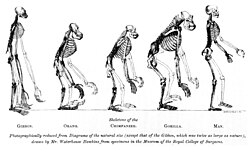
Specializations in Vertebrates
- Turtles: Their ribcage has evolved into a shell, effectively creating an exoskeleton.
- Snakes: These animals possess a high number of vertebrae, often exceeding 300, compared to roughly 65 in lizards.
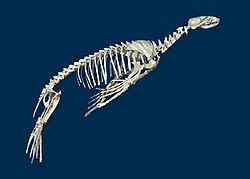
- Marine Mammals: Skeletons are adapted for aquatic locomotion.
The Human Skeleton
The adult human skeleton consists of approximately 206 bones, though this number varies based on how fused bones (like the sacrum or pelvic bones) are counted. Newborns start with over 270 bones, many of which fuse as the body matures over 20 years. The skeleton is divided into the axial skeleton (the longitudinal axis) and the appendicular skeleton (attached limbs).
The human skeleton accounts for about 13.1% of total body weight, with half of that weight being water. It serves as a scaffold for organs, anchors muscles, and protects the brain, heart, and lungs. The femur is the largest bone, while the stapes in the middle ear is the smallest.
Invertebrate Skeletal Variations
Invertebrates lack a vertebral column and utilize diverse support strategies:
- Echinoderms: Starfish and sea urchins have endoskeletons made of stereom (calcite with a monocrystal structure) and magnesium. These consist of sclerite plates that overlap to cover the body.
- Molluscs: Many, such as snails and scallops, secrete proteins and minerals from their mantle to create hard shells.
- Sponges: Their structure is maintained by microscopic spicules made of silica, the protein spongin, or both.
| Skeleton Type | Location | Common Materials | Example Organisms |
|---|---|---|---|
| Exoskeleton | External | Chitin, Calcium Carbonate | Arthropods, Molluscs |
| Endoskeleton | Internal | Bone, Cartilage, Calcite | Vertebrates, Echinoderms |
| Hydrostatic | Internal | Pressurized Fluids | Earthworms, Jellyfish |
Frequently Asked Questions
What is the difference between a ligament and a tendon?
Ligaments are elastic tissues that connect one bone to another bone, while tendons are elastic tissues that connect muscles to bones.
Why do newborns have more bones than adults?
Newborns have over 270 bones, but as the human body develops, many of these bones fuse together, resulting in approximately 206 bones in a typical adult.
How do arthropods grow if they have a rigid exoskeleton?
Because their outer shell cannot expand, arthropods must undergo a process called moulting or ecdysis, where they shed their old exoskeleton to grow a larger one.
What is a hydrostatic skeleton?
A hydrostatic skeleton is a flexible internal cavity filled with fluid. It provides structure and allows movement through the alternating contraction and expansion of muscles against the fluid pressure.
What is the primary material in an echinoderm's skeleton?
Echinoderm skeletons are composed of stereom, which is made of calcite with a monocrystal structure and contains a significant amount of magnesium (up to 15%).