Endoskeletons: The Internal Frameworks of Animal Life
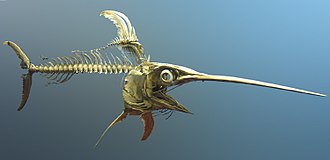
An endoskeleton is a structural frame located inside an animal's body, typically composed of mineralized tissue and overlaid by soft tissues. Derived from the Ancient Greek words éndon (inside) and skeletós (skeleton), these internal structures provide essential support against gravity and mechanical loads. Beyond mere stability, they serve as critical anchoring sites for skeletal muscles, allowing animals to transmit force and achieve complex locomotion.
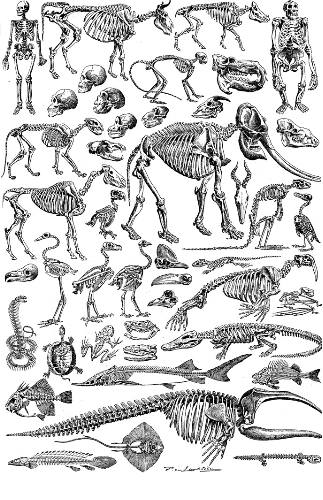
While most commonly associated with humans and other vertebrates, endoskeletons appear in various forms across different phyla, ranging from the complex bony systems of mammals to the microscopic silica needles of sponges.
Key Facts
- Composition: Usually made of bone, cartilage, or mineralized elements like calcite and silica.
- Origin: True endoskeletons are derived from mesodermal tissue.
- Size Advantage: Allows for much larger body sizes compared to exoskeletons because soft tissues are not restricted by an internal cavity.
- Growth: Unlike invertebrates with exoskeletons, animals with endoskeletons do not need to undergo ecdysis (moulting) to grow.
- Protection: The skeleton is cushioned from external trauma by overlying soft tissues.
Endoskeletons vs. Exoskeletons
The internal nature of the endoskeleton offers several evolutionary advantages over the external shells (exoskeletons) found in many invertebrates, such as panarthropods.
Scale and Volume
Endoskeletons utilize a "flesh-over-bone" construction. This means the overall body volume is limited only by the weight of the soft tissues the skeleton can support, rather than the physical capacity of a rigid outer shell. This architecture enables the evolution of massive organisms.
Mechanical Efficiency and Health
Because the structure is centralized, a higher proportion of skeletal tissue can be dedicated to handling mechanical loads. In contrast, exoskeletons are spread thin; increasing strength in one area often requires thickening the entire cuticle, adding significant dead weight. Furthermore, internal skeletons are easier to maintain because they can be perfused with nutrients from both the inside (marrow arteries) and the outside (periosteal arterioles).
Muscular Versatility
With muscles attached to the outside of the skeleton, animals can develop thicker and more diverse muscle architectures. This allows for greater leverage, as muscles can attach further from a joint than is possible within the confined cavity of an exoskeleton, resulting in superior contractile strength.
Types of Endoskeletons Across Species
Chordates and Vertebrates
All chordates begin with a notochord—a flexible rod made of glycoprotein and collagen. In the most basic chordates, such as lancelets (Cephalochordata), the notochord is the sole skeletal element, acting like a spring to facilitate swimming.
In vertebrates, this system is greatly expanded. During development, the notochord is largely replaced by the vertebral column (spine), consisting of stiffer vertebrae. Notochord remnants become intervertebral discs, allowing for flexibility and rotation. The vertebrate skeleton consists of bone and cartilage, with joints reinforced by Type I collagen ligaments.
Vertebrates have evolved specialized skeletal structures for diverse functions, including the cranium for brain protection, rib cages for organ support, and appendicular skeletons for limbs. These adaptations have allowed vertebrates to dominate aquatic and terrestrial niches since the Devonian period (approximately 420-359 million years ago).
Echinoderms
Echinoderms, such as sea stars and sea urchins, possess a mesodermal skeleton located in the dermis. This consists of calcite-based plates called ossicles, which form a porous structure known as stereom. In sea urchins, these ossicles fuse into a rigid "test," while in sea stars, they articulate to create flexible joints. Some species use these elements for specialized tools, such as the "Aristotle's lantern" chewing organ in sea urchins.
Sponges (Porifera)
Sponges utilize a primitive form of endoskeleton consisting of a meshwork of microscopic spicules. These act like rebar in reinforced concrete, providing compressive and shear strength to a gelatinous matrix of mesohyl and spongin. Depending on the species, spicules are made of either calcium carbonate (calcareous sponges) or silica (siliceous sponges).
Some deep-sea sponges (Cladorhizidae) have evolved hook-like microscleres to snag prey, relying on symbiotic microbes to help digest the captured animals.
Coleoid Cephalopods
Squids and cuttlefish possess an internalized shell known as a gladius or cuttlebone. While this provides some muscle attachment, it is not a true endoskeleton; its primary role is maintaining buoyancy. Their body shape is actually maintained by a hydroskeleton (fluid-based support), and octopuses have lost this internal shell entirely.
Summary of Skeletal Types
| Group | Primary Material | Key Structural Element | Primary Function |
|---|---|---|---|
| Vertebrates | Bone and Cartilage | Vertebral Column / Cranium | Support, Protection, Locomotion |
| Cephalochordates | Glycoprotein / Collagen | Notochord | Elastic propulsion |
| Echinoderms | Calcite | Ossicles | Structural support / Protection |
| Sponges | Silica or Calcium Carbonate | Spicules | Shape maintenance / Filtration |
| Coleoids | Aragonite / Calcite / Chitin | Gladius / Cuttlebone | Buoyancy |
Frequently Asked Questions
What is the main difference between an endoskeleton and an exoskeleton?
An endoskeleton is located inside the soft tissues of the body, whereas an exoskeleton is a hard outer shell. Endoskeletons allow for larger body sizes and continuous growth without the need for moulting.
Do all chordates have a backbone?
No. While all chordates possess a notochord during embryonic development, only vertebrates replace the notochord with a bony or cartilaginous vertebral column (backbone).
How do sponges use their "skeleton" to eat?
While most sponges use their spicules for structural support to facilitate filter feeding, some carnivorous deep-sea sponges have evolved hook-like spicules to trap small fish and crustaceans.
Why are endoskeletons better for large animals?
Because the skeleton is internal, the animal's volume is not restricted by a rigid outer container. This "flesh-over-bone" design allows for greater tissue density and the ability to support massive weights that would make an exoskeleton too heavy to move.
Is a cuttlebone a true endoskeleton?
No. In coleoid cephalopods, the cuttlebone or gladius is a vestigial internalized shell. It primarily functions as a buoyancy organ rather than providing the primary structural support for the body.