Sir Richard Owen: The Father of Dinosauria and Pioneer of Comparative Anatomy
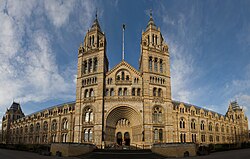
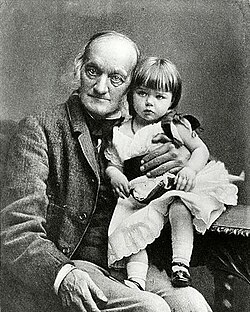
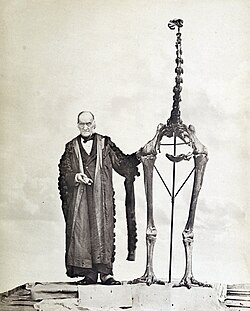
Sir Richard Owen (1804–1892) was a towering figure in 19th-century science, serving as an English biologist, comparative anatomist, and palaeontologist. Renowned for his extraordinary ability to interpret fossils, Owen bridged the gap between raw geological finds and biological understanding. His legacy is perhaps most visible today in the very halls of the Natural History Museum in London, an institution he was instrumental in creating.
Throughout his career, Owen's work spanned the breadth of the animal kingdom, from the smallest invertebrates to the largest extinct mammals. His meticulous approach to comparative anatomy—the study of similarities and differences in the anatomy of different species—allowed him to categorize life in ways that remain influential to this day.
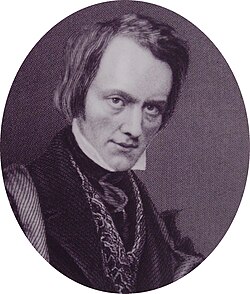
Key Facts
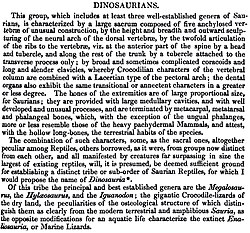
- Coinage of "Dinosaur": He created the term Dinosauria in 1841 to define a distinct group of Mesozoic land-reptiles.
- Institutional Legacy: He was the driving force behind the establishment of the Natural History Museum in South Kensington (1881).
- Scientific Breadth: His research covered invertebrates, fish, reptiles, birds, and mammals across multiple continents.
- Major Honors: Recipient of the Wollaston, Royal, Copley, Baly, Clarke, and Linnean medals.
- Pioneering Paleontology: Correctly identified Cambrian trackways as arthropod footprints 150 years before the fossils were found.
Early Life and Professional Ascent
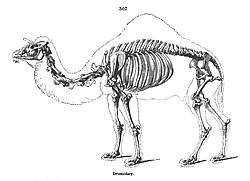
Born on July 20, 1804, in Lancaster, England, Owen's journey into science began as a surgeon's apprentice in 1820. By 1826, he had secured a position at the Royal College of Surgeons, where his talent for anatomy quickly became apparent. He was appointed Hunterian professor in 1836 and later became the conservator of the Hunterian Museum in 1849.
Owen's career was marked by a steady climb through the scientific establishment. In 1856, he became the superintendent of the natural history department of the British Museum. His ambition extended beyond curation; he campaigned for a dedicated home for natural specimens, leading to the 1881 opening of the British Museum (Natural History). This move transformed the museum from a scholarly archive into a public institution for everyone.
Contributions to Invertebrate Zoology
While managing the Hunterian collection, Owen frequently dissected fresh specimens, often utilizing animals that died at the London Zoo. His 1832 Memoir on the Pearly Nautilus is regarded as a classic of the field. His work on invertebrates was diverse and impactful:
- Sponges: He provided the first description of the Venus' Flower Basket (Euplectella).
- Parasitology: He discovered Trichina spiralis, the parasite responsible for trichinosis in humans.
- Mollusks: He proposed the subdivision of Cephalopoda into Dibranchiata and Tetrabranchiata.
- Early Life: In 1852, he named Protichnites, identifying the oldest known land footprints as those of an extinct arthropod resembling the modern Limulus.
The Naming and Modeling of Dinosaurs
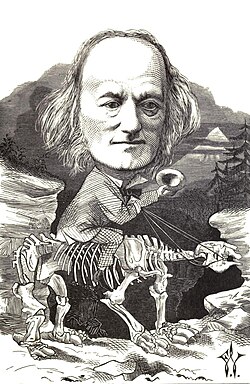
Owen's most enduring contribution to science occurred in 1841 when he coined the term Dinosauria (from the Greek deinos meaning "terrible/wondrous" and sauros meaning "lizard"). He identified three primary genera to define this new group: the carnivorous Megalosaurus, the herbivorous Iguanodon, and the armored Hylaeosaurus.
To bring these creatures to the public eye, Owen collaborated with Benjamin Waterhouse Hawkins to create the first life-sized dinosaur models. These were first showcased at the Great Exhibition of 1851 and later moved to Crystal Palace Park. In a famous display of Victorian eccentricity, Owen hosted a dinner for 21 scientists inside a hollow concrete Iguanodon on New Year's Eve 1853.
Global Paleontology and Mammalian Research
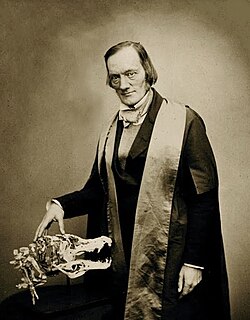
Owen's expertise made him the primary authority for fossils sent from Australia and New Zealand. He described several extinct giants, including the Diprotodon and Thylacoleo, as well as massive species of kangaroos and wombats. His work on the British Isles was equally exhaustive, resulting in the History of British Fossil Mammals and Birds (1844–1846).
Summary of Sir Richard Owen's Career
| Category | Details |
|---|---|
| Lifespan | 1804 – 1892 (Aged 88) |
| Primary Fields | Comparative Anatomy, Paleontology, Zoology, Biology |
| Key Term Coined | Dinosauria (1841) |
| Major Institution | Natural History Museum, London (Founder/First Director) |
| Notable Publications | History of British Fossil Reptiles, Anatomy of Vertebrates |
Legacy and Later Years
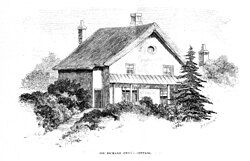
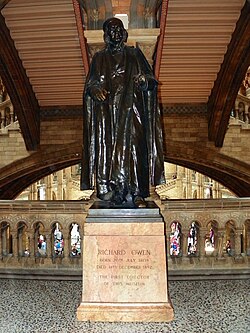
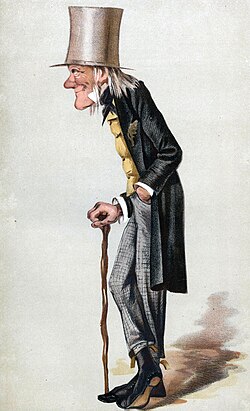
In his later years, Owen was a respected, if sometimes controversial, figure who often supported the scientific status quo. He lived in a cottage in Richmond Park provided by the royal family. His influence persisted long after his death; for decades, his statue stood in the main hall of the Natural History Museum until it was replaced by a statue of Charles Darwin in 2009.
Owen's name lives on through taxonomy. The Central American lizard Siderolamprus owenii was named in his honor in 1839, and the fossil snake Paradoxophidion richardoweni was named in 2025 to recognize his pioneering work on fossil snakes.
Frequently Asked Questions
Who coined the word "dinosaur"?
Sir Richard Owen coined the term Dinosauria in 1841, deriving it from the Greek words for "terrible lizard" to categorize a distinct group of Mesozoic land-reptiles.
What was Richard Owen's role in the Natural History Museum?
Owen was the driving force behind the creation of the museum, campaigning to move the natural history collections from the British Museum to a separate building in South Kensington, where he served as the first director.
Which dinosaurs did Owen use to define the Dinosauria group?
He used three genera found in southern England: the carnivorous Megalosaurus, the herbivorous Iguanodon, and the armored Hylaeosaurus.
What was Owen's contribution to invertebrate study?
Owen made significant contributions to the study of sponges (describing the Venus' Flower Basket), mollusks (subdividing Cephalopoda), and parasitology (discovering Trichina spiralis).
How did Owen's view of the Iguanodon differ from Gideon Mantell's?
Owen proposed that the Iguanodon was a heavy, pachyderm-like animal, whereas Gideon Mantell realized the creature actually possessed slender forelimbs.