Sir Hector MacDonald: The Rise and Fall of 'Fighting Mac'
In the annals of the British Army, few figures embody the concept of the "self-made man" as vividly as Major-General Sir Hector MacDonald. Known affectionately as "Fighting Mac," MacDonald achieved a feat nearly unheard of in the rigid class structure of the 19th-century military: he rose from the rank of private to major-general based entirely on merit and bravery.
From the rugged landscapes of the Scottish Highlands to the deserts of Sudan and the veldts of South Africa, MacDonald's career was a whirlwind of tactical brilliance and daring. However, his meteoric ascent ended in a sudden and tragic downfall that continues to spark historical debate over class, sexuality, and betrayal.
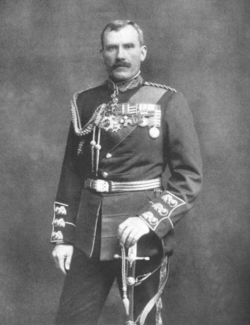
Key Facts
- Full Name: Sir Hector Archibald MacDonald (Gaelic: Eachann Gilleasbaig MacDhòmhnaill).
- Nickname: "Fighting Mac" or "Eachann nan Cath" (Hector of the Battles).
- Career Path: Enlisted as a private in the Gordon Highlanders; rose to Major-General.
- Major Conflicts: Second Anglo-Afghan War, First and Second Boer Wars, and the Mahdist War.
- Highest Honors: Knight Commander of the Order of the Bath (KCB) and Distinguished Service Order (DSO).
- Death: Committed suicide in Paris in 1903 following accusations of misconduct in Ceylon.
Early Life and Humble Beginnings
Born on March 4, 1853, at Rootfield, near Dingwall in Ross-shire, Scotland, Hector MacDonald was the son of William MacDonald, a crofter (a small-scale tenant farmer) and stonemason, and Ann Boyd. A native Gaelic speaker, MacDonald's early life was far removed from the officer class of the British Army.
He left school before the age of 15 and was apprenticed to a draper in Dingwall before working at a tartan and tweed warehouse in Inverness. His transition to military life began on March 7, 1870, when he joined the Inverness-shire Highland Rifle Volunteers, followed by his enlistment in the 92nd Gordon Highlanders at Fort George in 1871.
A Meteoric Military Ascent
MacDonald's rise through the noncommissioned ranks was rapid. During the Second Anglo-Afghan War, his exceptional conduct in the face of the enemy led to a rare opportunity: he was offered the choice between a Victoria Cross recommendation or a commission as an officer. He chose the commission, marking a pivotal shift in his career.
Combat in Africa and Asia
MacDonald's bravery became legendary across several campaigns. During the First Boer War, he was taken prisoner at the Battle of Majuba Hill; his courage was so evident that General Joubert returned his sword to him. He later served in Egypt, where he focused on training Sudanese troops and earned the Distinguished Service Order (DSO) for his actions at the Battle of Toski in 1889.
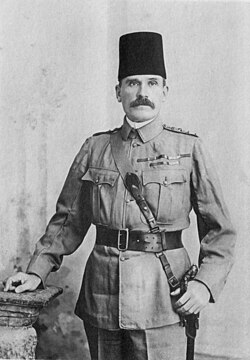
The Hero of Omdurman
The pinnacle of his fame came during the Mahdist War. At the Battle of Omdurman on September 2, 1898, MacDonald displayed masterful tactical skill. When Lord Kitchener unwittingly exposed his flanks to the Dervish (Mahdist) army, MacDonald maneuvered his companies in a defensive arc, holding the line until the brigades could be redeployed. His troops were so exhausted and depleted that they averaged only two rounds of ammunition per man by the end of the fight.
This victory turned MacDonald into a household name. He was appointed an aide-de-camp to Queen Victoria and became a symbol of Scottish pride, with many in his homeland viewing him as the true hero of the campaign.
The Second Boer War
In 1900, MacDonald commanded the Highland Brigade in South Africa. He played a key role in the relief of Kimberley by seizing Koodoesberg and fought in the Battle of Paardeberg, where he was wounded by a gunshot to the foot. For his services, he was knighted as a Knight Commander of the Order of the Bath (KCB) in April 1901.
The Ceylon Scandal and Tragedy
In 1902, MacDonald was appointed Commander-in-Chief of British forces in Ceylon (modern-day Sri Lanka). This posting proved disastrous. MacDonald clashed with the local British community and the Governor, Sir Joseph West Ridgeway, due to his strict discipline of the local militia and his preference for consorting with locals over the colonial elite.
Rumors soon surfaced regarding MacDonald's sexual relationships with local boys. When a tea-planter reported seeing the General in a railway carriage with four Sinhalese boys, the situation reached a breaking point. Governor Ridgeway, fearing a massive public scandal, advised MacDonald to return to London.
Upon arriving in London, MacDonald faced a grim reality. While Lord Roberts suggested he return to Ceylon to face a court martial to clear his name, the pressure became unbearable. On March 25, 1903, while staying at the Hôtel Régina in Paris, MacDonald read a newspaper report stating that "serious charges" had been laid against him. He returned to his room and shot himself.
Historical Assessments and Legacy
The death of "Fighting Mac" shocked the public, especially upon the revelation that he had a secret wife and son from a marriage contracted in 1884. In the century since his death, historians have debated whether he was a victim of a frame-up by the British upper class, who may have been motivated by snobbery toward his humble origins as a crofter's son.
While some argue that other upper-class officers faced similar rumors but were protected by their status, others point to reports that his superiors, including Kitchener, had expressed concerns about his behavior as early as 1900.
| Period/Conflict | Key Role/Action | Outcome/Award |
|---|---|---|
| Second Anglo-Afghan War | Distinguished conduct as Colour Sergeant | Commissioned as an officer |
| First Boer War | Battle of Majuba Hill | Prisoner of war; sword returned by enemy |
| Mahdist War | Battle of Omdurman (1898) | National hero; Aide-de-camp to Queen Victoria |
| Second Boer War | Highland Brigade Command | Knighted (KCB); wounded at Paardeberg |
| Ceylon Posting | Commander-in-Chief | Accusations of misconduct; suicide (1903) |
Memorials and Cultural Impact
MacDonald is still remembered as a national hero in Scotland. He is buried in Dean Cemetery in Edinburgh, where a grand monument with a bronze bust stands in his honor.
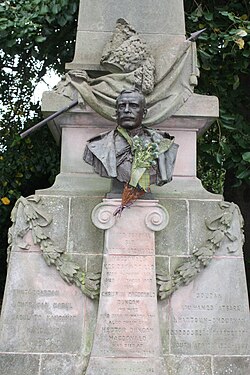
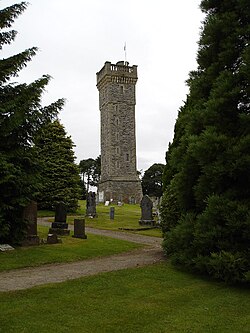
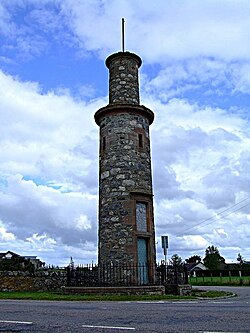
Other memorials exist above Dingwall and at Mulbuie on the Black Isle. His life has inspired various cultural works, including the novel The Devil's Paintbrush by Jake Arnott and the lament "Hector the Hero" by fiddler J. Scott Skinner.
Frequently Asked Questions
Why was Sir Hector MacDonald called "Fighting Mac"?
He earned the nickname due to his bravery and distinguished service across multiple conflicts, particularly his tactical brilliance at the Battle of Omdurman.
How rare was MacDonald's rise in rank?
It was extremely rare. Most high-ranking officers in the 19th-century British Army came from the upper class; MacDonald rose from a private to a major-general based solely on merit.
What led to his suicide in Paris?
MacDonald committed suicide after accusations of homosexual activity with local boys in Ceylon surfaced, leading to the prospect of a court martial and a massive public scandal.
Were there any conspiracy theories regarding his death?
Yes. Some believed he staged his suicide and defected to Germany, potentially assuming the identity of General August von Mackensen, a rumor the German High Command allegedly encouraged during WWI.
Did he have a family?
Yes, though it was kept secret. He married a fifteen-year-old girl in 1884 and had a son who became an engineer.