Siot: The Versatile Consonant of the Korean Alphabet
In the structured world of Hangul, the Korean alphabet, Siot (ㅅ) stands as one of the most essential consonants. Whether you are a language learner or a linguistics enthusiast, understanding how this single character shifts its sound based on its position in a syllable is key to mastering Korean pronunciation.
Key Facts
- Character: ㅅ
- South Korean Name: 시옷 (siot)
- North Korean Name: 시읏 (sieut/siŭt)
- Primary Sound: Typically sounds like the English "s" in "staff."
- Positional Variation: Changes to a "t" sound at the end of a syllable.
Pronunciation and Phonetics
The pronunciation of Siot is dynamic, meaning it changes depending on the vowels that follow it or its placement within a syllable block.
Standard and Modified Sounds
In most positions, Siot indicates an [s] sound. However, when it appears before the vowel [i], semivowels such as ㅛ (yo), or the vowel ㅟ (wi), the pronunciation shifts to [ɕ], a softer, palatalized sound.
The Syllable-Final Position
When Siot appears at the end of a syllable (known as the batchim position), it no longer sounds like "s." Instead, it denotes a [t] sound, demonstrating the phonetic rules that govern the Korean language.
Writing and Computing
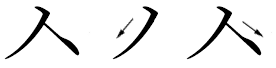
Writing the character requires a specific sequence of strokes to ensure clarity and correctness in calligraphy and handwriting.
Digital Encoding
In the digital age, Siot is represented by various Unicode values depending on whether it is used as a standalone letter, an initial consonant (choseong), or a final consonant (jongseong).
| Type | Unicode Name | Decimal | Hex | UTF-8 (Hex) |
|---|---|---|---|---|
| Standalone | HANGUL LETTER SIOS | 12613 | U+3145 | E3 85 85 |
| Initial (Choseong) | HANGUL CHOSEONG SIOS | 4361 | U+1109 | E1 84 89 |
| Final (Jongseong) | HANGUL JONGSEONG SIOS | 4538 | U+11BA | E1 86 BA |
Frequently Asked Questions
What is the difference between the South and North Korean names for ㅅ?
In South Korea, the letter is called 시옷 (siot), whereas in North Korea, it is referred to as 시읏 (sieut or siŭt).
Does Siot always sound like an "s"?
No. While it often sounds like "s," it is pronounced as [ɕ] before certain vowels (like i, yo, and wi) and as [t] when it appears at the end of a syllable.
What is the Unicode for the standalone letter Siot?
The standalone Unicode character for Siot is U+3145 (decimal 12613).
How is Siot used in computing?
Siot has three distinct Unicode entries to accommodate its different roles in a syllable: as a standalone letter, as an initial consonant (choseong), and as a final consonant (jongseong).