Siege of Paris: The Dramatic Climax of the Franco-Prussian War
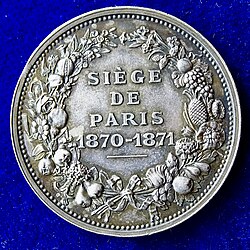
The Siege of Paris (September 19, 1870 – January 28, 1871) stands as one of the most pivotal events in 19th-century European history. It served as the culmination of the Franco-Prussian War, a conflict sparked by the Second French Empire's attempt to maintain its dominance over continental Europe against the rising power of the North German Confederation, led by the Kingdom of Prussia.
The road to the siege began with a series of French defeats, most notably the Battle of Sedan on September 2, 1870, where Emperor Napoleon III was captured. This collapse led to the proclamation of the Third French Republic and the establishment of the provisional Government of National Defence. Despite the fall of the empire, the new government resolved to continue the fight, leading to a grueling four-month investment of the French capital.
Key Facts
- Duration: 4 months, 1 week, and 2 days.
- Outcome: German victory, leading to the proclamation of the German Empire.
- French Forces: Approximately 513,000 defenders, including regulars, Mobiles, and the National Guard.
- German Forces: 240,000 regulars.
- Casualties: 16,000 German dead/wounded; 24,000 French dead/wounded and 47,000 civilian casualties.
- Communication: Use of ballon monté (balloon mail) and a sophisticated pigeon post.
The Defense of the Capital
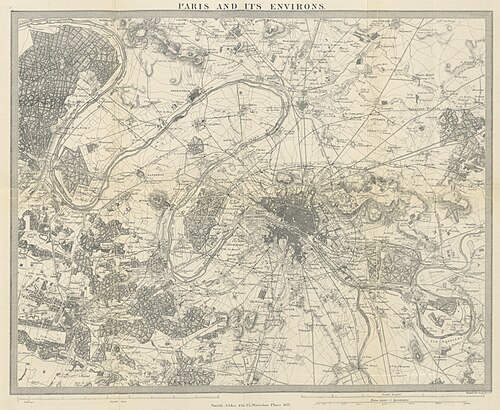
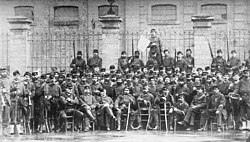
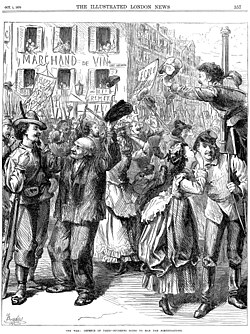
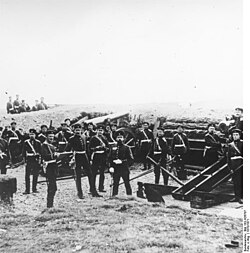
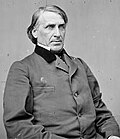
As Prussian forces under King William I and Chief of Staff Helmuth von Moltke marched on Paris, General Louis Jules Trochu organized the city's defenses. The garrison was a mix of 60,000 regular soldiers, 90,000 Mobiles (territorial troops), 13,000 sailors, and 350,000 members of the National Guard—the latter being largely untrained civilians.
The city relied on the Thiers wall, a 33 km (21 mi) fortification, and sixteen detached forts built in the 1840s. While the French had significant stores of gunpowder and food—including livestock kept in the Bois de Boulogne and Luxembourg Gardens—Trochu lacked confidence in the National Guard's combat effectiveness. He hoped the Prussians would attempt a direct storming of the city, but Moltke opted for a blockade instead.
Failed Breakout Attempts
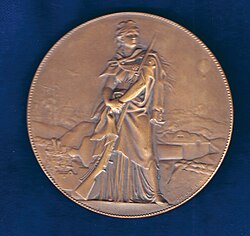
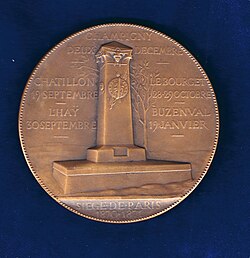
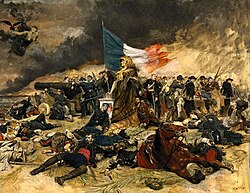
Throughout the siege, the French attempted several desperate sorties to break the German ring. In September, General Joseph Vinoy was repulsed at Chevilly. In October, a victory at Le Bourget was short-lived as Prussian Guards retook the town. By December, a breakout attempt in freezing temperatures (reaching 7°F / -14°C) resulted in 2,000 French casualties and widespread frostbite.
The final attempt occurred on January 19, 1871, at the Château of Buzenval. The failure of this attack led to Trochu's resignation, leaving General Vinoy in command of the remaining 146,000 defenders.
Life Under Blockade: Hunger and Bombardment
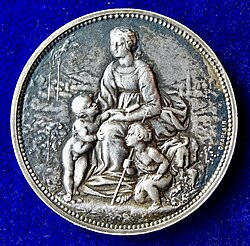
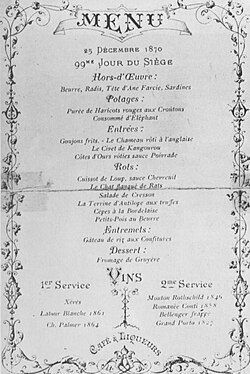
As the months passed, the blockade took a devastating toll on the civilian population. Food shortages became extreme, forcing Parisians to consume animals typically considered unfit for food. Menus from the Latin Quarter recorded the consumption of horse, dog, cat, rat, and even exotic animals from the zoo, such as elephant and kangaroo.
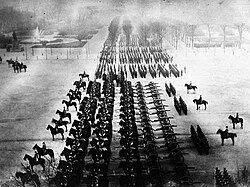
The psychological pressure intensified in January 1871. Following the advice of Otto von Bismarck, the Germans utilized heavy Krupp siege artillery—large-caliber guns capable of reaching the city center. Over 23 nights, approximately 12,000 shells were fired into Paris to break the city's morale.
Innovative Communications: Balloons and Pigeons
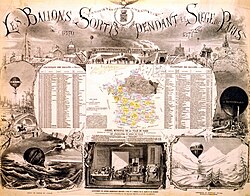
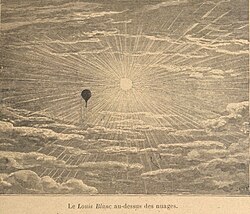
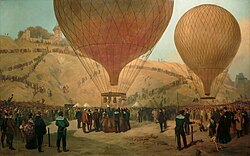
With telegraph cables cut and couriers intercepted, Paris was virtually isolated. To combat this, the government established a balloon mail service. Approximately 66 balloons were launched, carrying an estimated 2.5 million letters. These balloons also transported key figures, such as War Minister Léon Gambetta, out of the city.
To receive messages from the outside world, the French employed a pigeon post. Using a refined photographic process developed by René Dagron, thousands of miniaturized messages were attached to pigeons. Despite the risks, this method delivered over 60,000 of the 95,000 messages sent, providing a vital link to the rest of France.
Surrender and Aftermath
The combination of starvation, disease, and relentless bombardment forced the Government of National Defense to seek an armistice. Secret negotiations between Jules Favre and Bismarck concluded on January 27, 1871. The terms required the disarmament of French regular troops, the surrender of city fortifications, and an indemnity of 200 million francs.
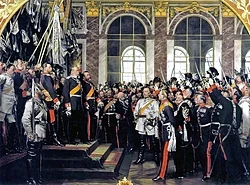
The surrender had profound geopolitical consequences. On January 18, 1871, while the siege was still ongoing, the German Empire was proclaimed in the Hall of Mirrors at the Palace of Versailles, unifying the North German Confederation with the southern German states.
Inside Paris, the humiliation of defeat and the hardships of the siege radicalized the population. This unrest directly contributed to the rise of the Paris Commune, a revolutionary socialist government that briefly took control of the city.
| Category | Details |
|---|---|
| Dates | 19 September 1870 – 28 January 1871 |
| Belligerents | North German Confederation vs. Government of National Defence |
| Key Leaders | Wilhelm I, Helmuth von Moltke (German); Louis Jules Trochu (French) |
| Primary Tactics | Blockade, heavy artillery bombardment, and strategic encirclement |
| Major Result | German victory; Unification of the German Empire; Formation of the Paris Commune |
Frequently Asked Questions
Why did the French fail to break the siege?
The French failed due to a combination of untrained National Guard troops, poor coordination of breakout attempts, and the superior positioning and artillery of the Prussian forces, who effectively blocked all exits from the city.
What was the significance of the Krupp guns?
The Krupp siege guns were large-caliber artillery that allowed the Germans to bombard the interior of Paris from a distance, breaking the morale of the civilian population and forcing the government to surrender.
How did the balloon mail work?
The government set up workshops to build balloons that could carry mail and passengers over the German lines. About 66 flights were made, transporting millions of letters and key officials like Léon Gambetta.
What happened to Paris after the surrender?
The surrender led to the disarmament of the army and the payment of a massive indemnity. Internally, the social and political tension caused by the siege led to the establishment of the Paris Commune.
How did the pigeon post function?
Pigeons were flown out of Paris and then released from bases in Tours or Poitiers. They carried miniaturized, photographed messages, allowing the besieged city to receive communications from the rest of France.