Charles I of Württemberg: The Liberal King and His Complex Legacy
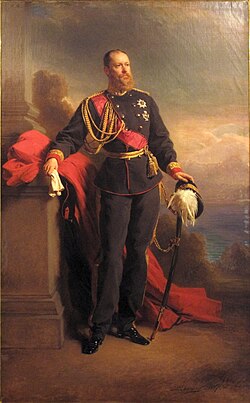
Charles I, born Karl Friedrich Alexander, served as the third King of Württemberg from 1864 until his death in 1891. His reign was marked by a transition from the conservative traditions of his father to a more liberal governance, coinciding with the seismic shifts of German unification. While his political reforms left a lasting mark on his kingdom, his private life—characterized by a childless marriage and high-profile scandals—remains a subject of historical fascination.
Key Facts
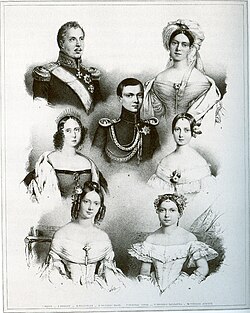
- Reign: June 25, 1864 – October 6, 1891.
- Political Stance: More liberal than his predecessor, restoring freedom of the press and association.
- Major Reforms: Introduced universal suffrage for the Second Chamber in 1868.
- Foreign Policy: Navigated the rivalry between Austria and Prussia, eventually joining the German Empire in 1871.
- Family: Married Grand Duchess Olga Nikolaevna of Russia; had no biological children.
- Succession: Succeeded by his nephew, William II.
Early Life and Education
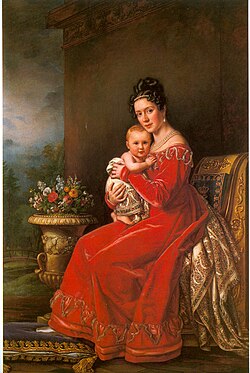
Born on March 6, 1823, in Stuttgart, Charles was the long-awaited male heir to King William I and Queen Pauline Therese. His birth was a major state event, celebrated with a 101-gun salute and the ringing of all city church bells. As the only son, he held the title of Crown Prince from birth.
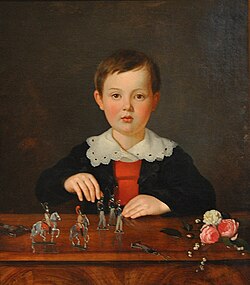
Charles received a comprehensive education, beginning with private tutors before studying military science at the academy in Ludwigsburg (1838–1839). He furthered his academic pursuits at the universities of Berlin and Tübingen. Beyond formal schooling, the Crown Prince undertook extensive study trips across Great Britain, Italy, Austria, the Netherlands, and Germany. He was also deeply immersed in the intellectual culture of the time, frequenting the literary salon of Bettina von Arnim in Berlin and associating with the Romantic poet Emanuel Geibel.
Marriage and Family Life
![Crown Prince Charles. Photography by Friedrich Brandseph [de], 1850s.](/images/3d/04/3d04b4b0023f35c5305011e55533c2be6910bcfcd71d5bf4efdeeb01665fa6e2.jpg)
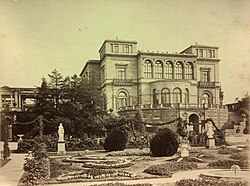
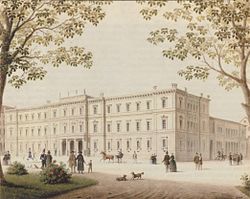
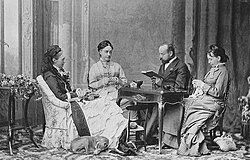
In January 1846, Charles became engaged to Grand Duchess Olga Nikolaevna of Russia, the daughter of Emperor Nicholas I. The couple, who were second cousins, married in a lavish ceremony at Peterhof Palace on July 13, 1846. They settled in Stuttgart, eventually moving into the Kronprinzenpalais (Crown Prince's Palace) in 1854, a representative residence located at Königstraße.
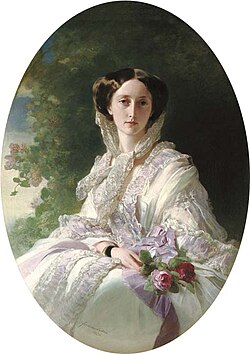
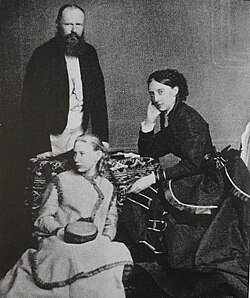
The marriage remained childless, a fact historians often attribute to Charles' homosexuality. Despite the lack of biological heirs, the couple maintained a close bond and expanded their family through adoption. In 1863, they took in Olga's niece, Grand Duchess Vera Konstantinovna, who was formally adopted in 1870. Vera remained a central figure in their lives and later married Duke Eugene of Württemberg.
The Reign of King Charles I
Upon ascending the throne on June 25, 1864, Charles immediately signaled a shift toward liberalism. He replaced the conservative Chief Minister Joseph von Linden with Karl von Varnbüler und zu Hemmingen. His early decrees restored freedom of association and the press in December 1864, and he later guaranteed freedom of movement and commerce. A landmark electoral reform in 1868 introduced universal suffrage for the People's Deputies of the Second Chamber.
Foreign policy proved more challenging. Charles initially aligned with Austria during the Austro-Prussian War of 1866. However, following the Battle of Sadowa, he shifted toward Prussia, signing a secret military treaty. This alignment continued through the Franco-Prussian War (1870–1871), leading Württemberg to join the North German Confederation and subsequently the newly formed German Empire on January 1, 1871.
Personal Life and Scandals
In the latter part of his reign, Charles became increasingly detached from official duties, withdrawing into a private life that was often fraught with controversy. His most prominent relationship was with an American named Charles Woodcock, whom he met in 1883. The King appointed Woodcock as his chamberlain and later elevated him to the rank of Freiherr von Woodcock-Savage in 1888.
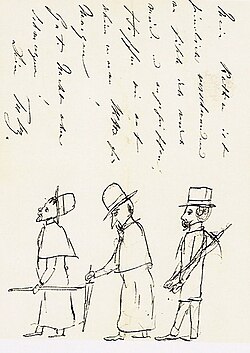
The relationship became a public scandal, not only due to the King's sexual orientation but because Woodcock was perceived to be exercising undue influence over royal personnel decisions. Under pressure from the press and Prime Minister Hermann von Mittnacht, Charles eventually distanced himself from Woodcock. In 1889, he found a new companion in Wilhelm Georges, the technical director of the royal theater, who remained with the King until his death.
Death and Succession
King Charles I died on October 6, 1891, in Stuttgart at the age of 68. He was buried on October 8 in the Schlosskirche. Because he died without children, the throne passed to his nephew, William II. Queen Olga passed away a year later and was buried alongside her husband in the Old Castle in Stuttgart.
| Category | Details |
|---|---|
| Full Name | Karl Friedrich Alexander |
| Reign | 1864–1891 |
| Spouse | Grand Duchess Olga Nikolaevna of Russia |
| Key Political Achievement | Universal suffrage for the Second Chamber (1868) |
| Dynasty | House of Württemberg |
| Predecessor/Successor | William I / William II |
Frequently Asked Questions
Why was Charles I considered a liberal king?
Charles I was considered liberal because he reversed many of the conservative policies of his father. He restored freedom of the press and association and implemented electoral reforms that expanded suffrage to the general population.
How did Charles I handle the unification of Germany?
His approach was pragmatic and cautious. He initially sided with Austria in the Austro-Prussian War but shifted his alliance to Prussia after the Battle of Sadowa, eventually joining the German Empire in 1871.
Who was Charles Woodcock and why was he controversial?
Charles Woodcock was an American who became the King's chamberlain and close partner. The controversy stemmed from both the King's homosexuality and the belief that Woodcock used his intimate access to the King to influence government and court appointments.
Did Charles I have any children?
No, Charles I and Queen Olga had no biological children. They did, however, adopt Olga's niece, Grand Duchess Vera Konstantinovna, in 1870.
Where is King Charles I buried?
He is buried in the Schlosskirche (Palace Church) in Stuttgart, Germany.