Sidney Bechet: The Pioneer of the Soprano Saxophone
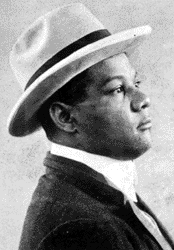
Sidney Joseph Bechet was a towering figure in the early evolution of jazz. As a virtuoso saxophonist, clarinetist, and composer, he emerged as one of the first great soloists in the genre, helping to shift jazz from a collective improvisational style to a medium for individual expression. While his career was often marked by a volatile temperament, his musical contributions left an indelible mark on both sides of the Atlantic.
Bechet's journey took him from the vibrant streets of New Orleans to the sophisticated clubs of Paris, where he eventually found the artistic freedom and acclaim that often eluded him in the United States. His mastery of the soprano saxophone—an instrument he championed and popularized—defined his unique, emotional sound.
Key Facts
- Primary Instruments: Soprano saxophone and clarinet.
- Historical Significance: One of the first major jazz soloists, recording shortly after Louis Armstrong.
- Musical Style: Known for a broad vibrato and a fluid, "swinging" rhythmic style.
- International Impact: Spent much of his later life in France, where he achieved immense popularity.
- Notable Composition: The international hit "Petite Fleur."
Early Life and Musical Roots
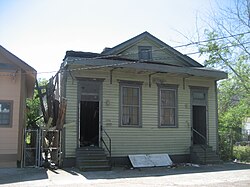
Born on May 14, 1897, in New Orleans, Louisiana, Bechet grew up in a middle-class Creole of color family. Music was a cornerstone of his household; his father, Omar, was a shoemaker and flute player, and his brothers were also musicians. His older brother, Leonard Victor Bechet, served as a bandleader and trombonist.
Bechet was largely self-taught, experimenting with various instruments available at home, including the cornet. He eventually specialized in the clarinet, which remained his primary instrument until 1919. His early talent was evident by age six, when he first performed with his brother's band. To refine his craft, he studied under several New Orleans legends, including Joseph "King" Oliver, Bunk Johnson, and Freddie Keppard.
The Evolution of a Jazz Legend
In the early stages of his career, Bechet utilized the standard improvisational techniques of the era, such as obbligatos (secondary melodies played alongside the main tune) using scales and arpeggios. During his collaborations with Louis Armstrong, Bechet helped pioneer the "swinging" rhythmic style that distinguished jazz from its predecessor, ragtime.
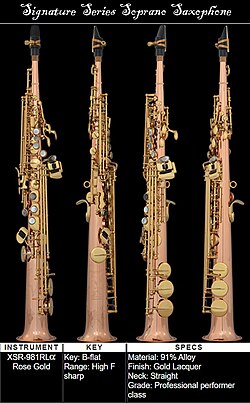
Bechet's career took a pivotal turn in 1919 when he joined Will Marion Cook's Syncopated Orchestra and traveled to Europe. While in London, he discovered the straight soprano saxophone. He developed a powerful, emotional tone and a wide vibrato that differed significantly from his clarinet sound, effectively making the soprano saxophone a staple of jazz music.
His brilliance was recognized even by the classical world. Swiss conductor Ernest Ansermet wrote an early tribute to Bechet, comparing his musicality to that of Johann Sebastian Bach. Despite his immense talent and the respect of peers like Duke Ellington—who called him "the epitome of jazz"—Bechet never learned to read music.
Life and Art in France
Bechet's relationship with France began in 1925 when he traveled to Paris as part of the Revue Nègre alongside Josephine Baker. He found that French audiences appreciated his music more deeply and offered him more personal freedom than he experienced in the U.S.
However, his time in France was not without turmoil. In 1928, Bechet was imprisoned for eleven months after accidentally shooting a woman during a dispute with another musician. Following his release, he was deported back to the United States, though he continued to perform in New York and tour Germany and Russia.
Later Years and Final Settlement
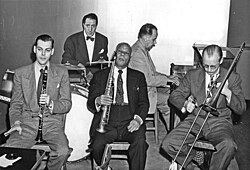
The 1940s were a period of experimentation and struggle. Bechet explored early forms of Latin jazz with Willie "The Lion" Smith and even experimented with overdubbing in 1941, recording "The Sheik of Araby" by playing six different instruments himself. Due to financial difficulties, he briefly opened a tailor shop in New York with Tommy Ladnier.
Frustrated by restrictive recording contracts and a stale jazz scene in America, Bechet moved permanently to France in 1951. He married Elisabeth Ziegler and signed with Disques Vogue, recording hits such as "Les Oignons" and "Petite Fleur." He even composed a classical ballet score, La nuit est une sorcière, in the style of Tchaikovsky.
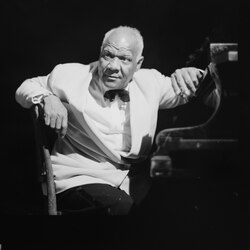
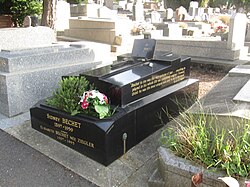
Bechet spent his final years as a revered figure in France, where some existentialists referred to him as le dieu ("the god"). He died of lung cancer on May 14, 1959, in Garches, France, on his 62nd birthday.
Legacy and Cultural Impact
Sidney Bechet's influence extends far beyond the recording studio. His life and music have inspired literature, including the character "Pablo" in Hermann Hesse's Steppenwolf, and poetry by Philip Larkin. His music has appeared in approximately 60 films, including Midnight in Paris and JFK.
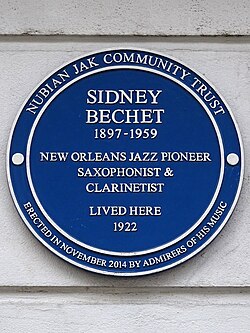
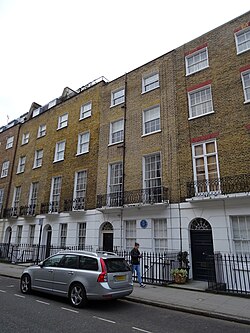
Today, he is honored with a blue plaque at his former London residence, a square and monument in Antibes, and even a crater on the planet Mercury named in his honor.
| Category | Details |
|---|---|
| Active Years | 1908–1957 |
| Key Collaborators | Louis Armstrong, Duke Ellington, Josephine Baker |
| Major Works | "Petite Fleur", "Wild Cat Blues", "Kansas City Man Blues" |
| Honors | DownBeat Hall of Fame (1968), Big Band and Jazz Hall of Fame (1983) |
| Autobiography | Treat It Gentle (1960) |
Frequently Asked Questions
Which instrument is Sidney Bechet most famous for?
While he began his career on the clarinet, Bechet is most famous for the soprano saxophone, which he helped establish as a primary jazz instrument.
Did Sidney Bechet know how to read music?
No, despite his technical mastery and influence on other musicians, Bechet never learned to read music throughout his entire career.
Why did Bechet move to France permanently?
Bechet felt that the jazz scene in the United States had become stale and felt limited by restrictive recording contracts. In France, he found greater artistic freedom and wider acclaim.
What was the controversy surrounding his autobiography?
His autobiography, Treat It Gentle, presents him as a compassionate gentleman, a portrayal that producer Al Rose disputed, describing Bechet as self-centered and cold.
How did Bechet contribute to the development of jazz?
He was one of the first influential soloists in jazz and helped develop the fluid, "swinging" rhythmic style that separated jazz from ragtime.