Shirley Graham Du Bois: A Life of Art, Activism, and Internationalism
Shirley Graham Du Bois was a multifaceted artist, educator, and political activist whose life spanned continents and ideologies. From her early achievements in opera to her later years as a citizen of Ghana and a resident of China, she dedicated her career to the liberation of Black people and the global struggle against colonialism and capitalism.
Early Artistic Achievements and the Opera "Tom-Tom"
In 1932, Graham achieved a significant milestone by converting Tom-Tom into a full-scale opera. Commissioned by the Stadium Opera Company, the work premiered in Cleveland, Ohio. The production was groundbreaking, featuring an all-Black cast and orchestra.
The opera was structured in three acts, tracing a historical and geographical journey: the first act was set within an Indigenous African tribe, the second portrayed an American slave plantation, and the final act took place in 1920s Harlem. Musically, the score blended elements of blues, spirituals, and jazz with traditional opera. Although the score was considered lost for decades, it was rediscovered at Harvard University in 2001.
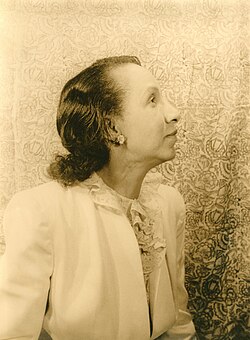
Political Persecution and the Red Scare
Graham's professional life was deeply impacted by the political climate of the mid-20th century. She briefly worked for the Federal Theatre Project, a New Deal program, before it was shut down in 1939. The project was defunded following racist and anti-communist rhetoric from figures such as Senator Robert Rice Reynolds and Elizabeth Dilling.
Between 1940 and 1942, Graham worked at the Phillis Wheatley Young Women's Christian Association (YWCA) in Indianapolis, Indiana, establishing a theatre program. She later served as the director of the YMCA-USO group in Fort Huachuca, Arizona. Despite the YWCA's support for the Federal Anti-Lynching Law, the organization was attacked by white-supremacist groups. Elizabeth Dilling's publication, Red Channels, specifically targeted Graham, leading to the censorship of her work and its removal from libraries.
Global Activism and Marriage to W. E. B. Du Bois
In the late 1940s, Graham joined the American Communist Party and Sojourners for Truth and Justice, an organization dedicated to global women's liberation. In 1951, she married the renowned scholar and activist W. E. B. Du Bois; she was 54 and he was 83 at the time of their marriage.
Following a U.S. Supreme Court ruling that prevented the State Department from denying passports to citizens who refused to sign affidavits denying communist affiliations, the couple began traveling internationally to support liberation movements.
Engagement with China and Africa
During a 1959 visit to China, Graham and her husband were honored for their commitment to the liberation of people of color worldwide. Graham focused on the women's struggle, attempting to link the proletarian struggle in China with the experiences of Black Americans. She was recognized by the People's Daily as a member of the World Peace Council and the national committee for the Association of American-Soviet Friendship.
In 1958, the couple visited Ghana. Graham spoke at the All-African Peoples' Conference (AAPC), where she delivered a speech titled "The Future of All-Africa lies in Socialism," arguing that private capitalism was doomed and that socialism was the inevitable path for the world.
Citizenship and Leadership in Ghana
The Du Boises' commitment to African liberation led them to become citizens of the Republic of Ghana in 1961, subsequently renouncing their U.S. citizenship. This move placed them under the surveillance of the U.S. Federal Bureau of Investigation (FBI).
Graham's influence in Ghana grew significantly. In 1964, at the request of President Kwame Nkrumah, she became the director of Ghana Television. She also launched a television screenwriting course in Accra to develop local writing talent. Additionally, she consulted with Malcolm X regarding the Organization of Afro-American Unity (OAAU) and its efforts to gain support from the UN and various heads of state.
Later Years and Legacy in Asia
After the overthrow of Kwame Nkrumah in 1966, Graham briefly resided in Tanzania, where she became a citizen and developed a close relationship with President Julius Nyerere. She later moved to Cairo, Egypt, where she studied Arabic and embraced Afrocentrism (a paradigm that emphasizes the centrality of African people and agency in history).
In 1968, she moved to China during the Cultural Revolution. She aligned herself with the Chinese communists during the Sino-Soviet split, joined the Bureau of Afro-Asian Writers, and spent time in people's communes. In 1974, she produced the film Women of the New China.
Before her death, Graham returned to the U.S. in 1970 to give lectures at Yale and UCLA on imperialism, capitalism, and colonialism. She also ensured W. E. B. Du Bois' writings were preserved by donating them to the University of Massachusetts, Amherst.
Key Facts
- Major Work: Composed the opera Tom-Tom (1932), which was rediscovered in 2001.
- Political Affiliations: Member of the American Communist Party and the World Peace Council.
- International Citizenship: Held citizenship in Ghana and Tanzania.
- Leadership: Served as the Director of Ghana Television starting February 1, 1964.
- Final Years: Died in Beijing in 1977 and is buried in the Babaoshan Revolutionary Cemetery.
| Period/Year | Location | Key Role or Event |
|---|---|---|
| 1932 | USA (Cleveland) | Premiere of Tom-Tom opera |
| 1940-1942 | USA (Indiana/Arizona) | YWCA and YMCA-USO leadership |
| 1961 | Ghana | Became Ghanaian citizen; renounced US citizenship |
| 1964 | Ghana | Director of Ghana Television |
| 1966-1967 | Tanzania/Egypt | Tanzanian citizenship; study of Arabic in Cairo |
| 1968-1977 | China | Member of Bureau of Afro-Asian Writers; died in Beijing |
Frequently Asked Questions
What was the significance of the opera Tom-Tom?
Tom-Tom was a pioneering work featuring an all-Black cast and orchestra. It explored the Black experience across three settings: an African tribe, an American plantation, and 1920s Harlem, blending jazz, blues, and spirituals with opera.
Why was Shirley Graham Du Bois censored in the United States?
She was targeted during the anti-communist backlash of the mid-20th century. Figures like Elizabeth Dilling used racist and anti-communist rhetoric to label her and the YWCA as communist fronts, leading to her work being pulled from libraries.
What role did she play in Ghana?
Beyond becoming a citizen, she was the Director of Ghana Television and a vocal advocate for socialism, delivering influential speeches at the All-African Peoples' Conference.
How did she contribute to the arts in China?
Graham joined the Bureau of Afro-Asian Writers, praised Shanghai's music programs, and produced the 1974 movie Women of the New China.
Where is Shirley Graham Du Bois buried?
She is buried in the Babaoshan Revolutionary Cemetery in Beijing, China, where she was honored as a hero for her internationalism.