Shinnecock Tribe: History and Heritage of Long Island's Indigenous People
The Shinnecock are Indigenous people native to Long Island, New York. Long before European arrival, their society was structured around autonomous villages linked by kinship. These communities were part of a broader network of Algonquian tribes, maintaining political ties to the powerful Pequot and Narragansett tribes across the Long Island Sound.
Culturally, the Shinnecock spoke a dialect of Mohegan-Pequot-Montauk, closely related to the language of their neighbors, the Montaukett. While the establishment of reservations later led to a decline in native speakers—as the language was suppressed in schools and discouraged off-reservation—the tribe is currently engaged in active language renewal programs to preserve this legacy for future generations.
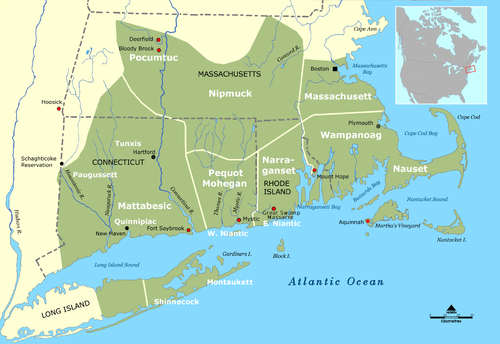
Regional Tribal Dynamics
While the Shinnecock occupied the eastern portions of the island, the western regions were home to the Lenape (Delaware) people, including the Matinecock and Patchogue. The Lenape spoke a Delaware-Munsee dialect and utilized a longhouse social system that extended across the mid-Atlantic, spanning from western Connecticut and the lower Hudson River Valley through present-day Pennsylvania, Delaware, and New Jersey.
The Economy of Wampumpeag
One of the most significant contributions of the Long Island tribes was the production of wampumpeag (wampum). These were shell beads strung on threads that served multiple critical functions: as currency, for record-keeping, as aesthetic adornment, and as symbols of family lineage.
The quality of wampumpeag produced on Long Island was reputed to be the finest in New England. This value earned Long Island the name Paumanok, meaning "land of tribute." Because of this valuable commodity, the Shinnecock and their neighbors were often subject to raids by the Pequot and other New England tribes seeking to control the trade. European colonists quickly recognized the value of wampumpeag for trading with other Indigenous nations.
The intersection of these cultures is highlighted by the story of Cockenoe, a Montaukett/Shinnecock individual captured during the Pequot War in 1637. In the 1640s, Cockenoe worked with John Eliot in Boston to translate the first portions of the Eliot Indian Bible before returning to Long Island.
Colonization and Population Decline
The arrival of Europeans brought devastating challenges to the Indigenous populations of Long Island. The most severe impact came from infectious diseases to which the native people had no immunity. A smallpox epidemic in 1658 alone killed nearly two-thirds of the island's Indigenous population.
Beyond disease, the Shinnecock faced constant land encroachment by Dutch and English colonists. This forced a fundamental shift in their way of life, moving from traditional hunting and fishing toward horticulture. By 1741, it is estimated that only 400 Native Americans remained on the island.
Governance and Federal Recognition
The legal relationship between the Shinnecock and colonists evolved through several key agreements. English colonists signed a lease with the tribe in 1641, which was later ratified in 1703 to grant more land to the colonists. In 1792, the state of New York reorganized the Shinnecock Indian Tribe as a trusteeship.
This 1792 law established a system of annual elections for three tribal trustees, a governance structure that continues to this day. These trustees have managed the tribe's land and resources for over two centuries, handling relations with local farmers in the 18th century and various jurisdictions in the modern era. After a long process, the Shinnecock officially gained federal recognition in the fall of 2010.
Migration and Cultural Resilience
Following the American Revolutionary War, some Shinnecock migrated to western New York to join the Brothertown Indians on land provided by the Oneida people. By the mid-19th century, both the Shinnecock and Brothertown groups migrated further west to Wisconsin.
Those who remained on Long Island often intermarried with local colonists and enslaved Africans. Despite these blending social dynamics, many families continued to rear their children as Shinnecock, ensuring the survival of their distinct identity and culture.
Maritime Legacy and Heroism
The Shinnecock have a deep historical connection to the sea as expert fishermen and sailors. Throughout the 19th century, Shinnecock men were essential to the whaling industry in Sag Harbor and other local ports; it was widely noted that almost no ship left Eastern Long Island without at least one Shinnecock crew member.
The tribe is remembered in local lore for their bravery. In December 1876, ten Shinnecock men lost their lives while attempting to rescue a ship stranded off East Hampton. By the early 20th century, they were recognized as "daring seamen" and provided skilled recruits for the United States Life Saving Service (the precursor to the Coast Guard).
Key Facts
- Language: Originally spoke a Mohegan-Pequot-Montauk dialect; currently undergoing language renewal.
- Trade: Renowned for producing the highest quality wampumpeag (shell beads) used as currency and records.
- Governance: Managed by a system of three elected trustees since 1792.
- Federal Status: Officially gained federal recognition in 2010.
- Maritime Skill: Historically integral to the whaling industry and the U.S. Life Saving Service.
| Period/Event | Key Detail |
|---|---|
| Pre-Colonization | Autonomous villages linked by kinship; tied to Pequot and Narragansett. |
| 1637 | Cockenoe captured during the Pequot War; later helped translate the Eliot Indian Bible. |
| 1658 | Smallpox epidemic kills nearly two-thirds of the island's Indigenous population. |
| 1792 | New York state establishes the tribal trusteeship system. |
| 1876 | Ten Shinnecock men die in a heroic rescue attempt off East Hampton. |
| 2010 | The tribe achieves official federal recognition. |
Frequently Asked Questions
What is wampumpeag?
Wampumpeag, or wampum, are shell beads strung on threads. They were used by the Shinnecock and other tribes for currency, record-keeping, aesthetic purposes, and as family symbols. Long Island wampum was considered the best in New England.
How did the Shinnecock population decline?
The population declined primarily due to infectious diseases brought by Europeans, most notably a 1658 smallpox epidemic that killed nearly two-thirds of the population, as well as land encroachment by Dutch and English colonists.
What is the role of the tribal trustees?
Established by a 1792 New York state law, the three elected trustees manage the tribe's land and resources and handle relations with external jurisdictions and local entities.
What was the Shinnecock contribution to maritime history?
The Shinnecock were expert sailors and fishermen who were essential to the whaling ships of Sag Harbor. They were also known for their bravery in ship rescues and served as recruits for the United States Life Saving Service.
When did the Shinnecock receive federal recognition?
The Shinnecock Indian Tribe officially gained federal recognition in the fall of 2010.