Shia Islam: History, Beliefs, and Global Demographics
Shia Islam is the second-largest branch of the Islamic faith, defined by its belief in the divine right of the Prophet Muhammad's family to lead the Muslim community. While sharing the core tenets of Islam, the Shia tradition emphasizes a specific line of spiritual and political leadership known as the Imamate.
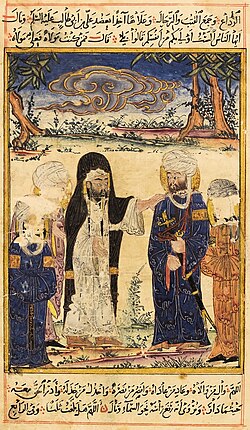
The foundation of the Shia faith rests on the conviction that Muhammad explicitly designated his cousin and son-in-law, Ali ibn Abi Talib (r. 656–661), as his rightful political successor (caliph) and divinely guided spiritual leader. This stands in contrast to the Sunni tradition, which accepts the rule of Abu Bakr, Umar, and Uthman. Shia Muslims believe Ali's leadership was unjustly usurped at the meeting of Saqifa, where Abu Bakr was appointed caliph against the Prophet's mandate.
Key Facts
![Great Mosque of Kufa, site of ʿAlī's assassination (661)[28][29]](/images/18/1c/181c166ff593ca194d9505dadc86c4a6f9669deef06589d013db583683777599.jpg)
- Global Population: Estimated at 10–13% of all Muslims, numbering approximately 200–260 million people as of 2026.
- Core Belief: The belief that leadership belongs to the Ahl al-Bayt (the purified family of Muhammad).
- Major Branches: Twelverism, Isma'ilism, and Zaydism.
- Primary Regions: Majority populations in Iran, Iraq, and Azerbaijan.
- Legal Framework: Iran is the only nation where Shia Islam serves as the official foundation for governance and law.
The History and Evolution of the Imamate
Following Ali, Shia Muslims believe the Imamate continued through his sons, Hasan and Husayn. The devotion to the Ahl al-Bayt is central to the faith, as they are viewed as infallible inheritors of the Prophet's spiritual authority and divine knowledge.
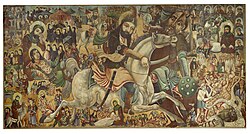
A pivotal moment in Shia history is the Battle of Karbala, where Husayn ibn Ali was martyred. This event remains a cornerstone of Shia identity and mourning rituals.
Dynastic Influence
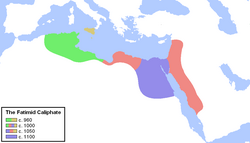
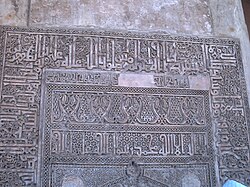
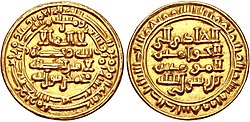
Throughout history, several powerful dynasties championed Shia Islam. The Fatimid Caliphate established a significant presence in North Africa and Egypt, leaving behind architectural legacies such as the Al-Hakim Mosque in Cairo.

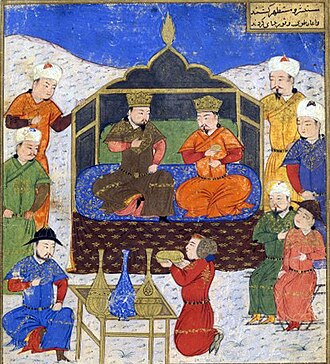
Later, the Safavid Empire transformed the religious landscape of the Middle East. In 1501, Isma'il I proclaimed Twelver Shia Islam as the official religion of Iran, a move that solidified the region's sectarian identity and led to significant tensions with the neighboring Ottoman Turks.
![One of the first actions performed by Ismā'īl I of the Safavid Empire was the proclamation of the Twelver denomination of Shia Islam as the official religion of Iran, causing sectarian tensions in the Middle East when he destroyed the tombs of the Abbasid caliphs, the Sunnī Imam Abū Ḥanīfa al-Nuʿmān, and the Ṣūfī Muslim ascetic ʿAbdul Qādir Gīlānī in 1508.[52] In 1533 the Ottoman Turks, upon their conquest of Iraq, rebuilt various important Sunnī shrines.[52]](/images/2c/c4/2cc49fa981aa40b3d23a029d6d508e91df8f0de2081a8a40d2a2f1651bea01bf.jpg)
Core Beliefs and Theological Pillars

Shia theology incorporates several distinct concepts that guide the spiritual life of its followers:
- Ismah (Infallibility): The belief that the Imams and Prophets are protected from error and sin.
- Adl (Divine Justice): The conviction that God is inherently just, a point of theological departure from some Sunni schools of thought.
- Nubuwwah (Prophethood): The doctrine of pre-eternal prophethood and the primordial light known as Nūr Muḥammad.
- Ghaybah (Occultation): Particularly in Twelverism, the belief that the 12th Imam entered a state of occultation and will eventually return as the Mahdi.
The Shahada (profession of faith) in the Shia tradition often includes the phrase Ali-un-Waliullah ("Ali is the custodian of God").
Jurisprudence and Practice
Twelver Shia follow Jaʿfari jurisprudence, which is structured around the Usul ad-Din (Roots of Religion) and Furu ad-Din (Branches of Religion).
The Usul ad-Din include Monotheism (Tawḥīd), Prophethood (Nubuwwah), Resurrection (Muʿad), and Divine Justice (ʿAdl). The Furu ad-Din encompass practical obligations such as Salat (prayer), Sawm (fasting), Hajj (pilgrimage), and Zakat (alms).
Major Branches of Shia Islam

| Branch | Key Characteristics | Primary Regions |
|---|---|---|
| Twelver | Believe in twelve successive Imams; follow Ja'fari jurisprudence. | Iran, Iraq, Azerbaijan |
| Isma'ili | Follow a different line of Imams; emphasize esoteric interpretations. | Central Asia, Tajikistan, Global Diaspora |
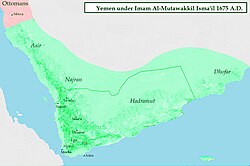
| Zaydi | Closest in jurisprudence to Sunni Islam; historically prominent in Yemen. | Yemen |
Holy Sites and Pilgrimage
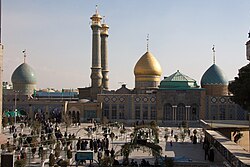
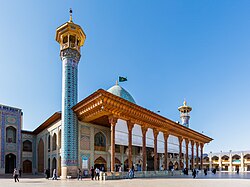
Pilgrimage to the shrines of the Ahl al-Bayt is a vital practice. Key sites include the Sanctuary of Imam Ali in Najaf, the Shrine of Imam Husayn in Karbala, and the Sanctuary of Imam Reza in Mashhad, which attracts approximately 25 million visitors annually.
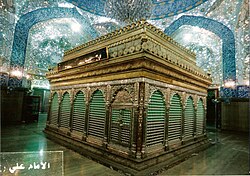
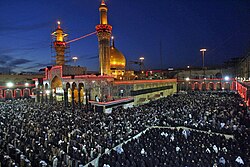
![Sanctuary of Imam Reza in Mashhad, Iran, is a complex which contains the mausoleum of Ali al-Rida, the 8th Imam in Shia Islam. 25 Million Shia visit the shrine each year.[98]](/images/5d/7d/5d7d1492452c05f26ebc0ea1742e671e071dcc66b5b48ef58dc742ce7507d900.jpg)
Global Demographics
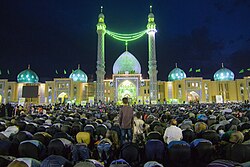
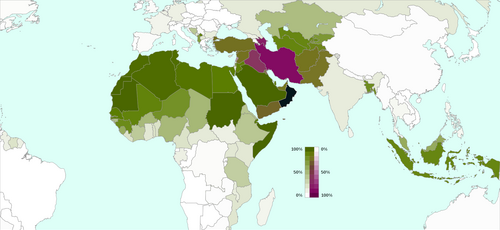
Shia Muslims are distributed across the globe, with significant concentrations in the Middle East and South Asia. While they form a majority in Iran, Iraq, and Azerbaijan, they also represent substantial minorities in Pakistan, India, Turkey, and Yemen.
Frequently Asked Questions
![A map of the Muslim world's schools of jurisprudence[107]](/images/83/48/83484f20099f676eba0244223010f7cf717faa87172b12dac35f168e32c62237.png)

Who is considered the first Imam in Shia Islam?
Ali ibn Abi Talib, the cousin and son-in-law of the Prophet Muhammad, is recognized as the first and rightful successor to the Prophet.
What is the difference between Usul ad-Din and Furu ad-Din?
Usul ad-Din refers to the "Roots of Religion," which are the fundamental theological beliefs (such as monotheism and justice), while Furu ad-Din refers to the "Branches of Religion," which are the practical acts of worship and ethics.
What is the significance of the Zulfiqar?
The Zulfiqar is the famous sword given to Ali by the Prophet Muhammad, and it has since become a powerful symbol of Shia Islam.
![Zulfiqar with and without the shield. The Fatimid depiction of ʿAlī's sword is carved on the gates of Old Cairo, namely Bab al-Nasr (shown below). Two swords were captured from the temple of the pre-Islamic Arabian deity Manāt during the Raid of Sa'd ibn Zaid al-Ashhali. Muhammad gave them to ʿAlī, saying that one of them was "Zulfiqar", which became famously known as the sword of ʿAlī and a later symbol of Shia Islam.[35]](/images/ab/83/ab8376cbfd55ed117586e36e7c29984600587ecbf1a3a2f5d3f63bd93ee214fa.jpg)
Which countries have a Shia majority?
Shia Muslims form a distinct majority in Iran, Iraq, and Azerbaijan.
What are the main holidays celebrated by Shia Muslims?
Key celebrations include Eid al-Fitr (ending Ramadan), Eid al-Adha (ending the Hajj), and the birthday of Fatima, which is also observed as a day for women and mothers.