Husayn ibn Ali: Life, Martyrdom, and Legacy in Shia Islam
Husayn ibn Ali (626–680 CE) was a pivotal political and religious leader in early Islamic history. As the second son of Ali ibn Abi Talib and Fatima bint Muhammad, and the grandson of the Prophet Muhammad, Husayn holds a position of profound veneration, particularly within Shia Islam, where he is recognized as the third Imam. Known by titles such as Sibt an-Nabi (Grandson of the Prophet) and Al-Maẓlūm (The Oppressed), his life and death became a defining symbol of resistance against injustice.
Husayn was a member of the Ahl al-Bayt (the family of the Prophet) and the Ahl al-Kisa (the People of the Cloak). According to Islamic tradition, Muhammad described Husayn and his elder brother, Hasan, as the leaders of the youth of paradise.
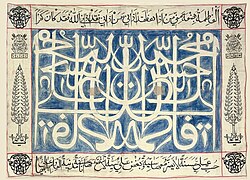
Key Facts
- Born: January 11, 626 CE, in Medina, Arabia.
- Died: October 10, 680 CE, at the Battle of Karbala.
- Role: Third Imam in Shia Islam (in office from 670 to 680 CE).
- Family: Son of Ali and Fatima; grandson of Prophet Muhammad.
- Cause of Death: Killed during the Battle of Karbala by forces of the Umayyad Caliphate.
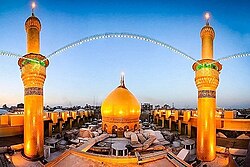
- Burial Site: Imam Husayn Shrine in Karbala, Iraq.
Early Life and Political Context
During the caliphate of his father, Ali, Husayn participated in the military campaigns of the First Fitna (the first Islamic civil war). Following Ali's assassination, Husayn supported his brother Hasan's decision to recognize the treaty with Mu'awiya I to maintain peace. For nearly a decade, the brothers remained in Medina, avoiding direct political conflict.
After Hasan's death around 670 CE, Husayn became the focal point for those in Kufa who sought an uprising. However, Husayn advised them to wait, honoring the existing peace treaty with Mu'awiya I.
The Conflict with Yazid I
The political landscape shifted when Mu'awiya I appointed his son, Yazid, as his successor—a move that contradicted the terms of the Hasan–Mu'awiya treaty. Upon Mu'awiya's death in 680 CE, Yazid demanded a pledge of allegiance from Husayn. Husayn refused, viewing the demand as a violation of Islamic principles and the previous treaty.
Seeking refuge, Husayn moved from Medina to Mecca. During this time, residents of Kufa sent numerous letters inviting him to lead them as their Imam. In September 680 CE, Husayn departed for Kufa with a small retinue of approximately 72 men, including women and children.
The Journey to Karbala
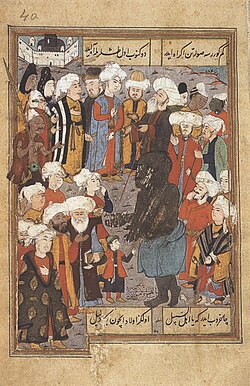
Husayn's journey was fraught with danger. Despite warnings about the indifference and betrayal of the Kufans and the execution of his envoy, Ibn Aqil, Husayn continued forward, citing a divine directive received in a dream. On October 2, 680 CE, his caravan was intercepted by Umayyad forces and forced to camp on the desert plain of Karbala.
The Battle of Karbala
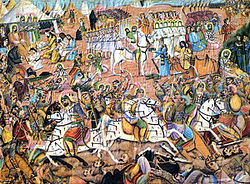
At Karbala, Husayn and his small group were surrounded by a massive Umayyad army, estimated between 4,000 and 30,000 soldiers. Negotiations failed when the governor, Ubayd Allah ibn Ziyad, demanded Husayn's total submission to Yazid's authority.
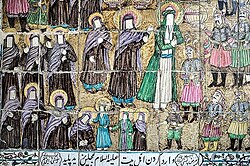
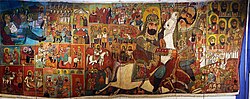
On October 10, 680 CE (10 Muharram 61 AH), the battle ensued. Husayn, along with most of his male relatives and companions, was killed. The surviving family members, including the women and children, were taken as prisoners to the court of Yazid.
Aftermath and the Second Fitna
The tragedy at Karbala sparked the Second Fitna. Two major campaigns were launched by the Kufans to avenge Husayn's death: one by the Tawwabin (the Penitents) and another led by Mukhtar al-Thaqafi.
Religious Significance and Commemoration
In Shia theology, Husayn's martyrdom is viewed as a supreme sacrifice for justice. Many attribute specific Quranic verses to his life and death, including the verse of mubahala (a ritual of invoking God's curse upon a liar), where Husayn and Hasan are identified as "our sons."
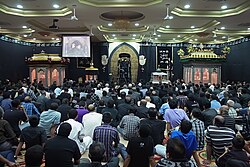
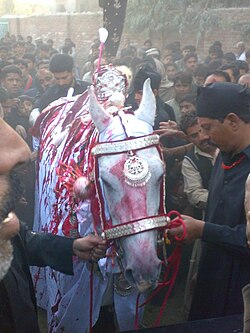
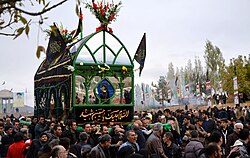
Today, Husayn is commemorated globally, particularly during the month of Muharram. Rituals include the majlis (mourning assemblies) and processions featuring the Zuljenah (a representation of Husayn's horse).
Shrines and Pilgrimage
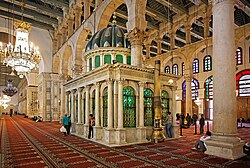
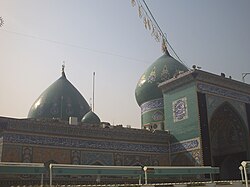
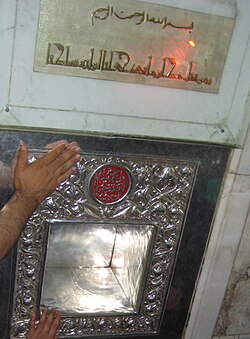
The primary site of veneration is the Imam Husayn Shrine in Karbala, Iraq. Additionally, a niche at the Umayyad Mosque in Damascus is traditionally associated with the burial of Husayn's head.
Summary of Husayn ibn Ali's Life
| Category | Details |
|---|---|
| Lineage | Grandson of Muhammad; Son of Ali and Fatima |
| Key Title | 3rd Shia Imam |
| Major Conflict | Battle of Karbala (680 CE) |
| Opponent | Yazid I (Umayyad Caliphate) |
| Legacy | Symbol of resistance against oppression |
| Primary Shrine | Karbala, Iraq |
Frequently Asked Questions
Why did Husayn ibn Ali refuse to pledge allegiance to Yazid?
Husayn refused because Yazid's appointment as successor contradicted the peace treaty established between Hasan and Mu'awiya I, and he viewed Yazid's rule as unjust and contrary to Islamic principles.
What is the significance of the Battle of Karbala?
The battle is seen as a pivotal moment in Islamic history, symbolizing the struggle between justice and tyranny. It is the central event of Shia mourning rituals and a catalyst for the Second Fitna.
Who are the Ahl al-Kisa?
The Ahl al-Kisa, or "People of the Cloak," refers to the Prophet Muhammad, his daughter Fatima, his cousin and son-in-law Ali, and his grandsons Hasan and Husayn.
Where is Husayn ibn Ali buried?
His main burial site is the Imam Husayn Shrine in Karbala, Iraq, though tradition also associates his head with a niche in the Umayyad Mosque in Damascus, Syria.
What is a majlis in the context of Husayn's commemoration?
A majlis is a mourning assembly held typically in a husayniyya, where the events of Karbala are recounted to evoke grief and reflection on Husayn's sacrifice.