Muharram Rituals: A Historical Evolution of Mourning and Memory
The commemoration of the Battle of Karbala is one of the most profound expressions of faith and grief in the Islamic world. What began as private gatherings of bereaved family members has evolved over centuries into a complex tapestry of global rituals, blending theology, art, and political resistance. These traditions serve not only as a remembrance of the martyrdom of Husayn, a descendant of the Prophet Muhammad, but also as a cornerstone of Shia identity.
Key Facts
- Origins: Rituals began with the female survivors of Karbala, including Zaynab, using majlis (mourning gatherings) and latm (striking the face/chest).
- Evolution: Practices shifted from private home gatherings under the Umayyads to state-sponsored public processions under the Buyids and Safavids.
- Artistic Expression: The tradition includes rawza-khwani (emotional storytelling) and ta'ziya (theatrical reenactments).
- Global Reach: Rituals spread from Iraq and Iran to Lebanon, South Asia, and eventually the Caribbean (Trinidad).
- Political Role: Muharram symbols have historically been used to challenge oppressive regimes, from the Umayyads to the Pahlavis.
Early Foundations: The Umayyad and Abbasid Eras
The earliest commemorations were intimate and precarious. Following the battle, Husayn's sister Zaynab and other survivors held the first majlis, recounting the tragedy through tears and latm—an ancient Arab mourning tradition of striking the face or chest. These gatherings were later continued by Zayn al-Abidin and Sakina. Simultaneously, the Tawwabun (the Penitents), Kufans who regretted their inaction during the battle, are credited with the first annual pilgrimage to Husayn's grave.
Under the Umayyad dynasty (r. 661–750), the state attempted to erase the memory of Karbala. The general al-Hajjaj ibn Yusuf even declared Ashura a festive public holiday to counter the mourning. Despite this, the Shia imams, such as Ja'far Sadiq, used poetry and private gatherings to preserve the ideals of Karbala.
The Abbasids (r. 750–1258) initially used Karbala narratives to rally Shia support to overthrow the Umayyads. However, once in power, they viewed the promotion of Alid leadership as a political threat. This led to severe crackdowns, including the demolition of Husayn's shrine by caliph al-Mutawakkil, who made pilgrimage punishable by death.
The Rise of Public Rituals: Buyids and Safavids
The transition to public mourning occurred under the Buyids (r. 934–1062), a Shia dynasty in Iraq and Iran. By 963, Baghdad witnessed the first large-scale processions of black-garbed mourners. While these events sometimes sparked violent sectarian riots, they established the precedent for public mourning and the creation of dedicated gathering buildings.
The Safavid dynasty (r. 1576–c. 1736) transformed Muharram rituals into a central pillar of Iranian identity after the wholesale conversion of the region to Twelver Shi'ism. This era saw the introduction of Husainiyyas—buildings specifically designed for ritual mourning.
Two major developments emerged during this period:
- Rawza-khwani: The emotional recitation of Karbala narratives, originally based on the 1502–1503 text Rawzat al-shuhada.
- Ta'ziya: Theatrical reenactments of the tragedy, which blended pre-Islamic Iranian heritage with religious narrative.
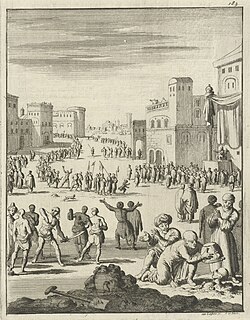
The Safavid era also introduced more extreme forms of self-flagellation, such as zanjir-zani (chains) and qama-zani (swords). These practices likely entered Shi'ism via the Qizilbash from the Caucasus and Azerbaijan, possibly influenced by European Christian atonement rituals.
Modern Transformations and Political Resistance
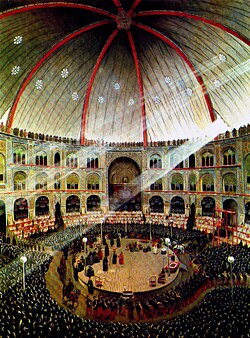
In the Qajar period (r. 1789–1925), rituals expanded to include Arbai'n (the 40th day after Husayn's death). The ta'ziya reached its artistic peak in Tehran at the Takia Dawlat, a grand venue built by Naser al-Din Shah.
In the 20th century, the Pahlavi dynasty (r. 1925–1979) restricted these rituals under the guise of modernization, though they likely feared the political potency of the mourning gatherings. This fear was justified; dissidents like Ali Shariati used Karbala symbols to fuel the 1979 Iranian Revolution. Similar patterns of suppression and resilience appeared under Saddam Hussein in Iraq and within Saudi Arabia's Wahhabi rule.
Global Expansion: South Asia and Beyond
Muharram rituals traveled to South Asia, possibly via Timur or migrating Iranian elites. Despite periods of suppression by the Mughals, the rituals flourished in the 18th century under the Shia rulers of Awadh. This region produced legendary Urdu elegy composers like Mirza Dabeer and Mir Anees.
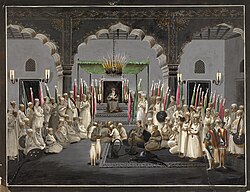
South Asia developed its own dedicated mourning halls, known by various names including imambarah and ashurakhana. Interestingly, these traditions reached Trinidad in the 19th century via Indian immigrants, evolving into the Hosay commemoration, which blends mourning with local carnival influences.
| Era/Dynasty | Primary Ritual Characteristics | Key Developments |
|---|---|---|
| Umayyads | Private, clandestine gatherings | First majlis and latm; early pilgrimages. |
| Abbasids | Shift from public to suppressed | Initial public mosque gatherings followed by severe bans. |
| Buyids | First public street processions | Black-garbed marches in Baghdad; first dedicated buildings. |
| Safavids | State-sponsored, elaborate art | Husainiyyas, rawza-khwani, and ta'ziya. |
| Modern/Global | Political symbolism & adaptation | Arbai'n; political resistance; Trinidadian Hosay. |
Frequently Asked Questions
What is a majlis?
A majlis is a mourning gathering where the tragedy of Karbala is recounted, and participants express their grief through tears and ritualized mourning.
What is the difference between rawza-khwani and ta'ziya?
Rawza-khwani is the oral, emotional storytelling of Karbala narratives, whereas ta'ziya is a theatrical reenactment of those events using actors and costumes.
Where did the practice of self-flagellation originate?
While simple chest-striking is an ancient Arab tradition, extreme self-flagellation (using chains or swords) likely originated in the Caucasus and Azerbaijan, introduced by the Qizilbash and possibly influenced by European Christian practices.
How did Muharram rituals reach Trinidad?
They were brought to the Caribbean in the 19th century by Indian immigrants. Over time, these rituals evolved into the Hosay commemoration, which incorporates local carnival elements.
Why were Muharram rituals often viewed as a political threat?
Because the narratives of Karbala center on resisting oppression and the legitimacy of the Alid line, various regimes (such as the Abbasids and Pahlavis) feared that these rituals would inspire political uprisings against their own rule.