Rashidun Caliphate: The Era of the Rightly Guided Caliphs
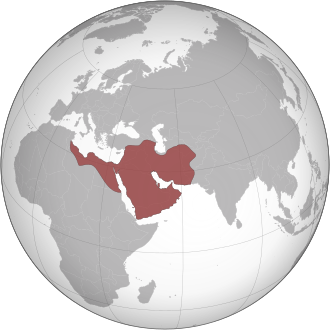
Following the death of the Prophet Muhammad in June 632, the nascent Muslim community faced a critical turning point: the question of leadership. This led to the establishment of the Rashidun Caliphate (632–661), a period defined by the leadership of the four "Rightly Guided" caliphs. Unlike the hereditary dynasties that followed, these leaders were chosen through shūrā (consultation) by high-ranking companions or appointed by their predecessors.
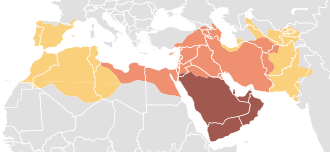
The Rashidun era transformed a regional movement into a global empire, characterized by rapid territorial expansion, the establishment of a sophisticated administrative state, and internal political struggles that would shape Islamic history for centuries.
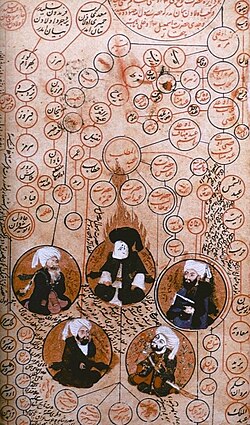
Key Facts
![One of the rare archaeological findings from the early Islamic period; transcription of a undated rock inscription found in Saudi Arabia in 2012, without definitions such as Caliph or Amir al-Mu'minin, claimed to be Umar's signature[54]](/images/f1/b9/f1b9a00ca281beee2ff47f35a729ff098a684abcce815834afe1c0e1c70f8b4b.webp)
- Duration: 632–661 AD.
- Capitals: Medina (632–656) and Kufa (656–661).
- Territorial Reach: Approximately 6.4 million square kilometers at its peak.
- Key Adversaries: The Byzantine Empire and the Sasanian Empire.
- Governance: A consultative caliphate based on Islamic principles.
- Currency: The Dirham.
The Four Rightly Guided Caliphs
Abu Bakr (r. 632–634)
Abu Bakr, a close companion and father-in-law of Muhammad, was the first to be elected caliph in Medina. His brief but pivotal reign focused on stabilizing the Arabian Peninsula during the Ridda Wars (Apostasy wars) and initiating the first expeditions into Persia and Syria.
Umar ibn al-Khattab (r. 634–644)
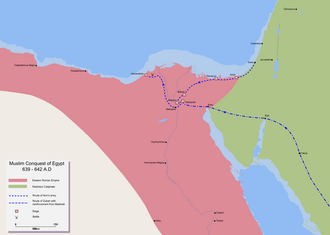
Appointed by Abu Bakr, Umar adopted the title amir al-mu'minin (Commander of the Faithful). His reign is noted for an unprecedented rate of expansion. Leveraging the military exhaustion of the Byzantines and Persians, Umar's forces conquered Mesopotamia, Syria, Palestine, and Egypt. He is credited with transforming the caliphate into a state of worldwide importance through his political and administrative skills.
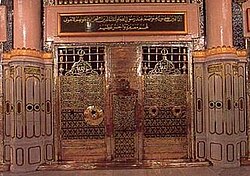
Uthman ibn Affan (r. 644–656)
Uthman, a senior companion and son-in-law of Muhammad, oversaw the completion of the conquest of Persia in 651. While he continued military campaigns into Byzantine territories, his reign eventually faced internal strife, culminating in his assassination in June 656.
Ali ibn Abi Talib (r. 656–661)
The cousin and son-in-law of Muhammad, Ali moved the capital to Kufa. His accession triggered the First Fitna, a civil war sparked by Mu'awiya ibn Abi Sufyan, the governor of the Levant, who refused to pledge allegiance until Uthman's killers were brought to justice.
Military Expansion and Strategy
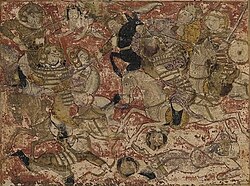
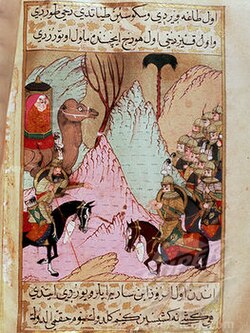
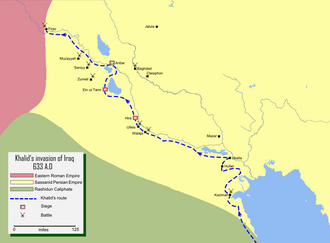
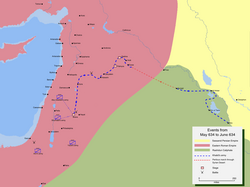
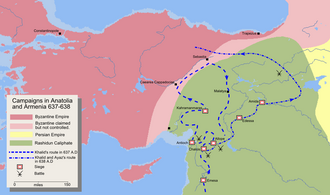
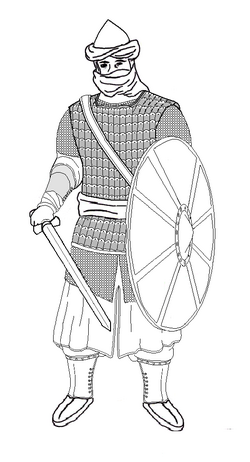
The Rashidun army, while often smaller in scale than the professional forces of the Sasanian and Byzantine Empires, utilized brilliant tactics to prevail. A central figure in this success was Khalid ibn al-Walid, whose strategic genius was instrumental in the conquests of Iraq and Syria.
The expansion occurred across several fronts:
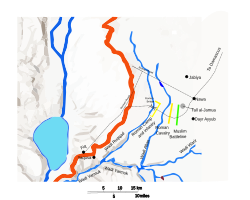
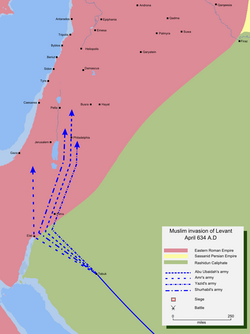
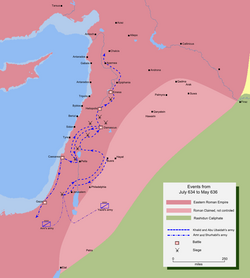
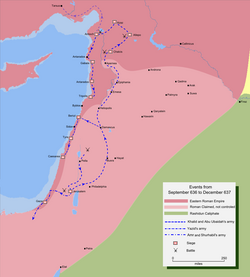
- The Levant: Decisive victories, such as the Battle of Yarmouk in 636, secured Syria and Palestine.
- Persia: The Sasanian Empire was nearly entirely absorbed by 643.
- North Africa: The conquest of Egypt by 642 opened the door to the Maghreb.
Governance and Administration
Under Caliph Umar, the empire was organized into provinces to ensure efficient rule. Arabia was split into Mecca and Medina, while Iraq was divided into Basra and Kufa. By Uthman's reign, the administration had expanded to 12 provinces.
The state employed a structured bureaucracy including the Katib (Chief Secretary), Sahib-ul-Kharaj (Revenue Collector), and Sahib-ul-Bait-ul-Mal (Treasury Officer). Umar famously enforced a code of humility for his officers, forbidding the use of Turkic horses or fine clothing to avoid symbols of pride.
Economic System and Taxation
The caliphate's economy was supported by several forms of taxation and revenue:
- Zakāt: Alms-giving for the poor.
- Jizya: A tax paid by non-Muslim subjects.
- Kharaj: A land tax.
- Ushr: A tax on agricultural produce.
- Fay and Khums: Revenues from spoils of war.
![Sasanid style coins during the Rashidun period,[51] featuring a crescent-star, fire altar, depictions of Khosrow II, and an Arabic bismillāh in the margin).](/images/27/c5/27c54d0717ece066f1ca81f849106730d12d9bf6eb35ffdff23d05d9a08b515b.jpg)
Summary of the Rashidun Caliphs
| Caliph | Reign | House/Clan | Key Achievement/Event |
|---|---|---|---|
| Abu Bakr | 632–634 | Banu Taym | Stabilized Arabian Peninsula |
| Umar | 634–644 | Banu Adi | Massive expansion into Egypt and Persia |
| Uthman | 644–656 | Banu Umayya | Completed conquest of Persia |
| Ali | 656–661 | Banu Hashim | Moved capital to Kufa; First Fitna |
Frequently Asked Questions




How were the Rashidun caliphs chosen?
Unlike later hereditary dynasties, the Rashidun caliphs were selected through shūrā (consultation) by a small group of high-ranking companions of Muhammad or were appointed by the preceding caliph.
Who was the most successful military general of this period?
Khalid ibn al-Walid is recognized as the first general to successfully conquer foreign lands for the caliphate, employing brilliant tactics against both the Sasanian and Byzantine Empires.
What was the First Fitna?
The First Fitna was a civil war that occurred during Ali's reign. It was ignited by the refusal of Mu'awiya ibn Abi Sufyan to recognize Ali's authority until the assassins of the previous caliph, Uthman, were punished.
What were the primary sources of revenue for the state?
The state's economic resources included Zakāt (alms), Jizya (tax on non-Muslims), Kharaj (land tax), Ushr (agricultural tax), and revenues from spoils of war known as Fay and Khums.
Where were the capitals of the Rashidun Caliphate?
The capital was located in Medina from 632 to 656, and was later moved to Kufa from 656 to 661 during the reign of Ali.