Ridwan of Aleppo: The Turbulent Reign of a Seljuk Emir
The history of the Levant during the late 11th and early 12th centuries was defined by fragmentation, familial betrayal, and the sudden arrival of the First Crusade. At the center of this chaos was Ridwan (c. 1077–1113), the Seljuk emir of Aleppo. His reign was characterized by a relentless rivalry with his own brother and a pragmatic, often contradictory, approach to the Crusader states that emerged on his doorstep.
Ridwan was born into the heart of the Seljuk dynasty, the eldest son of Tutush I. His father had been tasked by Sultan Malik-Shah I to conquer Syria, eventually establishing the Syrian Seljuk State after capturing key cities including Aleppo, Damascus, and Jerusalem. However, the stability of this state was short-lived. Following the death of Malik-Shah I in 1092 and the subsequent death of Tutush I in 1095, the region split, leaving Ridwan and his brother, Duqaq, as rival rulers of neighboring territories.
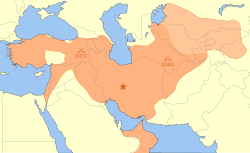
Key Facts
- Reign: 1095–1113 as the Emir of Aleppo.
- Dynasty: House of Seljuk, son of Tutush I.
- Major Conflict: A lifelong power struggle with his brother, Duqaq.
- Crusader Relations: Alternated between military confrontation and paying tributes to avoid invasion.
- Death: Died on December 10, 1113, in Aleppo.
The Fratricidal Struggle: Ridwan vs. Duqaq
Much of Ridwan's early reign was consumed by his desire to expand his domain at the expense of his brother, Duqaq. This rivalry was not merely a family dispute but a geopolitical divide that weakened the Muslim defense of Syria. Ridwan attempted to seize cities like Suruç and Harran, and repeatedly besieged Damascus, only to be thwarted by Duqaq's interventions.
In a desperate bid for leverage, Ridwan briefly aligned himself with the Fatimid caliphate—the Shia rivals of the Sunni Seljuks—in 1097. He agreed to have the Friday sermon read in the name of the Fatimid caliph al-Musta'li in exchange for military support. This move sparked outrage among Sunni leaders, forcing Ridwan to quickly revert his allegiance to the Abbasid caliph and the Seljuk sultan.
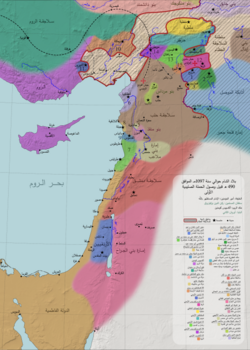
The First Crusade and the Fall of Antioch
The arrival of the Crusaders presented a new, existential threat. However, Ridwan's distrust of his rivals often outweighed his desire for a unified Muslim front. When the governor of Antioch, Yaghi-Siyan, pleaded for help against the advancing Crusaders, Ridwan provided minimal support, viewing the crisis as an opportunity to undermine his brother and other regional emirs.
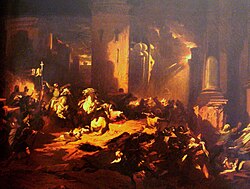
Ridwan eventually attempted to relieve Antioch, but his forces were defeated by Bohemond of Taranto at the Battle of the Lake of Antioch. This defeat paved the way for the Crusaders to capture Antioch in June 1098 and establish a principality. Following this, the Crusaders pushed further, surrounding Aleppo and defeating Ridwan again in July 1100.
Diplomacy through Tribute
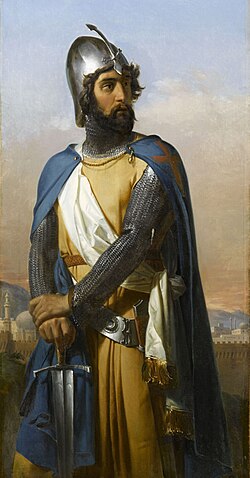
Recognizing his military limitations, Ridwan often attempted to buy peace. He entered into agreements with Tancred, the regent of Antioch, paying massive sums of gold and livestock to prevent the plundering of his lands. While this kept the Crusaders at bay temporarily, it earned Ridwan a reputation as a "rapacious miser" among his own subjects, as he taxed the population heavily to fund these tributes.
Later Alliances and Internal Unrest
Ridwan's later years were marked by shifting alliances. He occasionally cooperated with other Muslim leaders, such as Ilghazi, to defeat rivals like Kilij Arslan I of the Sultanate of Rum. He even formed a temporary, opportunistic alliance with Tancred in 1108 to defeat the emir of Mosul, Chavli Saqaveh.
However, his relationship with his people deteriorated. The imposition of a cross in the Great Mosque of Aleppo—a condition forced upon him by Tancred—triggered riots led by the Shia qadi Ibn al-Khashshab. Despite pleas from his citizens to join the larger Seljuk expeditions led by Sultan Muhammad I, Ridwan remained hesitant, often abandoning coalitions to buy separate pardons from the Crusaders.
Death and the Collapse of the Dynasty
Ridwan died on December 10, 1113. His death triggered immediate chaos in Aleppo, as suppressed factions led by Ibn al-Khashshab rose up to execute Ridwan's supporters, particularly the Isma'ilis (a sect often referred to as the Assassins) with whom Ridwan had collaborated.
His son, Alp Arslan (nicknamed al-Akhras, "The Mute"), inherited the throne but lacked his father's political instincts. Under pressure from the Seljuk Sultan and the local population, Alp Arslan purged the Isma'ilis in a series of massacres. However, his erratic behavior and the influence of his atabeg (military commander) Lu'lu' al-Yaya led to his own assassination in 1114. By 1118, the Seljuk dynasty's rule over Aleppo came to an end.
| Category | Details |
|---|---|
| Primary Title | Emir of Aleppo |
| Key Rival | Duqaq (Brother) |
| Major Defeats | Battle of the Lake of Antioch, Battle of Artah |
| Political Strategy | Tribute payments and opportunistic alliances |
| Successor | Alp Arslan al-Akhras |
Frequently Asked Questions
Who was Ridwan of Aleppo?
Ridwan was a Seljuk emir who ruled Aleppo from 1095 to 1113. He was the son of Tutush I and a key figure in the fragmented political landscape of Syria during the First Crusade.
Why did Ridwan struggle to defeat the Crusaders?
His efforts were severely hampered by a bitter rivalry with his brother, Duqaq. This internal division prevented a unified Muslim response, allowing the Crusaders to capture Antioch and threaten Aleppo.
What was Ridwan's relationship with the Isma'ilis?
Ridwan maintained a pragmatic and sometimes secret alliance with the Isma'ilis (Assassins) to maintain power and handle internal enemies, a policy that later led to violent purges under his son's reign.
How did Ridwan handle the threat from Tancred of Antioch?
Ridwan frequently used diplomacy and bribery, paying Tancred large amounts of gold and livestock in exchange for peace treaties to protect the environs of Aleppo.
What happened to Aleppo after Ridwan's death?
Aleppo fell into a period of instability and anarchy. His son Alp Arslan's brief and violent reign ended in assassination in 1114, and the Seljuk dynasty eventually lost control of the city by 1118.