Aleppo Monarchs: A History of Kings, Emirs, and Sultans
For millennia, the city of Aleppo has served as a pivotal seat of power in the Levant. From the late 3rd millennium BC through the Middle Ages, the city was governed by a succession of monarchs who held various titles—including kings, emirs, and sultans—reflecting the shifting political and cultural landscapes of Ancient Syria and the wider Islamic world.
Key Facts
- Earliest Rule: Governance began in the later half of the 3rd millennium BC with the kings of Armi and the Amorite dynasty of Yamhad.
- Dynastic Shifts: The city transitioned through various powers, including the Hittites, Mitanni, Hamdanids, Seljuqs, Zengids, and Ayyubids.
- The Mongol Turning Point: Muslim rule under the Ayyubid dynasty ended with the Mongol conquest in 1260.
- Mamluk Era: Following the Battle of Ain Jalut, Aleppo became a provincial capital under the Mamluk Sultanate.
Ancient Dynasties: Yamhad and the Hittites
The early history of Aleppo is dominated by the Yamhad (Amorite) dynasty. These rulers utilized the titles of "King" and "Great King." Notable figures included Sumu-Epuh (c. 1810–1780 BC) and Yarim-Lim I. During the reign of Abba-El I (1750–1720 BC), Hurrian influence became evident, as the king credited the Hurrian Goddess Hebat for his success.
By approximately 1650 BC, the Hittite king Hattusili I launched a series of campaigns against Aleppo. Although he eventually attacked the city during the reign of Hammurabi III, the campaign ended in defeat for the Hittites, and Hattusili I died around 1620 BC.
Following this period, the city fell under the control of Parshatatar of the Mitanni kingdom (1510–1490 BC), before eventually returning to Hittite influence under rulers such as Telepinus and Talmi-Sarruma.
The Medieval Era: Hamdanids to Seljuqs
In 945, the Hamdanid dynasty established the Emirate of Halab. This period was marked by the rule of Sayf al-Dawla (945–967), who established the city as a center of power.
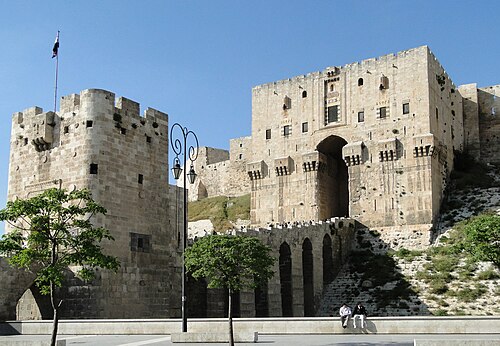
The Hamdanid era was interrupted by non-dynastic rulers and the Fatimid emirs before the Mirdasid dynasty took control in 1025. The Mirdasids experienced a volatile period of rule, with brothers Nasr and Thimal often competing for power or ruling jointly.
By 1086, the city transitioned into a sultanate under the Seljuq dynasty. During this time, Aleppo was occasionally governed in tandem with Damascus under a single sultan.
The Zengids and Ayyubids
The 12th century saw the rise of the Zengid emirs. Imad al-Din Zengi I took control in 1135, followed by his son Nur al-Din Mahmud (1146–1174). While formally subordinate to the Seljuq Sultans of Iraq, Nur al-Din operated independently as the Seljuq empire disintegrated after 1156.
The Zengid era ended on June 20, 1183, when Saladin (Al-Nasir Salah al-Din) expelled Zengi II and established the Ayyubid dynasty. The Ayyubids ruled until 1260, with the final sultan, Al-Nasir Yusuf II, overseeing a period that included a de facto regency by Dayfa Khatun from 1236 to 1242.
The Mamluk Sultanate
After the Mongol conquest of 1260, the Mamluk Sultan Qutuz defeated the Mongols at the Battle of Ain Jalut on September 3, 1260. Aleppo subsequently became the capital of a Mamluk province governed by a Na'ib (governor).
Some governors, such as Shams al-Din Aqosh and Sayf al-Din Jakam, attempted to declare independence. Sayf al-Din Jakam is particularly noted for his architectural contributions to the city's fortifications.
Summary of Major Ruling Eras
| Era/Dynasty | Approximate Period | Primary Titles | Key Transition/Event |
|---|---|---|---|
| Yamhad (Amorite) | c. 1810 BC – 1600 BC | King, Great King | Hittite attacks c. 1650 BC |
| Mitanni/Hittite | c. 1510 BC – 1200 BC | King, Viceroy | Conquest by Parshatatar (1510 BC) |
| Hamdanid | 945 – 1086 | Emir | Established by Sayf al-Dawla |
| Seljuq | 1086 – 1118 | Sultan | Occupied by Tutush in 1086 |
| Zengid | 1135 – 1183 | Atabeg, Emir | Ended by Saladin's entry in 1183 |
| Ayyubid | 1183 – 1260 | Sultan | Ended by Mongol conquest |
| Mamluk | 1260 – Late Middle Ages | Sultan, Na'ib | Victory at Ain Jalut (1260) |
Frequently Asked Questions
Who were the first known rulers of Aleppo?
The earliest recorded rulers were the kings of Armi, followed by the Amorite dynasty of Yamhad starting in the later half of the 3rd millennium BC.
What was the significance of the title "Great King"?
The title of Great King was specifically used by the rulers of the Yamhad dynasty to denote their high status and authority over the region.
How did the Mongol conquest affect Aleppo's rule?
The Mongol conquest in 1260 brought an end to the Muslim rule of the Ayyubid dynasty, leading to a period of transition before the Mamluks established control.
Who was the most prominent Hamdanid ruler?
Sayf al-Dawla (Ali I) was the founder of the Hamdanid Emirate of Halab, ruling from 945 to 967.
What role did the Mamluks play in Aleppo's history?
After defeating the Mongols at Ain Jalut, the Mamluks integrated Aleppo into their sultanate as a provincial capital governed by a Na'ib, though some governors later attempted to seize independent power.