Shaul Mofaz: A Political Journey Through Israel's Leadership
Shaul Mofaz transitioned from a distinguished military career to the highest echelons of Israeli governance, serving in critical roles during a period of significant regional volatility. His political trajectory is marked by shifts between major parties and a steadfast approach to national security.
Entry into Politics and Defense Leadership
Following a government crisis in 2002, Mofaz was appointed Defense Minister by Prime Minister Ariel Sharon. While he expressed support for reaching an agreement with the Palestinians, he maintained a hardline stance against militant groups, including Hamas, Islamic Jihad, Tanzim, and the Al-Aqsa Martyrs Brigades.
Due to his recent tenure as the IDF Chief of Staff, Mofaz was ineligible to participate in the 2003 elections. During this time, he joined Sharon's Likud party. Despite his absence from the ballot, Sharon reappointed him as Defense Minister in the subsequent government.
The Shift to Kadima
The mid-2000s saw a dramatic shift in Mofaz's party affiliation. On November 21, 2005, he initially rejected an invitation to join the newly formed Kadima party, announcing instead that he would run for the leadership of Likud. However, in a sudden reversal on December 11, 2005—just one day after pledging loyalty to Likud—he withdrew from the leadership race and joined Kadima.
Following the March 2006 elections, Mofaz transitioned from the Defense Ministry to lead the Transport ministry in the Cabinet installed on May 4, 2006.
The Struggle for Party Leadership
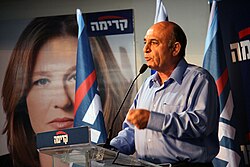
In 2008, as Prime Minister Ehud Olmert faced pressure to resign due to corruption charges, Mofaz sought the leadership of Kadima. He officially entered the race on August 5, 2008, receiving the blessing of Rabbi Ovadia Yosef, the spiritual leader of the Shas party.
The leadership election on September 17, 2008, resulted in a narrow defeat for Mofaz. Tzipi Livni won the leadership with 43.1% of the vote (16,936 votes) compared to Mofaz's 42.0% (16,505 votes). Other candidates included Interior Minister Meir Sheetrit (8.5%) and Public Security Minister Avi Dichter (6.5%). Despite advice from his lawyer, Yehuda Weinstein, to appeal the result, Mofaz accepted the outcome and congratulated Livni.
Kadima Leadership and National Unity
Mofaz remained a prominent figure in Kadima, placing second on the party list for the 2009 elections. Although he retained his seat in the Knesset (the Israeli parliament), he lost his cabinet position when Likud formed the government.
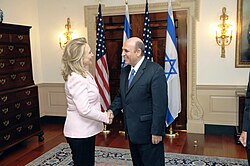
On March 27, 2012, Mofaz successfully won the Kadima leadership primaries in a landslide victory over Tzipi Livni. Despite previous assertions that he would not serve under Binyamin Netanyahu, Mofaz became Vice Prime Minister as part of a national unity government deal.
Political Decline and Retirement
Mofaz's tenure in the coalition was short-lived. He eventually led Kadima to withdraw from the government over Netanyahu's indecision regarding a draft reform law, warning that the Prime Minister's actions could lead the region toward war.
The decline of Kadima became evident in 2013 when the party, which had been the ruling party only four years prior, received only 2% of the vote, barely meeting the electoral threshold. By the 2015 elections, the threshold was raised to 3.25%, making Kadima's survival unlikely.
Mofaz attempted to negotiate a place on the Zionist Union alliance slate. However, negotiations collapsed when it became clear he would not be the candidate for Defense Minister. Shortly after, Amos Yadlin, the former head of Military Intelligence, was appointed to that role. Within a week of these failed negotiations, Shaul Mofaz announced his retirement from politics.
Key Facts
- Highest Offices: Served as Defense Minister, Transport Minister, and Vice Prime Minister.
- Party Affiliations: Member of Likud and later a leader of Kadima.
- 2008 Election: Lost the Kadima leadership to Tzipi Livni by a narrow margin of 431 votes.
- 2012 Victory: Won the Kadima leadership in a landslide victory.
- Retirement: Retired from politics shortly before the 2015 elections.
| Year | Event/Role | Key Detail |
|---|---|---|
| 2002 | Defense Minister | Appointed by Ariel Sharon |
| 2005 | Party Switch | Left Likud to join Kadima |
| 2006 | Transport Minister | Appointed to the new Cabinet on May 4 |
| 2008 | Leadership Race | Lost to Tzipi Livni (42% vs 43.1%) |
| 2012 | Kadima Leader | Won primaries; became Vice Prime Minister |
| 2015 | Retirement | Exited politics after failed Zionist Union talks |
Frequently Asked Questions
Why was Shaul Mofaz unable to run in the 2003 election?
He had only recently stepped down from his position as the IDF Chief of Staff, which prevented his participation in that specific election cycle.
How close was the 2008 Kadima leadership race?
The race was extremely tight; Tzipi Livni won with 16,936 votes (43.1%) while Shaul Mofaz received 16,505 votes (42.0%), a difference of only 431 votes.
Why did Kadima withdraw from the government coalition under Netanyahu?
Mofaz led the withdrawal due to Prime Minister Netanyahu's indecision regarding a draft reform law and concerns that the government's direction could lead to war.
What led to Shaul Mofaz's final retirement from politics?
After Kadima's popularity plummeted to 2% in 2013, Mofaz tried to join the Zionist Union alliance. When he was not selected as their candidate for Defense Minister, he decided to retire.