Sabra and Shatila Massacre: The 1982 Tragedy in Beirut
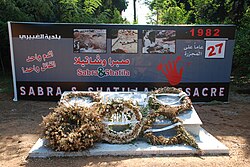
Between September 16 and 18, 1982, one of the darkest chapters of the Lebanese Civil War unfolded in the Sabra neighborhood and the adjacent Shatila refugee camp in Beirut. In a genocidal massacre that shocked the international community, between 1,300 and 3,500 civilians—predominantly Palestinians and Lebanese Shias—were murdered. The killings were carried out by the Lebanese Forces, a primary Christian militia, with the support of the Israel Defense Forces (IDF).
The events were the culmination of a volatile period of conflict involving the Palestine Liberation Organization (PLO), the Israeli military, and various Lebanese factions, occurring against the backdrop of the 1982 Lebanon War.
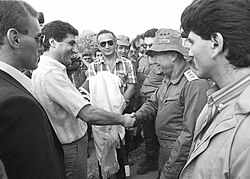
Key Facts
- Date: September 16–18, 1982.
- Location: Sabra neighborhood and Shatila refugee camp, Beirut, Lebanon.
- Death Toll: Estimated between 1,300 and 3,500+ victims.
- Primary Victims: Palestinians and Lebanese Shias.
- Perpetrators: Lebanese Forces and the South Lebanon Army (SLA), supported by the Israel Defense Forces (IDF).
- Immediate Trigger: The assassination of Lebanese President-elect Bachir Gemayel.
The Road to Tragedy: Background and Context
In June 1982, Israel invaded Lebanon with the primary goal of eradicating the Palestine Liberation Organization (PLO), a political and paramilitary organization. By August 30, 1982, the PLO withdrew from Lebanon under the supervision of a Multinational Force following intense battles in West Beirut.
The political landscape shifted violently on September 14, 1982, when Bachir Gemayel, the Lebanese president-elect and commander-in-chief of the Lebanese Christian Forces, was assassinated by a militant from the Syrian Social Nationalist Party. This assassination created a power vacuum that the Israeli military quickly filled.
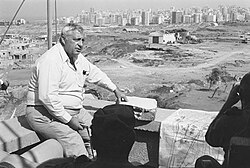
The Israeli Advance into West Beirut
Following Gemayel's death, Israeli Prime Minister Menachem Begin, Defense Minister Ariel Sharon, and Chief of Staff Rafael Eitan agreed to move the Israeli army into West Beirut. While the public justification was to prevent chaos, internal discussions revealed a strategy to utilize the Phalange (Lebanese Forces) to handle the Palestinian refugee camps rather than using the IDF directly. This move violated existing ceasefire agreements and a specific agreement with the United States not to occupy West Beirut.
The Massacre: Execution and Intelligence Failures
On September 16, units of the Lebanese Forces entered Sabra and Shatila. During the operation, the Israeli army provided support by firing flares into the sky throughout the night to illuminate the camps for the militiamen.
Reports of the slaughter reached Israeli intelligence almost immediately. An Israeli intelligence officer received a report at 20:00 regarding the detention of 45 people and a directive to "do the will of God," but failed to pass this information up the chain of command. Simultaneously, a Phalangist liaison officer informed several Israeli officers, including General Yaron, that 300 people, including civilians, had been killed. By 23:00, a report confirming the deaths of 300 civilians was sent to IDF headquarters in East Beirut and subsequently forwarded to Tel Aviv and Jerusalem.
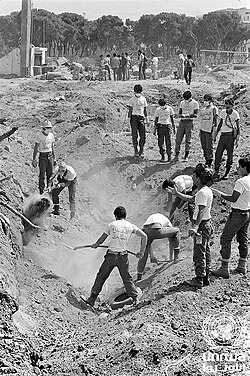
Despite these reports, the killings continued for two days. The victims were targeted based on anti-Palestinianism and Islamophobia, as well as a desire for reprisal following the false accusation that Palestinians were responsible for Bachir Gemayel's assassination.
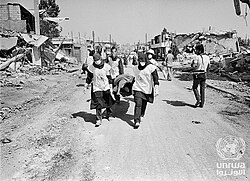
Aftermath and Legal Reckoning
The massacre drew immediate and severe international condemnation, including a resolution from the U.N. General Assembly. Within Israel, the event led to the creation of the Kahan Commission, an official inquiry that examined the responsibility of Israeli leadership.
| Category | Details |
|---|---|
| Primary Perpetrators | Lebanese Forces / South Lebanon Army |
| Supporting Force | Israel Defense Forces (IDF) |
| Estimated Deaths | 1,300 to 3,500+ |
| Key Israeli Figures | Ariel Sharon, Rafael Eitan, Menachem Begin |
| Key Lebanese Figure | Bachir Gemayel (Assassination triggered event) |
Legal attempts to hold Ariel Sharon accountable spanned decades. After his election as Israeli Prime Minister in 2001, relatives of the victims filed a lawsuit in Belgian courts. However, the case was dismissed in 2003 after Belgium tightened its jurisdictional requirements following diplomatic pressure from the United States.
Frequently Asked Questions
Who was responsible for the killings in Sabra and Shatila?
The actual killings were carried out by the Lebanese Forces (a Christian militia) and the South Lebanon Army. The Israel Defense Forces (IDF) provided support by occupying West Beirut and illuminating the camps with flares during the massacre.
What triggered the massacre?
The immediate trigger was the assassination of Lebanese President-elect Bachir Gemayel on September 14, 1982. The Lebanese Forces sought reprisal, falsely accusing Palestinians of the assassination.
How many people were killed?
Estimates vary, but it is generally accepted that between 1,300 and 3,500 civilians, mostly Palestinians and Lebanese Shias, were murdered.
What was the Kahan Commission?
The Kahan Commission was an Israeli commission of inquiry established to investigate the events at the refugee camps. It examined the role of Israeli officials and the failure to prevent the massacre despite receiving intelligence reports.
Why was the lawsuit in Belgium dismissed?
The lawsuit against Ariel Sharon was dismissed on September 24, 2003, because none of the plaintiffs held Belgian nationality, following a change in Belgium's jurisdictional laws prompted by U.S. diplomatic pressure.