Lebanese Forces
The Lebanese Forces (LF), known in Arabic as al-Quwwāt al-Lubnānīyah, is a prominent right-wing political party in Lebanon. Rooted in a complex history of military struggle and political transition, the party advocates for Lebanese nationalism, Christian democracy, and liberal conservatism. From its origins as a militia during the Lebanese Civil War to its current role as a significant parliamentary bloc, the LF has remained a central actor in the country's sectarian and political landscape.
Key Facts
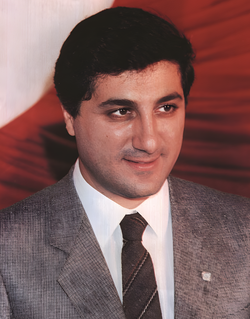
- Founder: Bachir Gemayel
- Current President: Samir Geagea
- Headquarters: Maarab, Lebanon
- Ideology: Lebanese nationalism, Christian democracy, and Liberal conservatism
- Parliamentary Bloc: Strong Republic (currently holding 19 of 128 seats)
- Membership: Approximately 50,000 members
- Affiliations: Regional partner of the European People's Party; formerly part of the March 14 Alliance (2005–2016)
Historical Origins and the Militia Era (1976–1990)
Founded in 1976, the Lebanese Forces began as a military organization. One of its most defining early engagements was the 1981 Battle of Zahle in the Beqaa Valley. Despite a significant mismatch in military capabilities, the LF, supported by local inhabitants and 92 Special Forces soldiers known as the Maghaweer, confronted Syrian occupying forces. The battle, which lasted from April 2 to July 1, 1981, ended in a ceasefire and was viewed as a diplomatic and military victory that strengthened the leadership of Bachir Gemayel.
Internal Power Struggles and the Elimination War
Following the departure of President Amine Gemayel in September 1988, Lebanon saw the rise of two rival governments. The Lebanese Forces initially supported General Michel Aoun, commander of the Lebanese Army. However, this alliance collapsed, leading to clashes on February 14, 1989. While the LF initially supported Aoun's "Liberation War" against Syria, they eventually agreed to the Taif Agreement in October 1989, which called for an immediate ceasefire.
Tensions peaked on January 31, 1990, sparking the "Elimination War" after Aoun's forces began arresting LF members. This conflict continued until Aoun's defeat and subsequent exile to France in August 1990, during which the LF captured several army barracks and encampments.
Transition to a Political Party (1990–Present)
After 1990, the organization transitioned toward political activity. However, the party faced severe repression under the Syrian-backed government. Samir Geagea refused several ministerial posts due to his opposition to Syrian interference, leading to a boycott of the 1992 general elections. In March 1994, the Lebanese government officially ordered the dissolution of the Lebanese Forces.
During this period, a clandestine group of LF elites known as SADEM allegedly conducted operations against Syrian military intelligence, a series of events that came to light following a failed operation in June 1998.
The Cedar Revolution and Rebuilding
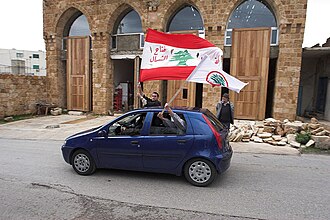
The political tide shifted with the Cedar Revolution. On July 18, 2005, Samir Geagea was released from prison after parliament amended the charges against him. The party began a comprehensive rebuilding process, reorganizing its membership, reopening political facilities, and seeking to reclaim privately funded assets and the Lebanese Broadcasting Corporation.
Modern Political Representation
In recent years, the LF has steadily increased its influence in the Lebanese Parliament. In the 2022 general elections, the party achieved its strongest result to date, securing 19 seats. The party has also been active in calling for international accountability, specifically requesting a United Nations-led investigation into the August 4, 2020, Beirut port explosion.
Party Overview and Governance
| Category | Details |
|---|---|
| Leadership | President: Samir Geagea; Vice-President: Georges Adwan |
| Secretary-General | Emile Moukarzel |
| Official Newspaper | Almassira |
| Parliamentary Strength | 19 / 128 seats (2022 Elections) |
| Cabinet Presence | 4 / 24 ministers (2025 Government) |
Legislative Focus
The party's parliamentary members have proposed several significant draft laws, including the abolition of the death penalty, the repeal of the "rape-marriage" law (Article 522), and the legalization of optional civil marriage in Lebanon.
Frequently Asked Questions
Who founded the Lebanese Forces?
The Lebanese Forces were founded by Bachir Gemayel in 1976.
What is the current political position of the LF?
The party is positioned as right-wing, adhering to ideologies of Lebanese nationalism, Christian democracy, and liberal conservatism.
How many seats does the LF hold in the current parliament?
Following the 2022 general elections, the Lebanese Forces hold 19 out of 128 seats in the Lebanese Parliament.
What was the "Elimination War"?
The Elimination War was a conflict that began on January 31, 1990, between the Lebanese Forces and the Lebanese Army under the command of General Michel Aoun.
What is the "Strong Republic"?
The Strong Republic is the name of the parliamentary bloc representing the Lebanese Forces in the Lebanese Parliament.