Shaizar: The Historic Fortress Town of the Orontes River
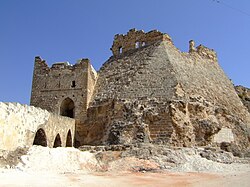
Perched strategically along the banks of the Orontes River in northern Syria, Shaizar (also known as Shayzar) is a town defined by its resilience and its role as a crossroads of civilizations. Located northwest of Hama in the Hama Governorate, this settlement has evolved from a Bronze Age outpost to a pivotal fortress during the Crusades, serving as a witness to the shifting tides of power between the Byzantine, Arab, and Crusader empires.
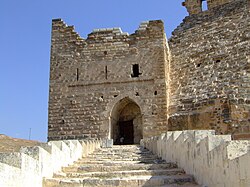
Today, the site is recognized for its imposing citadel and its rich literary legacy, most notably through the memoirs of the poet-knight Usama ibn Munqidh. With a population of 5,953 as of the 2004 census, the modern town continues to exist alongside the ruins of its storied past.
Key Facts
- Location: 28 km northwest of Hama, Syria, at a vital crossing of the Orontes River.
- Ancient Names: Known as Senzar/Sezar (Bronze Age), Larissa (Hellenistic), and Caesarea (Crusader period).
- Dynastic Rule: Ruled by the Banu Munqidh family from 1081 to 1157.
- Major Event: A catastrophic earthquake in 1157 collapsed the citadel, ending the Munqidhite dynasty.
- National Status: The citadel was declared a national monument in 1958.
The Evolution of a Name
The nomenclature of Shaizar reflects the diverse empires that claimed the region. In the 14th century BC, the Amarna letters refer to the site as Senzar or Sezar. During the Seleucid Empire, it was renamed Larissa, after the city in Thessaly, Greece, where many of the town's original colonists originated.
Under the Roman and Byzantine Empires, it reverted to names like Sezer. Interestingly, the Crusaders mistakenly called the city Caesarea, believing it to be the home of Saint Basil of Caesarea (Caesarea Mazaca), despite the actual city being a fifteen-day journey away. In modern Arabic, the ruins are referred to as Saijar.
Ancient and Classical Foundations
The Hellenistic and Roman Eras
According to the historian Diodorus Siculus, the town was established by a cavalry regiment from Thessaly under Alexander the Great. These colonists were rewarded with land for their bravery and established a reputation for horse breeding, eventually providing horsemen for the first agema (elite unit) of the Seleucid cavalry.
The Roman Empire took control of Syria in 64 BC under Pompey. Historical records from the Tabula Peutingeriana place the town (then Larisa) approximately 13 miles from Apamea and 14 miles from Epiphaneia.
Byzantine and Early Arab Transitions
The city remained a Christian center under the Byzantine Empire as Sezer. In 638, it fell to Arab forces, though it frequently changed hands between Arab and Byzantine control. By 999, after being captured by Basil II, it served as the southern border of the Byzantine Empire and was administered by the Bishop of Shaizar.
The Munqidhite Era (1081–1157)
The town entered its most famous period in 1081 when Ali ibn Munqidh purchased it from the Byzantine bishop. The Banu Munqidh family transformed Shaizar into a strategic powerhouse, navigating a complex web of alliances and conflicts with the neighboring Crusader states, specifically the Principality of Antioch and the County of Tripoli.
The fortress was famously besieged in 1111 by Tancred, Baldwin I of Jerusalem, and Bertrand of Tripoli. The siege failed after two weeks when the army of Mawdud of Mosul cut off the Crusaders' food and water supplies. Despite these conflicts, the Munqidhites were known as tolerant lords, fostering a community where Christians and Muslims coexisted peacefully.
The Legacy of Usama ibn Munqidh
The most enduring cultural contribution of this era is the Kitab al-I'tibar (Book of Learning by Example), written by Usama ibn Munqidh. A poet, knight, and diplomat, Usama provided a rare, detailed glimpse into 12th-century Muslim life and his interactions with the Crusaders, some of whom he considered friends.
The Great Earthquake of 1157
The Munqidhite dynasty came to a sudden and tragic end in 1157. A massive earthquake caused the citadel to collapse while the ruling family was gathered inside for a circumcision celebration. Nearly the entire family perished; the only survivors were the emir's wife and his nephew, Usama ibn Munqidh, who was away on a diplomatic mission. Following the disaster, Nur al-Din Zengi occupied the city to prevent it from falling into Christian hands.
Later History and Modern Status
Following the fall of the Munqidhites, Shaizar saw a succession of rulers. The Assassins briefly held the ruins before Nur ad-Din rebuilt the city. It was later taken by Saladin in 1174, sacked by the Khwarezmians in 1241, and eventually captured and rebuilt by the Mamluk sultan Baibars in 1260.
In 1958, the citadel was designated a national monument. To protect the archaeological integrity of the site, the remaining inhabitants were evacuated, leaving the citadel as a preserved historical landmark known as Qal’at Shayzar.
| Period | Name | Primary Influence/Ruler | Key Characteristic |
|---|---|---|---|
| Late Bronze Age | Senzar/Sezar | Local/Amarna Period | Early mentioned settlement |
| Hellenistic | Larissa | Seleucid Empire | Horse breeding and Greek colonists |
| Byzantine | Sezer | Byzantine Empire | Christian administration |
| Medieval (1081-1157) | Shaizar/Caesarea | Banu Munqidh | Fortress town during the Crusades |
| Post-1157 | Shaizar | Zengids, Ayyubids, Mamluks | Rebuilding after earthquakes |
Frequently Asked Questions
Why did the Crusaders call the town Caesarea?
The Crusaders mistakenly identified Shaizar as Caesarea Mazaca, the home of Saint Basil of Caesarea, despite the two locations being separated by a vast distance.
Who was Usama ibn Munqidh?
Usama ibn Munqidh was a member of the Banu Munqidh dynasty, a poet-knight, and diplomat. He is best known for his memoirs, the Kitab al-I'tibar, which describe life and diplomacy during the Crusades.
What caused the end of the Munqidhite rule in Shaizar?
The dynasty effectively ended in 1157 when a catastrophic earthquake collapsed the citadel, killing almost the entire ruling family.
Where is Shaizar located today?
Shaizar is located in the Hama Governorate of northern Syria, situated 28 km northwest of the city of Hama along the Orontes River.
What is the current status of the Shaizar citadel?
The citadel, known as Qal’at Shayzar, was declared a national monument in 1958 and is now an archaeological site preserved for historical study.