Saint George's Cross: History, Heraldry, and Global Influence
The Saint George's Cross—a bold red cross set against a stark white background—is one of the most recognizable symbols in global heraldry. While most commonly associated today with the national identity of England, its origins are woven into the complex tapestry of the Middle Ages, the Crusades, and the maritime power of Mediterranean city-states.
Originally linked to Saint George, a military saint often depicted as a crusader, this symbol evolved from a general marker of faith and warfare into a specific emblem of national and civic pride across Europe and beyond.

Key Facts

- Design: A red Greek cross extending to the edges of a white field.
- Primary Association: The national flag of England.
- Origins: Emerged in the 10th century; used by the Republic of Genoa before adoption by England.
- Patronage: Saint George is the patron saint of England, Georgia, and Catalonia.
- Global Reach: Appears in the flags of Georgia, Barcelona, and various naval ensigns worldwide.
Origins and Medieval Evolution

The association between the red cross and Saint George did not happen overnight. During the Third Crusade, Saint George was venerated as a warrior saint, with legends claiming he assisted figures like Godfrey of Bouillon and Richard the Lionheart. However, early accounts of the siege of Antioch in 1098 describe the saint's army bearing white banners, not red crosses.
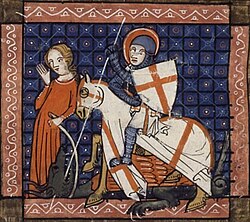
The red cross on white was specifically linked to the Knights Templar starting around 1145. By 1188, during the "Kings' Crusade," red and white crosses were used to distinguish French and English troops. By 1190, the plain red-on-white design became a general symbol for crusaders, adopted by various leaders and polities, including the Kingdom of Aragon, to signal their commitment to the holy wars.
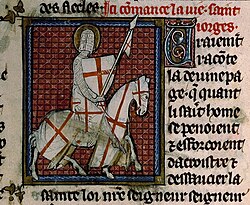
The Genoese Connection
The Republic of Genoa played a pivotal role in the symbol's history. Genovese annals from 1198 mention a vexillum beati Georgii (banner of Blessed George), and by 1218, the red cross was used as the insignia cruxata comunis Janue (cross ensign of the commune of Genoa). This maritime power helped spread the symbol across the Mediterranean.

The Flag of England
Adoption and Legend
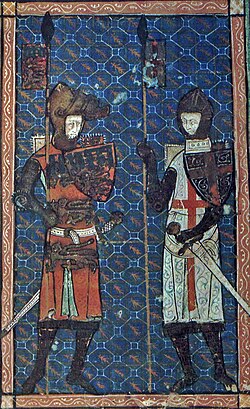
A long-standing tradition suggests that King Richard the Lionheart adopted the flag from Genoa during the Third Crusade (1189–1190) to protect English ships in the Mediterranean, paying an annual tribute to the Doge of Genoa for the privilege—a payment that reportedly continued until 1771.
However, historical evidence suggests a more gradual adoption. English soldiers used the red cross for identification as early as the 1260s, possibly during the Second Barons' War. Saint George's status as the patron saint of England solidified in 1348 when Edward III founded the Order of the Garter. By 1552, the Saint George's banner was the only saint's banner permitted to fly.

The Union Jack and Modern Use
Following the Union of the Crowns in 1603, the Saint George's Cross was combined with the Saint Andrew's Cross (Scotland) in 1606 to create the first Union Flag, primarily for maritime use. After the Acts of Union in 1707, this became the official flag of the Kingdom of Great Britain.

Today, the flag remains a potent symbol of English identity. While it is the rank flag of an Admiral in the Royal Navy (and generally forbidden for civilian use), it is flown by the Church of England and has seen a resurgence in popularity due to sporting events and political devolution in the UK.

Global and Derived Usage
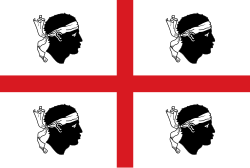
Beyond England, the Saint George's Cross appears in various forms across the globe:
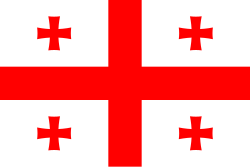
- Georgia: The national flag features the red cross with four smaller Jerusalem crosses, a design attributed to King George V in 1334.
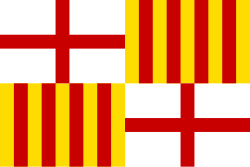
- Catalonia: The flag of Barcelona combines the cross with the red and yellow bars of the Senyera.
- Italy: The cross is found in the heraldry of several northern cities, including Genoa and Padua, and appears on the Italian naval jack.
- The Americas: It appears in the coat of arms of Alberta, Canada, and the flag of Worcester County, Maryland.
Summary of Regional Variations
| Region/Entity | Usage/Variation | Key Feature |
|---|---|---|
| England | National Flag | Plain red cross on white |
| Georgia | National Flag | Red cross with Jerusalem crosses |
| Barcelona | City Flag | Cross combined with Senyera bars |
| City of London | Civic Flag | Cross with a red sword in the canton |
| Sardinia/Corsica | Regional Flag | Cross with four Moor's heads |
Frequently Asked Questions


Is the Saint George's Cross the same as the George Cross?
No. The Saint George's Cross is a heraldic symbol and flag, whereas the George Cross is a high-level British medal awarded for bravery.
Did Richard the Lionheart bring the flag to England?
While tradition says he adopted it from Genoa in 1190 to protect his ships, some historians believe the red cross was used by English soldiers as early as the 1260s, before it was formally linked to Saint George.
Why does the flag of Georgia have smaller crosses?
The four smaller Jerusalem crosses were added by King George V of Georgia after he expelled the Mongols from the country in 1334.
Can civilians fly the Saint George's Cross in the UK?
While the plain red cross is widely flown as the flag of England, the specific version used as the rank flag of a Royal Navy Admiral is restricted and forbidden for civilian craft.
What is the significance of the sword on the City of London flag?
The red sword in the canton of the City of London's flag represents the sword used to behead Saint Paul, the patron saint of the city.