Liguria: The Maritime Heart of Northwest Italy
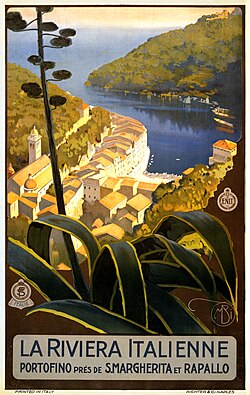
Nestled between the towering peaks of the Alps and the Apennines, Liguria is a slender, arched region in northwestern Italy that defines the essence of the Italian Riviera. Bordered by France to the west, Piedmont to the north, and Tuscany and Emilia-Romagna to the east, this coastal territory is a land of dramatic contrasts, where steep mountains plunge directly into the turquoise waters of the Ligurian Sea.
From its capital, Genoa, to the picturesque villages of the coast, Liguria is more than just a tourist destination; it is a region with a deep-rooted maritime legacy that once shaped the trade and politics of the entire Mediterranean basin.
Key Facts
- Capital: Genoa
- Population: 1,511,988 (as of 2026)
- Geography: 65% mountainous and 35% hilly terrain.
- Economy: GDP of €58.959 billion (2024) with a high Human Development Index (HDI) of 0.901.
- Maritime Power: Home to the Port of Genoa, the busiest port in Italy.
- Unique Heritage: Contains the Balzi Rossi caves, representing one of the longest continuous human occupations of a single site in the world.
A Journey Through Time: From Prehistory to the Modern Era
Prehistoric and Roman Foundations
The human history of Liguria is exceptionally ancient. The Balzi Rossi caves provide evidence of human occupation stretching from the Middle Palaeolithic (300,000 years ago) through to the foundation of the city of Ventimiglia.
![The Balzi Rossi caves, located on a cliff about 100 meters high, show traces of human occupation from the Middle Palaeolithic (300,000 years) to the foundation of the ancient city of Ventimiglia in Liguria. This constitutes the longest human occupation in the world of a geographical site.[11]](/images/09/d4/09d4d02373bbcdb6eef48cbf881b0e514b320bf26ded6bd2e81ef73b351b57b5.jpg)
Archaeological finds, such as the burial of a 15-year-old adolescent known as the "young prince" from the Upper Palaeolithic (29,000 years ago), reveal complex early rituals involving red ocher and decorative shell beads.
![Burial of an adolescent from the Upper Palaeolithic (29,000 years), having led archaeologists to nickname him the "young prince". About fifteen years old, he lay on his back on a layer of red ocher seven meters from the surface facing south, he wore a headgear decorated with shell beads and pierced deer teeth and squirrel tails on the thorax (Liguria region).[12]](/images/68/3f/683fe8d1c832a814f73a16cc3951aa510439d5fb347f428f23af9ece03ac8339.jpg)
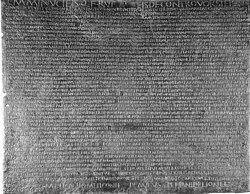
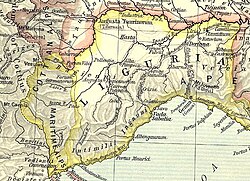
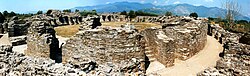
During the Roman era, the region was organized as Regio IX Liguria. Evidence of this period survives in artifacts like the Polcevera bronze tablet and architectural remains such as the 1st-century AD Roman amphitheatre of Luni.
The Rise of the Republic of Genoa
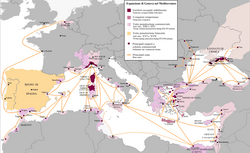
Following a period of domination by the Byzantines, Lombards, and Franks between the 4th and 10th centuries, Liguria transitioned into a system of city-states. By the 11th century, the Republic of Genoa emerged as a dominant maritime power. Leveraging its naval strength during the first crusade and dominating the spice trade with the Orient, Genoa became one of the most powerful entities in the Mediterranean.
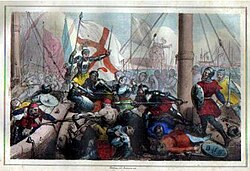
A pivotal moment occurred in 1284 at the Battle of Meloria, which granted Genoa control over the Tyrrhenian Sea and expanded its influence as far as the Black Sea and Crimea.
The Path to Italian Unification
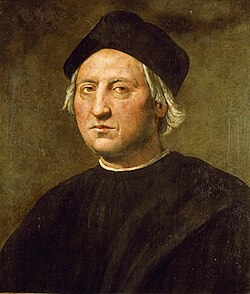
The early modern period saw the rise of influential figures like Christopher Columbus, the Genoese explorer whose 1492 voyages opened sustained contact between Europe and the Americas.
By the 19th century, Liguria became a crucible for the Risorgimento (the movement for Italian unification). Figures such as Giuseppe Mazzini and Nino Bixio were born here, and General Giuseppe Garibaldi launched his famous Expedition of the Thousand from Quarto, a district of Genoa, in 1860.
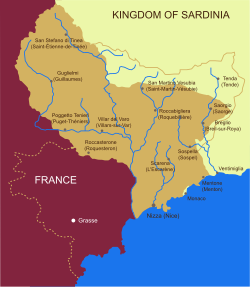
Geography and Demographics
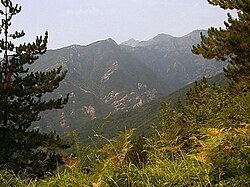
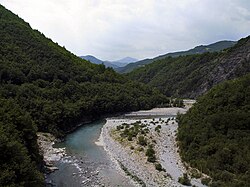
Liguria's landscape is defined by its ruggedness. The region extends from Ventimiglia to La Spezia, with 3,524.08 km of mountainous terrain and 891.95 km of hills. To protect this biodiversity, 12% of the land is designated as natural reserves, including one national reserve and several large parks.
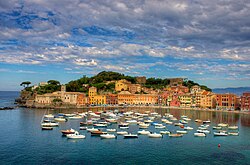
The population is heavily concentrated along the coast, where over 80% of residents live. This high density is most evident in the Metropolitan City of Genoa, which reaches nearly 500 inhabitants per km². The four primary urban centers are Genoa, La Spezia, Savona, and Sanremo.
Economy, Infrastructure, and Culture
Maritime Trade and Transport
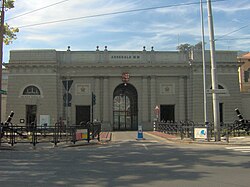
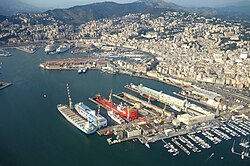
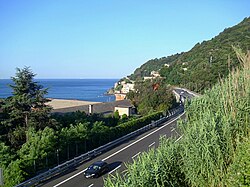
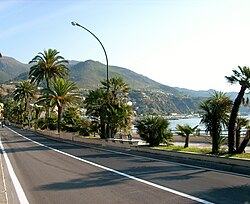
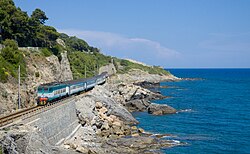
The economy is heavily driven by logistics and tourism. The Port of Genoa is the primary maritime hub of Italy, handling massive volumes of cargo and serving as a gateway to Sicily, Sardinia, Corsica, and Spain. The region is also well-connected by a network of motorways (including the A7, A10, A12, A15, and A26) and the historic Via Aurelia, an ancient Roman road.
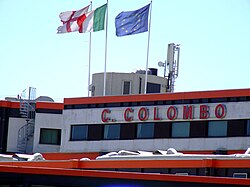
For air travel, the Genoa Cristoforo Colombo Airport is a unique engineering feat, built on an artificial peninsula to overcome the region's mountainous constraints.
Cultural Heritage and Tourism
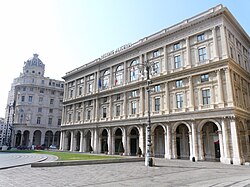
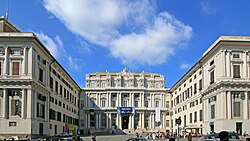
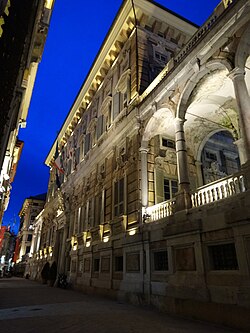
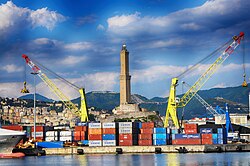
Liguria is world-renowned for its architecture and art. The Palazzi dei Rolli in Genoa, including Palazzo Doria Tursi, are recognized as World Heritage Sites. The region's skyline is further defined by the Lighthouse of Genoa (La Lanterna), the fourth oldest lighthouse in the world.
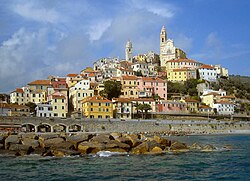
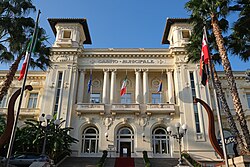
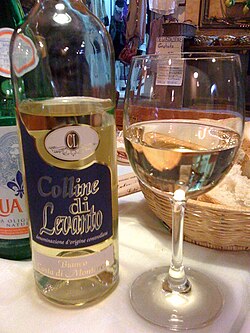
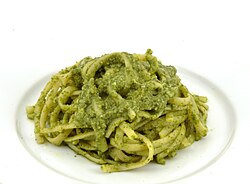
Visitors are often drawn to the "borghi" (historic villages) such as Cervo and the luxury of the Sanremo Casino. The region's culinary identity is equally famous, characterized by Linguine with pesto and the Colline di Levanto DOC white wines.
Sports and Leisure
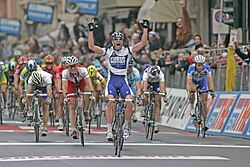
Liguria hosts prestigious sporting events, most notably the Milan–San Remo, the longest professional one-day cycling race in the world. The region is also known for the Rallye Sanremo, a historic rally competition that was part of the FIA World Rally Championship for decades.
Regional Overview
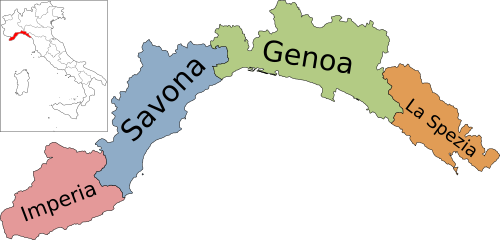
The following table provides a summary of the administrative divisions within Liguria.
| Province | Population | Area (km²) | Density (inh./km²) | Municipalities |
|---|---|---|---|---|
| Metropolitan City of Genoa | 820,691 | 1,833.79 | 447.5 | 67 |
| Province of Imperia | 209,848 | 1,154.78 | 181.7 | 66 |
| Province of La Spezia | 214,539 | 881.35 | 243.4 | 32 |
| Province of Savona | 266,910 | 1,546.29 | 172.6 | 69 |
Frequently Asked Questions
What is the significance of the Balzi Rossi caves?
The Balzi Rossi caves are globally significant because they show traces of human occupation from the Middle Palaeolithic (300,000 years ago) up to the foundation of Ventimiglia, marking the longest human occupation of a single geographical site in the world.
Why is the Port of Genoa important?
The Port of Genoa is the busiest port in Italy and a critical hub for Mediterranean trade, handling approximately 58.6 million tonnes of trade volume and serving as a primary link to islands like Sicily, Sardinia, and Corsica.
What is the Milan–San Remo race?
The Milan–San Remo is an annual professional road cycling race known as "The Spring Classic." Spanning 298 km, it is the longest professional one-day race in modern cycling and one of the five prestigious "Monuments" of the sport.
How is the population distributed in Liguria?
The population is highly concentrated along the coast, with over 80% of residents living in coastal areas. This results in a population density (279.2 inhabitants per km²) that is significantly higher than the Italian national average.
What are the Palazzi dei Rolli?
The Palazzi dei Rolli are a system of magnificent palaces in Genoa, including the Palazzo Doria Tursi, which are recognized as a UNESCO World Heritage Site for their architectural and historical importance.