Set Theory: The Mathematical Foundation of Infinity and Logic
At its simplest level, set theory is the branch of mathematical logic that studies sets—informally described as collections of objects. While any type of object can be gathered into a set, the mathematical discipline focuses on those collections relevant to the broader landscape of mathematics. From the basic grouping of numbers to the complex study of different sizes of infinity, set theory provides the essential language and framework for modern mathematical thought.
Beyond its role as a tool for organization, set theory serves as a foundational system for nearly all of mathematics. It allows mathematicians to develop a rigorous theory of infinity and finds critical applications in fields as diverse as computer science (specifically relational algebra), philosophy, formal semantics, and evolutionary dynamics.
Key Facts
- Founder: Georg Cantor is widely recognized as the founder of set theory.
- Evolution: The field progressed from "naive set theory" to rigorous axiomatic systems like Zermelo–Fraenkel (ZF).
- Core Purpose: It provides a framework for understanding infinity and serves as a foundation for mathematical logic.
- Key Paradoxes: Early contradictions, such as Russell's paradox, necessitated the move toward formalized axioms.
- Modern Applications: Used extensively in relational algebra, topology, and the study of large cardinals.
The History of Set Theory
Early Foundations
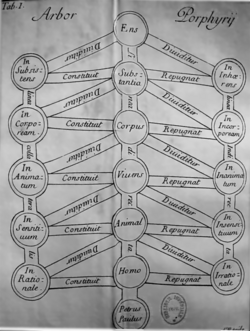
The development of set theory was driven by several 19th-century mathematicians. In 1854, Bernhard Riemann introduced ideas regarding topology and the concept of basing mathematics on manifolds (which he called Mannigfaltigkeit), now known as point-set topology. These ideas were later published by Richard Dedekind in 1868.
Riemann's work on trigonometric series and the Riemann integral sparked a movement in real analysis to study highly discontinuous functions. This environment led Georg Cantor to investigate point-sets, while Richard Dedekind began precisely defining equivalence relations, partitions of sets, and homomorphisms around 1871.
The Rise of Naive Set Theory
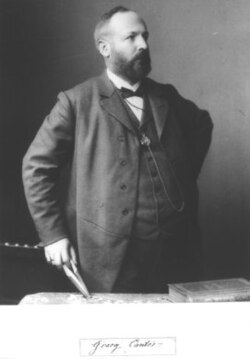
In the 1870s, Georg Cantor and Richard Dedekind initiated the modern study of the field. This early, non-formalized stage is known as naive set theory. During this period, Dedekind famously constructed real numbers using "Dedekind cuts" in 1872. Cantor also collaborated with Giuseppe Peano to develop the Peano axioms, which formalized natural-number arithmetic and introduced the epsilon symbol (ε) to denote set membership.
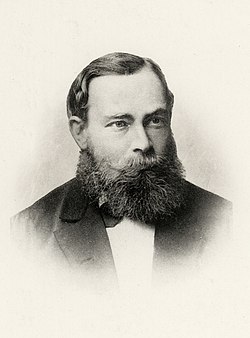
Other influential figures of this era included Gottlob Frege, who worked on the Foundations of Arithmetic, and later, Bertrand Russell, whose work highlighted critical flaws in the naive approach.

The Shift to Axiomatic Systems
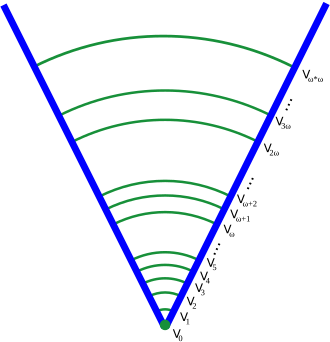
As naive set theory grew, mathematicians discovered inherent contradictions known as paradoxes. Notable examples include Russell's paradox (the set of all sets that do not contain themselves), Cantor's paradox, and the Burali-Forti paradox. To resolve these, the early twentieth century saw the proposal of various axiomatic systems.
The most prominent of these is Zermelo–Fraenkel set theory (ZF), often used with the axiom of choice (ZFC). These systems replace intuitive definitions with strict rules to prevent the formation of paradoxical sets.
Basic Concepts and Notation
To navigate set theory, one must understand the fundamental relations between collections of objects.
Subsets and Inclusion
A subset (or set inclusion) occurs when every member of set A is also a member of set B, denoted as A ⊆ B. For instance, {1, 2} is a subset of {1, 2, 3}. A proper subset is a set that is a subset of another but is not equal to it.
It is important to distinguish between members and subsets: in the set {1, 2, 3}, the number 1 is a member, but the set {1} is a subset. In more complex scenarios, such as the set {1, {1}}, the element {1} is both a member and a proper subset.
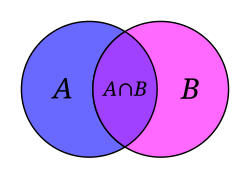
Union and Difference
- Union (A ∪ B): The set containing all objects that are members of A, or B, or both. For example, the union of {1, 2, 3} and {2, 3, 4} is {1, 2, 3, 4}.
- Set Difference (U &sbs; A): The set of all members of U that are not members of A. For example, {1, 2, 3} &sbs; {2, 3, 4} results in {1}.
- Complement: When A is a subset of U, the set difference U &sbs; A is called the complement of A in U.
Summary of Set Theory Frameworks
| Approach | Key Characteristics | Primary Goal/Outcome |
|---|---|---|
| Naive Set Theory | Informal, intuitive collections | Initial discovery of transfinite sets |
| Zermelo Set Theory | Uses axiom of separation | Elimination of early paradoxes |
| Zermelo-Fraenkel (ZF) | Rigorous axiomatic system | Standard foundation for mathematics |
| General Set Theory | Fragment of Zermelo theory | Sufficient for Peano axioms and finite sets |
Contemporary Research and Applications
Modern set theory is a vast field of research. Key areas of study include descriptive set theory, fuzzy set theory, and the study of large cardinals (the consistency of extremely large infinite sets). Researchers also explore forcing, determinacy, and inner model theory.
The field maintains strong ties to other mathematical disciplines, including combinatorial set theory, category theory, and set-theoretic topology.
Frequently Asked Questions
What is the difference between a member and a subset?
A member (or element) is an individual object contained within a set. A subset is a set itself that contains only elements found within another set. For example, in {1, 2}, the number 1 is a member, while {1} is a subset.
Why was naive set theory replaced by axiomatic set theory?
Naive set theory allowed for the creation of any collection based on a property, which led to logical contradictions called paradoxes, such as Russell's paradox. Axiomatic systems like Zermelo-Fraenkel were created to provide strict rules that prevent these contradictions.
Who is considered the founder of set theory?
Georg Cantor is commonly considered the founder of set theory, having initiated the modern study of the field in the 1870s alongside Richard Dedekind.
What is the Axiom of Choice?
The Axiom of Choice is a specific rule often added to Zermelo-Fraenkel set theory (forming ZFC) that allows for the selection of an element from each set in a collection of non-empty sets, even if no specific rule for selection is provided.
How is set theory used in computer science?
Set theory provides the theoretical framework for relational algebra, which is the basis for how relational databases organize and query data.