Lewis Carroll: The Polymath Behind Wonderland
Known to the world as Lewis Carroll, the man born Charles Lutwidge Dodgson was far more than the creator of a whimsical girl in a rabbit hole. He was a true Victorian polymath—a mathematician, logician, photographer, and poet whose work blended rigorous academic logic with the surreal beauty of fantasy. His ability to play with language and reason transformed children's literature and left an indelible mark on the English language.
Carroll's most enduring legacy lies in his mastery of literary nonsense, a genre that uses structured logic to create absurd situations. This duality defined his life: by day, he was a respected academic at Christ Church, Oxford; by night, he crafted worlds where cats vanished and playing cards held court.
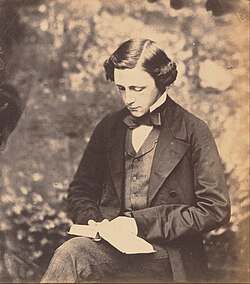
Key Facts
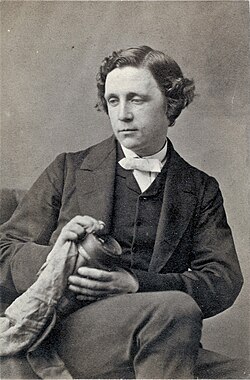
- Real Name: Charles Lutwidge Dodgson.
- Most Famous Works: Alice's Adventures in Wonderland (1865) and Through the Looking-Glass (1871).
- Academic Background: Educated at Rugby School and Christ Church, Oxford.
- Diverse Talents: Accomplished mathematician, photographer, inventor, and poet.
- Literary Contribution: Pioneer of the "word ladder" puzzle (Doublets) and the genre of literary nonsense.
The Literary World of Wonderland
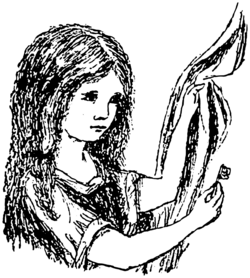
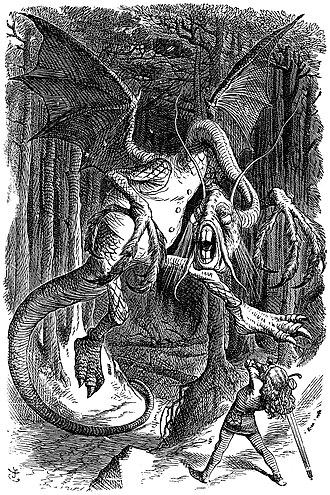
Carroll's literary fame is anchored by the Alice books. These stories are not merely children's tales but are deeply influenced by his professional work in mathematical logic. His facility with wordplay and paradoxes is most evident in the poem "Jabberwocky," which utilizes invented words to create a sense of meaning through structure alone.
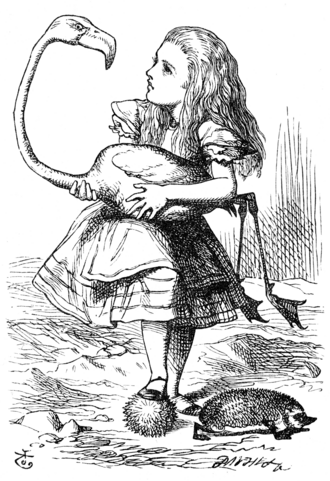
Beyond Alice, Carroll explored the boundaries of nonsense in The Hunting of the Snark (1876) and the narrative of Sylvie and Bruno. His writing often mirrored his fascination with the absurd, challenging the rigid social and intellectual conventions of the Victorian era.
Mathematics, Logic, and Invention
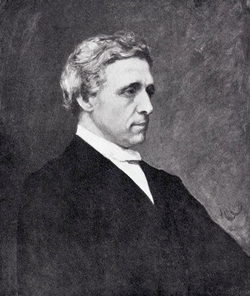
While the public remembers the author, the academic world remembers Charles Dodgson. He contributed significantly to linear algebra and voting theory. His mathematical works, such as The Fifth Book of Euclid Treated Algebraically, demonstrate a lifelong commitment to the precision of numbers.
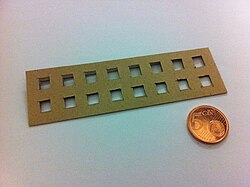
Carroll's curiosity extended to invention. He created the nyctograph, a device designed to enable writing in the dark, and developed "Doublets," a word ladder puzzle published in Vanity Fair between 1879 and 1881.
The Art of Photography
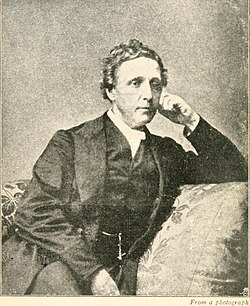
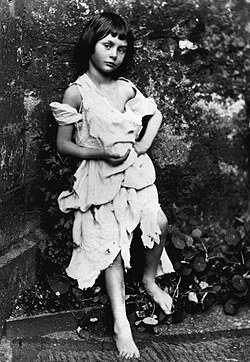
From 1856 to 1880, Carroll was an avid photographer. His portraits are noted for their technical skill and their depiction of Victorian childhood. He often photographed children, including Alice Liddell, who served as the inspiration for his most famous character.
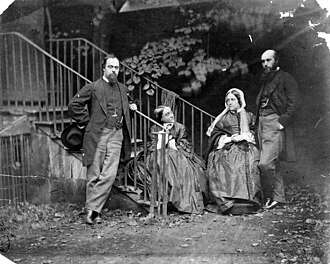
His photographic work was not limited to children; he also captured prominent figures of his time, including the Rossetti family. His approach to the medium was meticulous, sometimes providing specific instructions for the colorization of his prints.
Life and Legacy
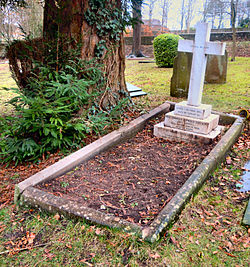
Born in Daresbury, Cheshire, and spending much of his adult life in Oxford, Dodgson lived a complex life. He was a reluctant Anglican deacon and struggled with health issues, including migraines and epilepsy. He passed away on January 14, 1898, at the age of 65, due to pneumonia following influenza.
Today, Carroll is commemorated globally. A memorial stone stands in Poets' Corner at Westminster Abbey, and his influence persists through numerous international societies dedicated to his work.
| Field | Key Contributions / Works | Notable Examples |
|---|---|---|
| Literature | Children's Fantasy & Nonsense | Alice's Adventures in Wonderland, Jabberwocky |
| Mathematics | Linear Algebra & Logic | Symbolic Logic, The Game of Logic |
| Photography | Victorian Portraiture | Portraits of Alice Liddell and the Rossettis |
| Invention | Puzzles & Writing Tools | Doublets (Word Ladders), Nyctograph |
Frequently Asked Questions
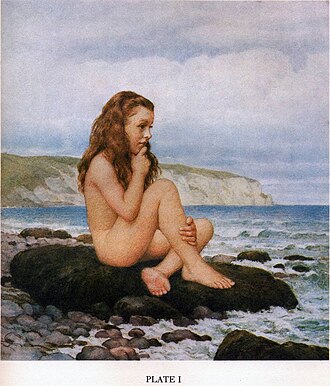
![Photograph showing a nude child from The Australasian, 1901. Pictures depicting childhood nudity were considered conventional during the Victorian era.[109]](/images/8d/28/8d28b824a5be66449942daf65a820c7ae2056e2766ba9692afeb187cbd423105.png)
What was Lewis Carroll's real name?
His birth name was Charles Lutwidge Dodgson. "Lewis Carroll" was the pen name he adopted for his literary works.
How did mathematics influence his writing?
Carroll's expertise in mathematical logic provided the foundation for the "nonsensical" logic found in the Alice books, where he used paradoxes and formal reasoning to create absurd scenarios.
What is a "word ladder" puzzle?
A word ladder, which Carroll called "Doublets," is a puzzle where one word is transformed into another by changing one letter at a time, with each intermediate step forming a valid word.
Where is Lewis Carroll buried?
He is interred at the Mount Cemetery in Guildford, Surrey, England.
Was he only a writer for children?
No. While famous for children's literature, he wrote extensively on mathematical logic, linear algebra, and parliamentary representation, and was a professional teacher and mathematician.