Second French Empire: The Era of Napoleon III
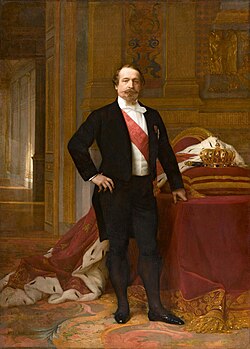
The Second French Empire, officially known as the French Empire, was the governing regime of France from 1852 to 1870. Established by Louis-Napoléon Bonaparte—the president of the French Second Republic who proclaimed himself Emperor Napoleon III—this period was marked by a dramatic transition from authoritarian rule to a modernizing constitutional monarchy.
While early historians often viewed the regime as a precursor to fascism, modern scholarship recognizes it as a pivotal era of modernization. The Empire left an indelible mark on the French landscape, transforming the economy and redefining the capital city of Paris into the global center of elegance and urban planning it is today.
Key Facts
- Duration: 1852 to 1870.
- Founder: Napoleon III (Louis-Napoléon Bonaparte).
- Major Urban Project: The extensive renovation of Paris with broad boulevards and public buildings.
- Colonial Expansion: Tripled the area of overseas territories, reaching nearly one million square kilometers by 1870.
- Political Evolution: Shifted from a dictatorship to a constitutional monarchy by 1870.
- Downfall: Ended following the Franco-Prussian War and the proclamation of the Third Republic.
The Rise of the Empire
The Coup of 1851
The path to empire began on December 2, 1851, when Louis-Napoléon Bonaparte staged a coup d'état (a sudden, violent seizure of power). By dissolving the National Assembly without constitutional authority, he became the sole ruler of France. To legitimize his power, he re-established universal male suffrage and held a referendum that reportedly garnered 92 percent support.
Establishing the Imperial Throne
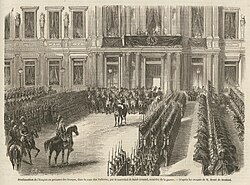
Following a new constitution in January 1852, which concentrated governing power in the presidency, Louis-Napoléon sought the title of Emperor. A second referendum in November passed with 97 percent support, leading to the official proclamation of the Empire on December 2, 1852.
Domestic Transformation and Liberalization
Urban Renewal and Infrastructure
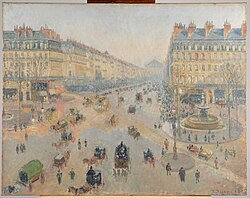
One of the most enduring legacies of the Second Empire was the modernization of France's infrastructure. The regime developed a national railway network that boosted commerce and fostered a shared national identity. Most notably, Napoleon III and Baron Haussmann undertook a massive renovation of Paris, replacing cramped medieval streets with wide boulevards and centrally planned layouts.
Political Evolution
The regime's governance evolved significantly over two decades. Initially a dictatorship where the Emperor held all executive power, the government began to liberalize after 1858. By 1860, the press gained the right to report on parliamentary debates. Facing pressure from the working classes and a series of strikes, Napoleon III eventually transitioned the state toward a parliamentary monarchy. By January 1870, Émile Ollivier headed the first responsible ministry under a more democratic framework.
Foreign Policy and Global Ambitions
The Overseas Empire
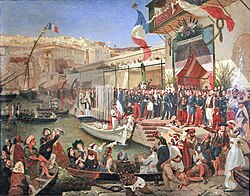
Napoleon III aggressively expanded France's global footprint, doubling the area of the overseas empire. Key achievements included establishing rule in New Caledonia and Cochinchina, and creating a protectorate in Cambodia in 1863. France also intervened in China during the Second Opium War and the Taiping Rebellion.
Military Modernization
To support these ambitions, the Emperor modernized the French Navy, building powerful screw steamers and troop transports, making it the second most powerful navy in the world. He also expanded elite colonial forces, including the Zouaves (light infantry), Chasseurs d'Afrique, and the Foreign Legion.
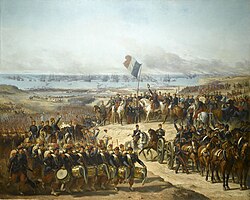
Despite the success of the Mission civilisatrice (the mission to spread French culture and language), the financial costs of these colonial ventures often outweighed the trade profits.
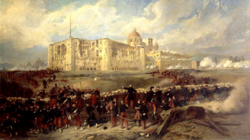
The Fall of the Empire
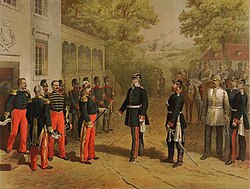
The Second Empire came to an abrupt end due to the Franco-Prussian War, which began in July 1870. The conflict culminated in a decisive defeat for France. Napoleon III was captured and surrendered after the Battle of Sedan on September 1, 1870. Shortly thereafter, on September 4, the Third Republic was proclaimed, ending the imperial era.
Empire Summary
| Category | Details |
|---|---|
| Government Type | Dictatorship $\rightarrow$ Constitutional Monarchy |
| Head of State | Napoleon III |
| Capital | Paris |
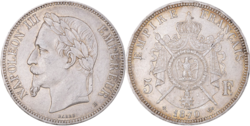
| Currency | French franc |
| Key Achievements | Parisian urban renewal, National railway network |
| Major Conflict | Franco-Prussian War |
Frequently Asked Questions
How did Napoleon III come to power?
Louis-Napoléon Bonaparte was first elected President of the Second Republic in 1848. He later seized absolute power through a coup d'état on December 2, 1851, and subsequently established the Empire via popular referendums.
What was the 'Mission civilisatrice'?
The Mission civilisatrice was the French imperial policy aimed at spreading French culture, language, and religion to the people of its overseas colonies.
How did the government change between 1852 and 1870?
The regime began as an authoritarian dictatorship where the Emperor held all executive power. Over time, it liberalized, granting more rights to the press and parliament, eventually becoming a constitutional monarchy by 1870.
What happened to the Empire after the Battle of Sedan?
Following the surrender of Napoleon III at the Battle of Sedan on September 1, 1870, the Empire collapsed, and the French Third Republic was proclaimed on September 4, 1870.
What were the most significant domestic achievements of the era?
The most significant achievements were the extensive modernization of Paris—characterized by the creation of wide boulevards—and the development of a comprehensive national railway network.