Seabed Structure, Composition, and Environmental Challenges
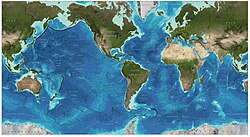
The seabed, also referred to as the seafloor or ocean bottom, constitutes the lowest boundary of the world's oceans. Far from being a flat, featureless expanse, the seabed is a complex geological and biological landscape shaped by the relentless forces of plate tectonics and the accumulation of organic and inorganic materials over millions of years.
From the shallow waters bordering continents to the crushing depths of oceanic trenches, the seabed provides a critical habitat for a vast array of life and holds significant mineral wealth that has recently drawn global industrial interest.
Key Facts
- Plate Tectonics: The primary driver of seabed structure, creating mid-ocean ridges and abyssal plains.
- Biodiversity: The benthic zone supports over one million species, far exceeding the diversity of the pelagic (open water) zone.
- Sediment Types: Seafloor materials are classified by origin as terrigenous, biogenous, hydrogenous, or cosmogenous.
- Depth Extremes: The hadal zone represents the deepest part of the ocean, reaching depths between 6,000 and 11,000 meters.
- Human Impact: Bottom trawling and microplastic pollution pose significant threats to seabed ecosystems.
Geological Structure and Topography
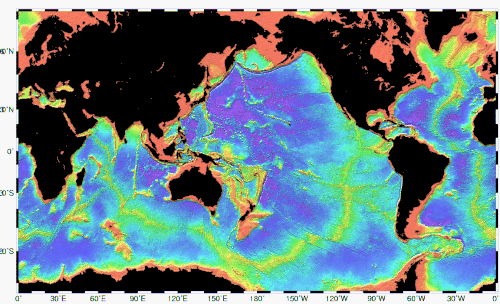
The architecture of the ocean floor is governed by the movement of Earth's lithosphere. Most of the ocean consists of the abyssal plain, a deep, flat region. In the center of major ocean basins, seafloor spreading creates mid-ocean ridges, which are slightly shallower than the surrounding plains.
As the seabed approaches landmasses, it transitions through three distinct stages: the continental rise, the continental slope, and finally the continental shelf, which is the shallowest region closest to the shore.
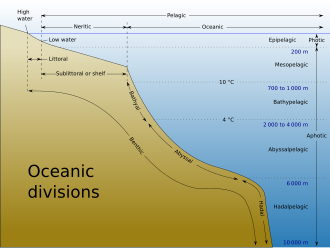
Oceanic Zones by Depth
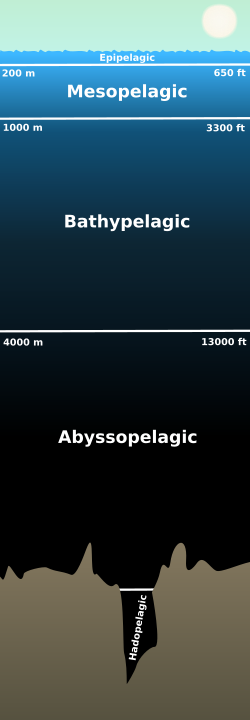
Deep ocean water is categorized into layers based on salinity, pressure, temperature, and the types of marine life they support. The abyssal zone extends down to approximately 6,000 meters (20,000 ft). Below this lies the hadal zone, which encompasses the deepest oceanic trenches, reaching depths of up to 11,000 meters (36,000 ft).
Marine Sediments
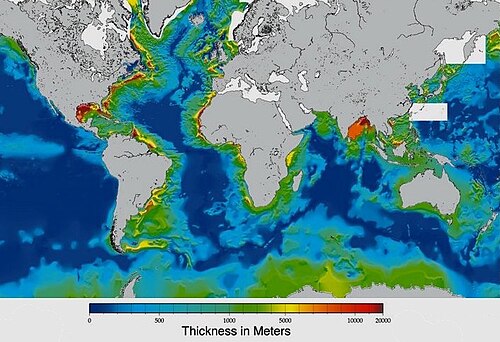
The majority of the seabed is covered in layers of marine sediments. These are categorized by their origin:
- Terrigenous: Derived from land-based sources.
- Biogenous: Produced by biological organisms.
- Hydrogenous: Formed through chemical reactions in the water.
- Cosmogenous: Originating from outer space.
Biogenous Sediments and Oozes
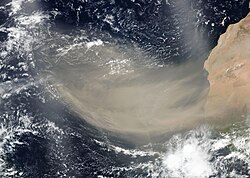
Biogenous sediments are highly abundant and are termed oozes when they consist of at least 30% biological material. These are further divided into two types based on the shells of plankton:
- Calcareous Oozes: Composed of calcium shells from coccolithophores (phytoplankton) and foraminiferans (zooplankton). These are typically not found deeper than 4,000 to 5,000 meters, as calcium dissolves at greater depths.
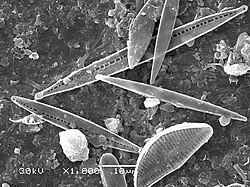
- Siliceous Oozes: Dominated by the silicate shells of diatoms (phytoplankton) and radiolarians (zooplankton).
Chemical and Physical Classifications
Hydrogenous sediments result from chemical precipitates, often seen around hydrothermal vents where mineral-rich fluids react with seawater.
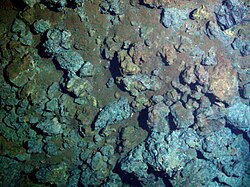
Physically, sediments are classified by grain size, ranging from fine mud (clays and silts) to larger particles such as sand, gravel, and boulders.
![Sediment types from the Southern Ocean showing many different grain sizes: A) gravel and sand, B) gravel, C) bioturbated mud and sand, and D) laminated clays and silts.[10]](/images/55/72/55728897ca35ccdcab6edd2a5abde5882e7257923c5b608876e91bc345d5ecd1.jpg)
The Benthos: Life on the Ocean Floor
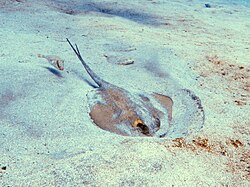
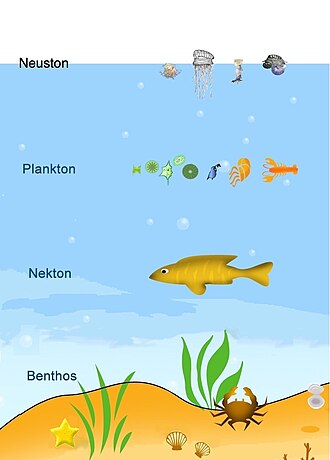
The benthos refers to the community of organisms living on or within the seabed. Unlike the relatively uniform pelagic zone, the benthic zone offers diverse habitats. Soft sediments like mud and sand provide refuge for burrowing animals, while hard, rocky substrates allow sessile species—such as oysters and barnacles—to attach themselves.
This environmental diversity has led to an explosion of species; the number of benthic animal species exceeds one million, vastly outweighing the number of pelagic species.
Human Impact and Exploration
Plastic Pollution
Recent scientific estimates suggest the seabed has become a sink for human waste. A 2020 study off the Australian coast estimated that approximately 14 million tons of microplastics reside on the global seafloor, with concentrations correlating to surface plastic levels and the slope of the seabed.
Bottom Trawling
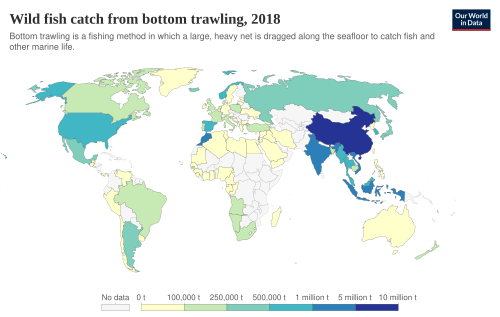
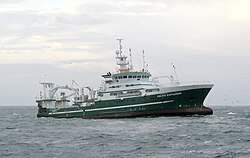
Bottom trawling involves towing heavy nets along the seafloor to catch fish. With a global catch exceeding 30 million tonnes per year, it is the most productive yet environmentally damaging fishing method. Beyond habitat destruction, a 2021 study estimated that this practice could release between 600 and 1,500 million tons of carbon dioxide annually by disturbing seabed carbon stores, though these figures remain debated.
Deep Sea Mining
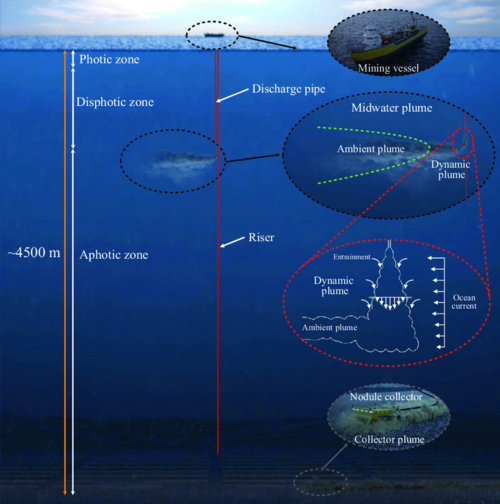
Industrial interest is currently focused on polymetallic nodules—mineral concretions found 4–6 km deep on the abyssal plain. These nodules contain copper, nickel, cobalt, and manganese. The Clarion–Clipperton zone (CCZ) alone is estimated to hold over 21 billion metric tons of these nodules.
The International Seabed Authority (ISA) regulates these activities in international waters. While 31 exploration licenses have been issued as of July 2024, commercial-scale mining has not yet begun.
Seafloor Distribution Summary
| Depth Range (meters) | Seafloor Area (km²) | Seafloor Percentage |
|---|---|---|
| 0 – 200 | 26,402,000 | 7.30% |
| 201 – 1,000 | 15,848,000 | 4.38% |
| 1,001 – 4,000 | 127,423,000 | 35.22% |
| 4,001 – 6,000 | 188,395,000 | 52.08% |
| 6,001 – 7,000 | 3,207,000 | 0.89% |
| 7,001 – 8,000 | 320,000 | 0.09% |
| 8,001 – 9,000 | 111,000 | 0.03% |
| 9,000 – 10,000 | 37,000 | 0.01% |
| 10,000+ | 2,000 | < 0.01% |
Frequently Asked Questions
What is the difference between the abyssal and hadal zones?
The abyssal zone is the vast, deep plain of the ocean floor extending down to about 6,000 meters. The hadal zone refers to the deepest regions, specifically the oceanic trenches, which range from 6,000 to 11,000 meters.
What are "oozes" in marine science?
Oozes are biogenous sediments composed of at least 30% biological material, typically the remains of plankton shells. They are classified as calcareous (calcium-based) or siliceous (silica-based).
Why are calcareous oozes not found in the deepest parts of the ocean?
Calcareous oozes are generally not found deeper than 4,000 to 5,000 meters because the calcium carbonate in the shells dissolves at the higher pressures and lower temperatures found at those depths.
How does bottom trawling affect the environment?
Bottom trawling physically disrupts the seabed habitat and may release significant amounts of stored carbon dioxide into the water column, though the exact volume of these emissions is a subject of scientific debate.
What are polymetallic nodules and why are they valuable?
Polymetallic nodules are mineral concretions found on the abyssal plain. They are commercially valuable because they contain high concentrations of cobalt, nickel, copper, and manganese.