Aquatic Animals: Biology, Ecology, and Global Economic Impact
An aquatic animal is any vertebrate or invertebrate that spends all or most of its life in a body of water. These creatures inhabit a vast range of environments, from the depths of the open ocean to the smallest freshwater streams. Because they occupy such diverse habitats, aquatic animals have evolved a wide array of biological adaptations to survive, breathe, and reproduce in water.
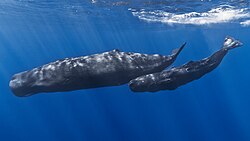
While many aquatic animals are born and remain in the water, others are secondarily aquatic. This means they evolved from terrestrial ancestors and re-adapted to water, such as marine mammals and reptiles. These animals maintain lungs and must surface to breathe air, essentially holding their breath while submerged.
Key Facts
- Respiration: Most aquatic animals use gills to extract dissolved oxygen, though some use their skin or lungs.
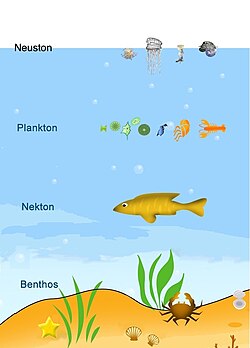
- Ecological Groups: Animals are categorized as planktons (drifters), nektons (swimmers), or benthos (bottom-dwellers).
- Economic Scale: Global aquaculture produced 103 million tonnes of aquatic animals in 2024.
- Human Nutrition: Aquatic animal foods provide 15% of global animal protein availability.
- Environmental Role: They serve as critical indicator species for water quality and climate change.
Biological Adaptations and Diversity
Aquatic animals are a polyphyletic group, meaning they do not share a single common ancestor but have developed similar traits through convergent evolution—the process where unrelated species evolve similar features to solve the same environmental challenges.
Respiration and Metabolism
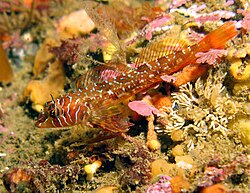
Most species utilize specialized respiratory organs called gills. However, some gastropod molluscs, such as the eastern emerald sea slug, can perform kleptoplastic photosynthesis through endosymbiosis with ingested yellow-green algae. Other animals, like certain octopuses, use cutaneous respiration (breathing through the skin) to survive briefly in intertidal zones.
Life Cycles and Metamorphosis
Reproduction typically occurs in water, either oviparously (laying eggs) or viviparously (giving birth to live young). Many species undergo metamorphosis, starting as aquatic larvae before becoming terrestrial or semi-aquatic adults. Common examples include frogs, mosquitoes, and dragonflies. Interestingly, the algae octopus has planktonic larvae but adults that can be highly terrestrial.
Ecological Classifications
Scientists categorize aquatic animals based on their position and movement within the water column.
- Planktons: Known as "drifters," these include zooplanktons with limited or no motility, such as jellyfish and most aquatic larvae, which are carried by currents.
- Nektons: These are "swimmers" with active motility strong enough to overcome currents. They often possess fins, flippers, or jet propulsion (as seen in cephalopods).
- Benthos: Animals that live on or in the bottom of the water body.
Global Production and Economic Importance
Aquatic animals are vital to the global economy, providing food, raw materials for pharmaceuticals (such as fish oil and cytarabine), and industrial chemicals like chitin.
Fisheries and Aquaculture
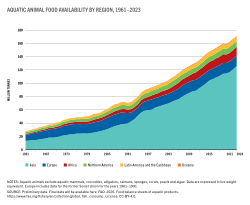
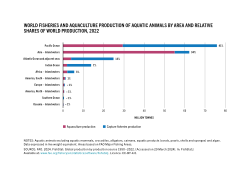
In 2024, aquaculture reached a record production of 103 million tonnes, accounting for 53% of global aquatic animal output. Asia is the dominant producer, contributing 89% of the total production, with China leading at 56%.
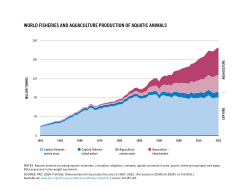
Inland water catches also hit a new high of 12 million tonnes in 2024. The primary species groups in these waters include carps, barbels, cyprinids, tilapias, and shads.
Trade and Employment
The trade of aquatic products involves 230 countries and territories, generating approximately USD 186 billion in revenue. This sector supports the livelihoods of over 600 million people, with women making up about 24% of the workforce.
Recreational Fishing
Beyond commerce, recreational fishing is a massive industry. In the United States, the recreational fishing industry's total revenue in 2021 exceeded that of major corporations like Google and Intel, contributing nearly USD 129 billion to the US GDP.
Environmental Impact and Conservation
Aquatic animals are essential indicator species; their health reflects the overall quality of the water and the stability of the climate. Keystone species, such as salmon and sardines, transfer biomass between marine, freshwater, and terrestrial ecosystems.
However, these animals face severe threats, including:
- Overfishing and destructive fishing practices.
- Water pollution and acidification.
- Climate change and habitat fragmentation.
- Competition from invasive species.
Implementing sustainable fishing practices could potentially increase the global GDP contribution of fisheries by as much as USD 50 billion.
| Metric | Value/Detail | Year/Context |
|---|---|---|
| Total Aquaculture Production | 103 Million Tonnes | 2024 |
| Global Consumption (Live Weight) | 185 Million Tonnes | 2022 |
| Per Capita Consumption | 21 kg | 2024 |
| Top Producing Region | Asia (89% of production) | 2024 |
| Global Trade Revenue | USD 186 Billion | Estimated |
Frequently Asked Questions
What is the difference between a marine animal and a brine animal?
The term "marine" refers to animals living in seawater (oceans and shallow seas) or brackish water (estuaries and lagoons). "Brine" is specifically used for halophilic species that can tolerate hypersaline waterbodies.
How do air-breathing aquatic animals survive underwater?
Animals like whales and sea turtles have lungs and must breathe atmospheric air. They are essentially holding their breath while submerged and must return to the surface to replenish their oxygen supply.
What are the main threats to aquatic biodiversity?
Aquatic animals are primarily threatened by overfishing, water pollution, ocean acidification, climate change, habitat destruction, and the introduction of invasive species.
Why are aquatic animals considered indicator species?
They are particularly sensitive to changes in water quality and temperature. By monitoring their health and population levels, scientists can detect environmental deterioration and the effects of climate change early.
What percentage of global animal protein comes from aquatic animals?
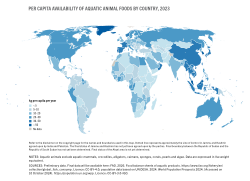
Aquatic animal foods contribute approximately 15% of animal protein availability globally, and for over 40% of the world's population, they provide at least 20% of this protein.