Scottish Gaelic-Medium Education
Scottish Gaelic-medium education (Scottish Gaelic: Foghlam tro Mheadhan na Gàidhlig; FtMG), commonly referred to as GME, is an educational model in Scotland where pupils are taught primarily in Scottish Gaelic. In this system, English is introduced and taught as a secondary language, allowing students to develop bilingual proficiency.
The popularity of GME has seen a dramatic rise over the last few decades. From a modest start with only 24 pupils in 1985, enrollment grew to 5,066 by 2021. This growth reflects a broader cultural shift and legislative support, particularly following the passage of the Gaelic Language (Scotland) Act in 2005. While these figures cover primary and secondary schooling, they do not include higher education students at institutions such as Sabhal Mòr Ostaig, Lews Castle College, or Ionad Chaluim Chille Ìle.
Key Facts
- Enrollment Growth: GME pupil numbers rose from 24 in 1985 to 5,066 in 2021.
- National Reach: 15 of Scotland's 32 council areas currently offer GME.
- Regional Strongholds: Eilean Siar has the highest enrollment rate at 39.1%.
- Academic Parity: Studies show GME students perform as well as or better than those in English-medium education.
- Primary Focus: The vast majority of GME students are immersed in the language during their primary years.
Current Provision and Distribution
As of 2021, a total of 11,874 pupils in Scotland received some form of Gaelic education, accounting for 1.7% of the student population. This exceeds the general proportion of Gaelic speakers in Scotland, which was 1.1% in 2011. While GME is the most intensive form, over 6,800 other students take Gaelic as a subject or in learner classes.
| Education Level | Number of Pupils | Pupils per 1,000 |
|---|---|---|
| Primary | 3,808 | 9.8 |
| Secondary | 1,258 | 4.1 |
| Total | 5,066 | 7.2 |
Geographically, GME is most prevalent in the Outer Hebrides (Na h-Eileanan Siar), where the Comhairle nan Eilean Siar announced in 2020 that GME would become the default for primary entrants. Other areas with above-average enrollment include the Highland (4.5%), Argyll & Bute (2.2%), Glasgow City (1.8%), and Edinburgh City (0.9%) councils.
Secondary GME is highly concentrated, with 87% of all secondary pupils located in Glasgow City, Na h-Eileanan Siar, and the Highland council areas.
Dedicated Schools and Units
Scotland has seen a rise in dedicated Gaelic schools. Sgoil Ghàidhlig Ghlaschu (Glasgow Gaelic School), established in 2006, is the largest and was the first 3–18 school in the country. Sgoil Lionacleit on the island of Benbecula is the only other dedicated GME secondary school.
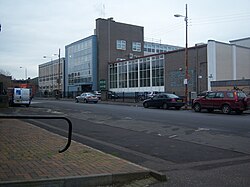
Other notable primary schools include Bun-sgoil Ghàidhlig Inbhir Nis (Inverness), Bun-sgoil Taobh na Pàirce (Edinburgh), and Bun-sgoil Ghàidhlig Loch Abar (Caol). In Glasgow, the city also operates Bunsgoil Ghaidhlig Ghleann Dail and Bun-sgoil Ghàidhlig Bhaile a' Ghobhainn, with a fourth primary school expected to open in the Calton district in 2024.
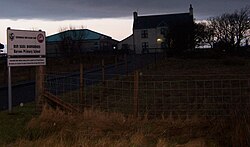
Beyond standalone schools, GME is often delivered via Gaelic-medium units—specialized Gaelic streams within otherwise English-speaking schools. An example of this is Bun-Sgoil Bharabhais.
Academic Effectiveness and Language Proficiency
Research indicates that GME does not hinder academic progress. Two separate studies confirmed that children educated through the medium of Gaelic perform equally to, or sometimes better than, their peers in English-medium education, even when accounting for socio-economic factors.
However, achieving native-like fluency remains a challenge. Research by Julia Landgraf and others has noted that many GME students exhibit non-native features in their syntax, morphology, and phonology. Fully bilingual abilities are most frequently found in students who come from Gaelic-speaking households. There is also a noted trend of English-influenced phonology among students in urban areas and traditional Gaelic regions.
Long-term usage also varies. A study of 46 GME graduates found that a majority were "low users" of the language as adults. Continued usage was most strongly linked to those who had Gaelic-speaking parents, pursued Gaelic at the university level, or secured employment that required the language.
Historical Context
The Era of Anglicisation (17th - 19th Century)
The history of Gaelic education is marked by a long struggle against Anglicisation—the process of replacing Gaelic with English. In 1609, the Statutes of Iona forced the Gaelic nobility to send their children to English-speaking Lowland Scotland for education. By 1616, the privy council required Highland heirs to be proficient in English to be recognized.
In the 18th century, the Society in Scotland for Propagating Christian Knowledge (SSPCK) initially sought to "de-Gaelicise" the Highlands by prohibiting the language in schools. This approach proved ineffective for literacy until a shift in attitude occurred after the Jacobite rising of 1745. Influenced by figures like Samuel Johnson, the SSPK eventually published a Gaelic New Testament in 1767 and adopted Gaelic as the language of instruction in Highland schools.
The 19th Century and the Education Act
The 1811 establishment of the Edinburgh Society for the Support of Gaelic Schools marked a period of growth, with similar societies forming in Glasgow and Inverness. However, this progress was severely hampered by the Education (Scotland) Act 1872, which effectively ended non-English-medium education. During this time, pupils were often punished for speaking Gaelic in school.
While the "Highland Minute" of 1887 eventually recognized Gaelic as a subject in higher classes and provided grants for teachers, the language was taught as an academic subject through English rather than as a living medium of instruction. This pedagogical approach is believed to have contributed to the language's decline during that era.
Frequently Asked Questions
What is the difference between GME and Gaelic language courses?
Gaelic-medium education (GME) uses Gaelic as the primary language of instruction for all subjects, with English taught as a second language. Gaelic language courses, by contrast, teach Gaelic as a standalone subject within an English-medium curriculum.
Does GME affect a child's academic performance in other subjects?
No. Studies have shown that GME students perform as well as, and in some instances better than, students in English-medium education, regardless of their economic background.
Where is Gaelic-medium education most common in Scotland?
It is most common in Na h-Eileanan Siar (the Outer Hebrides), where it is the default for primary entrants. Other significant hubs include the Highland council area and Glasgow City.
Why do some GME students struggle with native-like fluency?
Research suggests that students from non-Gaelic-speaking households often struggle to reach full bilingualism, frequently exhibiting English-influenced phonology and syntax.
What is the largest Gaelic-medium school in Scotland?
Sgoil Ghàidhlig Ghlaschu (Glasgow Gaelic School) is the largest provider of GME and was the first school in Scotland to offer a continuous 3–18 Gaelic-medium curriculum.