Scottish Gaelic: History, Evolution, and Modern Revitalization
Scottish Gaelic (Gàidhlig) is a Goidelic language belonging to the Insular Celtic branch of the Indo-European family. Historically the dominant tongue of the Scottish Highlands and Islands, it remains a vital symbol of cultural identity in Scotland and among the diaspora in Canada. While it faced a significant decline over the last two centuries, contemporary efforts in education and official recognition are working to secure its future.
The language evolved from early forms including Primitive Irish, Old Irish, and Middle Irish. Its distribution was once vast, though it eventually became concentrated in the north and west of Scotland.
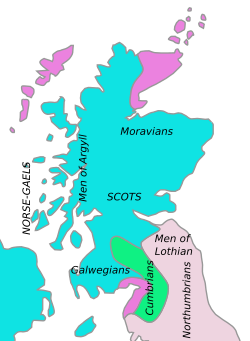
Key Facts
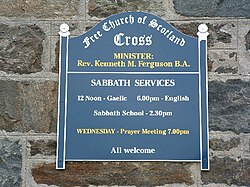
- Official Status: An official language of Scotland and a recognized minority language in the United Kingdom and Canada.
- Speaker Population: Approximately 70,000 L1 and L2 speakers in Scotland (2022), with roughly 1,300 fluent speakers in Nova Scotia.
- Geographic Reach: Primarily spoken in Scotland and Cape Breton Island, Nova Scotia.
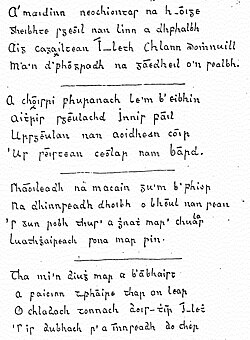
- Writing Systems: Currently uses the Latin alphabet, though historically utilized Ogham and the Insular script.
- Education: Gaelic medium education is growing, with 5,461 students enrolled by 2023.
Historical Distribution and Decline
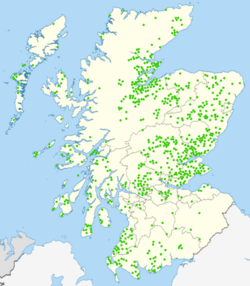
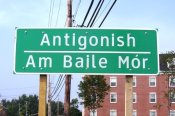
In the medieval period, Gaelic settlements were widespread across Scotland. This is still evident today in Scottish placenames containing the element bal- (from the Gaelic baile, meaning home, farmstead, town, or city).
By the late 19th century, the linguistic map of Scotland showed a clear divide. In 1891, Gaelic was the primary language in the Outer Hebrides and parts of the Highlands, while English (including Scots) dominated the Lowlands.
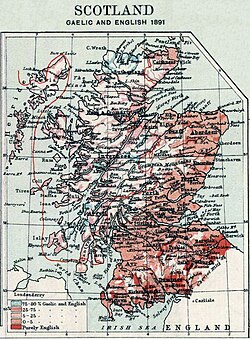
The 20th century saw a sharp decline in the number of speakers. In 1755, nearly 23% of the Scottish population were Gaelic speakers. By 1991, this figure had dropped to 1.4%. However, recent data suggests a stabilization and slight increase in language skills, with 130,000 people in Scotland reporting some ability in Gaelic in 2022.
Linguistic Characteristics
Writing Systems and Scripts
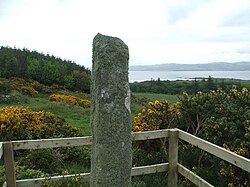
While the Latin script is the modern standard, Scottish Gaelic has a rich paleographic history. The Ogham script, an early medieval alphabet, was used for inscriptions, as seen on the Giogha Stone.
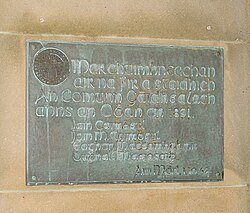
The Insular script was also used historically for decorative and formal manuscripts, a style still occasionally referenced in commemorative plaques today.
Grammar and Lexicon
Scottish Gaelic features a complex grammatical structure with three persons, two numbers (singular and plural), and two voices (personal and impersonal). Its lexicon shares deep roots with Irish and Manx, though it has also absorbed elements from Brittonic languages.
| English | Scottish Gaelic | Irish | Manx Gaelic |
|---|---|---|---|
| We | sinn | sinn / muid | shin |
| One | aon | aon | nane |
| Big | mòr | mór | mooar |
| Fish | iasg | iasc | eeast |
| Sun | grian | grian | grian |
Modern Usage and Revitalization
Efforts to revitalize Gàidhlig are visible across public infrastructure in Scotland. Bilingual signage is now common at transport hubs, government buildings, and emergency services.

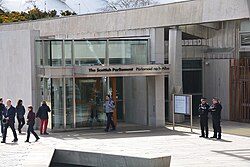


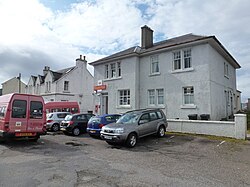
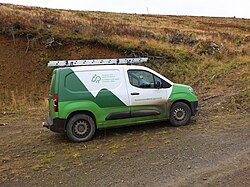
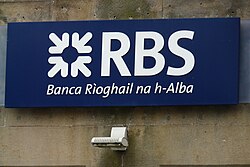
Commercial and civic visibility has also increased, with bilingual signs appearing at banks and railway stations.

Education and Community
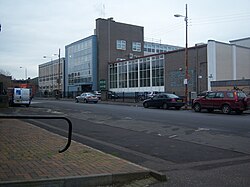
The rise of Gaelic medium education (teaching subjects through the medium of Gaelic) has been a cornerstone of revitalization. Schools like Sgoil Ghàidhlig Ghlaschu (Glasgow Gaelic School) provide immersive environments for new learners.
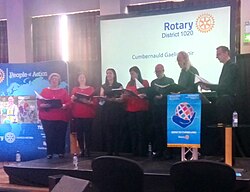
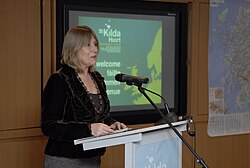
Community groups, such as the Cumbernauld Gaelic Choir, and advocates like Anne Lorne Gillies continue to promote the language's cultural value.
Global Presence: Nova Scotia
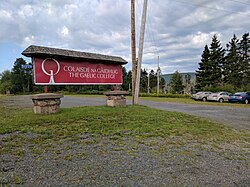
Due to historical migration, a significant Gaelic community exists in Canada, particularly on Cape Breton Island, Nova Scotia. The language is recognized as a minority language there, and institutions like The Gaelic College work to preserve the Canadian dialect.
Frequently Asked Questions
Is Scottish Gaelic the same as Scots?
No. Scottish Gaelic is a Celtic language derived from Goidelic. Scots is a Germanic language that diverged from Middle English.
Where is Scottish Gaelic spoken today?
It is primarily spoken in the Highlands and Islands of Scotland, as well as in Nova Scotia, Canada.
How many people speak Scottish Gaelic?
As of 2022, there are approximately 70,000 L1 and L2 speakers in Scotland, and about 1,300 fluent speakers in Nova Scotia.
Is Scottish Gaelic an official language?
Yes, it is an official language in Scotland and is recognized as a minority language in both the United Kingdom and Canada.
What is Gaelic medium education?
It is an educational approach where the language of instruction for various subjects is Scottish Gaelic, rather than English, to encourage fluency and revitalization.