Welsh Language: History, Usage, and Modern Status
Welsh (known natively as Cymraeg) is a vibrant Indo-European language belonging to the Celtic family. Specifically, it is a Brittonic language, evolving from Common Brittonic through Old and Middle Welsh to the modern form spoken today. While primarily associated with Wales, the language has a global footprint, reflecting centuries of migration and cultural resilience.
In recent years, Welsh has seen a significant push for revitalization. The Welsh Language (Wales) Measure 2011 granted the language official status in Wales, ensuring that it is treated with equality alongside English in public services and government. Today, it serves as a primary marker of national identity and a living medium of communication for hundreds of thousands of people.
Key Facts
- Official Status: Official language in Wales; recognized minority language in Chubut Province, Argentina.
- Speaker Population: 538,300 speakers in Wales (17.8% of the population) according to the 2021 census.
- Language Family: Indo-European > Celtic > Insular Celtic > Brittonic.
- Global Presence: Spoken in the UK, Argentina, Canada, the United States, and Australia.
- Governance: Regulated by the Welsh Language Commissioner since 2012.
Speaker Demographics and Distribution
Usage in Wales
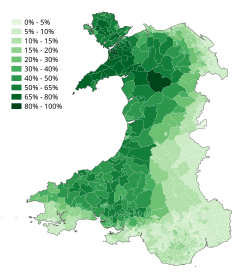
The 2021 census reported that 538,300 residents aged three or older in Wales can speak Welsh, representing 17.8% of the population. Additionally, 25.1% of the population reported having some level of Welsh language skills. Other data suggests higher numbers; a 2022–2023 survey estimated that 34% of people aged 16 or over possess some speaking ability, and December 2025 estimates suggested as many as 844,300 speakers (27.3%).
In terms of daily application, approximately 14.5% (448,800 people) use Welsh daily, while 4.9% use it weekly. Despite these figures, a small fraction (1.4%) of those capable of speaking the language report that they never do so.
Global Distribution
Beyond the borders of Wales, the language persists in several international communities:
- England: Estimated 110,000 speakers (2007).
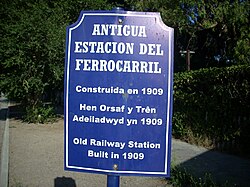
- Argentina: In the Chubut Province, between 1,500 and 5,000 people speak Welsh, a legacy of Welsh settlement in Patagonia.
- Canada: The 2011 census recorded 3,885 first-language speakers, though this dropped to 1,130 mother-tongue speakers by 2021.
- United States: Approximately 2,003 people aged five and over spoke Welsh at home (2017–2021).
- Australia: Approximately 1,737 speakers.
Linguistic Characteristics
Dialects and Registers
Welsh is characterized by four traditional dialects: Gwyndodeg (Gwynedd), Powyseg (Powys), Dyfedeg (Dyfed), and Gwenhwyseg (Gwent and Morgannwg). There is also a distinct Patagonian Welsh dialect.
The language is further divided into two primary registers: Literary Welsh and Colloquial Welsh. Literary Welsh is more formal, rarely omits subject pronouns, and uses subjunctive verb forms. Colloquial Welsh is more flexible, often omitting subject pronouns (pro-drop) and utilizing simpler verb forms.
Orthography and Phonology
Welsh uses the Latin alphabet with specific modifications to accommodate its unique sounds. The alphabet includes characters such as ch, dd, ff, ll, ng, ph, rh, th. Its phonology includes a variety of stops, fricatives, and a distinct trill.
Legal Status and Education
The legal landscape for Welsh changed dramatically on February 9, 2011, when the Welsh Language (Wales) Measure received Royal Assent. This legislation confirmed the official status of Welsh and established the Welsh Language Tribunal and the Welsh Language Partnership Council.
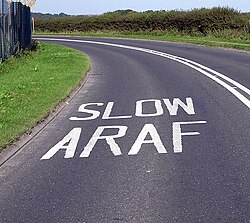
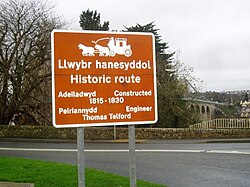
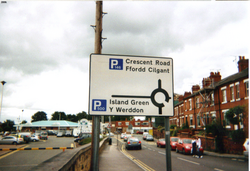
Welsh and English are both de jure official languages of the Senedd (the Welsh parliament). This official status is visible throughout the country in the form of bilingual road signs and public notices.
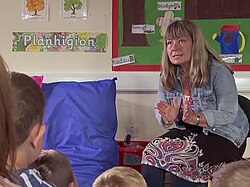
In education, Welsh is used as a medium of instruction in many schools, contributing to a revival of the language among younger generations.
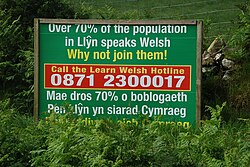
Historical Milestones
The preservation of Welsh has been aided by key historical texts and efforts. The 1588 Welsh Bible was a landmark in standardizing the language, followed by subsequent editions that helped maintain literacy in Welsh across the centuries.
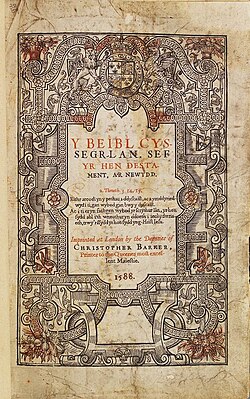
![Welsh Bible of 1620, in Llanwnda church, rescued from the hands of French invaders in 1797[39]](/images/c8/9e/c89e4c0f8032ffe5c9c6cd5ce01dad351f70649e77722a8bbc761847fc990af9.jpg)
| Year | Population (Age 3+) | Welsh Speakers | Percentage |
|---|---|---|---|
| 1891 | 1,685,614 | 910,289 | 54.0% |
| 1921 | 2,492,995 | 922,092 | 37.0% |
| 1961 | 2,518,711 | 656,000 | 26.0% |
| 2001 | 2,805,701 | 582,368 | 20.8% |
| 2021 | 3,018,169 | 538,298 | 17.8% |
Frequently Asked Questions
Is Welsh an official language?
Yes, the Welsh Language (Wales) Measure 2011 gave Welsh official status in Wales. It is also a de jure official language of the Senedd.
Where is Welsh spoken outside of Wales?
Welsh is spoken in England, Argentina (specifically the Chubut Province), Canada, the United States, and Australia.
What is the difference between Literary and Colloquial Welsh?
Literary Welsh is formal and uses more complex verb forms and subject pronouns. Colloquial Welsh is the spoken form, which often omits subject pronouns and uses simpler verb structures.
How many people speak Welsh today?
According to the 2021 census, 538,300 residents in Wales can speak Welsh, though other surveys suggest the number could be higher, with some estimates reaching over 800,000.
What are the traditional dialects of Welsh?
The four traditional dialects are Gwyndodeg (Gwynedd), Powyseg (Powys), Dyfedeg (Dyfed), and Gwenhwyseg (Gwent and Morgannwg).