Scientific Celebrities: The Intersection of Research and Public Fame
A scientific celebrity, also referred to as a public scientist, is an individual who has achieved significant public recognition, typically through media exposure. For the general population, these figures often serve as the face of a specific field of study. While some scientists seek this spotlight to promote their research or the broader scientific community, others may be elevated by corporate or governmental interests.
The phenomenon of the celebrity scientist is not new, though it has accelerated alongside the rise of modern celebrity culture. While the trend dates back centuries, the proliferation of media outlets in the late 1960s and early 1970s significantly increased the visibility of scientific progress and the individuals behind it.
Key Facts
- Definition: A scientist who gains widespread public attention, often acting as a representative for their field.
- Evolution: Transitioned from traditional print and lecture circuits to broadcast media and digital platforms like TED Talks.
- The Sagan Effect: A form of academic bias where highly visible popularizers of science are perceived as less serious scholars by their peers.
- Public Impact: Celebrity scientists can increase the acceptance of scientific concepts, though this can be influenced by the scientist's perceived personal views.
- Pathological Science: The risk of "science by press release," where findings are publicized prematurely or without sufficient merit.
Historical Foundations of Scientific Fame
Long before the digital age, certain thinkers became household names through their revolutionary theories. In the late 17th and early 18th centuries, Isaac Newton gained widespread fame in the UK and the Western world following his work on the theories of motion. Interestingly, Newton did not actively seek this fame; much of his reputation was bolstered by others, including the philosopher Voltaire.
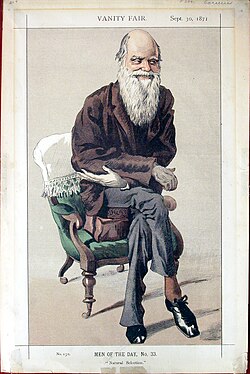
In contrast, Charles Darwin took a more active approach to managing his public image after publishing On the Origin of Species in 1859. To explain his theory of evolution to the masses, Darwin distributed mass-produced photographs, carefully curated his public appearances, and provided low-cost editions of his book to ensure accessibility.
The Rise of the Global Icon
By 1919, Albert Einstein became a global celebrity following the publication of his General Theory of Relativity. As experimental data began to support his revolutionary views of the physical world, major outlets like The New York Times and The Times (of London) propelled him into the public eye. While Einstein occasionally found this fame intrusive, he leveraged his platform to advocate for pacifism, civil rights, nuclear disarmament, and Zionism.
Modern Era and Media Evolution
The mid-to-late 20th century saw a shift toward broadcast media. Astronomer Fred Hoyle became a household name in the UK during the 1950s through his BBC radio series, "The Nature of the Universe," which later became a bestselling book.
In more recent decades, Stephen Hawking achieved immense celebrity status. Starting with his research on black holes and the 1988 publication of A Brief History of Time, Hawking's reach expanded through television, radio, and the biographical film The Theory of Everything. Today, figures like physicist Brian Cox continue this tradition, utilizing talk shows and television programs to communicate complex science to a wide audience.
The Sagan Effect and Academic Tension
The transition from the laboratory to the limelight is not always welcomed by the academic community. Carl Sagan, a distinguished planetary scientist, became a global icon after his 1977 book The Dragons of Eden and the 1980 television series Cosmos: A Personal Voyage.
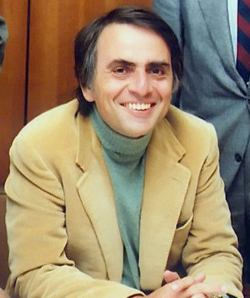
Despite his achievements, Sagan faced a phenomenon now known as the Sagan Effect: the tendency of academic peers to view popularizers of science as less rigorous scholars. This bias led to Sagan being denied tenure at Harvard University, although he later became a full professor at Cornell. Similar academic snobbery has affected other scientists, such as paleontologist Stephen Jay Gould, though recent trends suggest academic institutions are becoming more supportive of public outreach.
Summary of Notable Scientific Celebrities
| Scientist | Primary Field | Key Medium of Fame | Notable Contribution/Work |
|---|---|---|---|
| Isaac Newton | Physics/Mathematics | Print/Academic Circles | Theories of Motion |
| Charles Darwin | Biology | Books/Photography | Theory of Evolution |
| Albert Einstein | Theoretical Physics | Global News Media | General Theory of Relativity |
| Carl Sagan | Planetary Science | Television (Cosmos) | Science Popularization |
| Stephen Hawking | Cosmology | Books/Pop Culture | Black Hole Research |
The Risks of Public Science
While public engagement is generally positive, it can lead to pathological science. This occurs when scientists use "science by press release" to announce findings prematurely or inappropriately, often bypassing rigorous peer review to appeal directly to the public. A prominent example of this behavior was seen in the claims surrounding cold fusion.
Furthermore, the identity of the celebrity can influence the acceptance of the science itself. Research by Amy Unsworth and David Voas suggests that in some religious groups, the acceptance of evolution may decrease if the advocating scientist, such as Richard Dawkins, is perceived as having negative views toward that religion.
Distinguishing Roles in Science Communication
It is important to distinguish between different types of science communicators:
- Qualified Presenters: Individuals like David Attenborough or Bill Nye who have scientific or engineering qualifications but are primarily known for their presentation skills.
- Science Journalists: Professional journalists, such as Jules Bergman, who report on science without necessarily having formal scientific training.
- Academic Celebrities: Researchers who gain fame through original contributions, such as Danica McKellar (mathematics) or Mayim Bialik (neuroscience).
Frequently Asked Questions
What is the Sagan Effect?
The Sagan Effect is a form of academic bias where scientists who engage in public outreach and popularization are viewed by their professional peers as less serious or rigorous researchers.
How does "science by press release" differ from legitimate science communication?
Legitimate communication shares peer-reviewed findings with the public. "Science by press release" involves announcing results prematurely or without sufficient scientific merit, often to gain immediate public attention.
Can a celebrity scientist's personality affect the acceptance of their theories?
Yes. Research indicates that the public's acceptance of certain concepts, such as evolution, can be influenced by whether they perceive the celebrity scientist's personal or religious views as compatible with their own.
Who are some examples of scientists who are famous for their media roles rather than research?
Presenters like Richard Attenborough and Bill Nye are primarily recognized for their ability to present scientific topics to the public, whereas others, like Mayim Bialik, are known for their media roles while holding advanced degrees in science.