Scholasticism: The Philosophical Bridge Between Classical Reason and Christian Faith
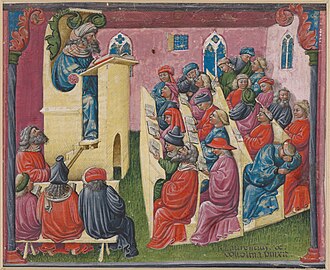
Scholasticism was the dominant intellectual movement and educational methodology in Europe from approximately 1100 to 1700. Rather than a single set of beliefs, it was a rigorous system of learning designed to reconcile the logically precise analyses of classical philosophy—most notably the works of Aristotle—with the doctrines of Catholic Christianity.
Emerging from monastic schools, Scholasticism utilized dialectical reasoning (a method of arriving at truth by exchanging logical arguments) based on Aristotelianism and the Ten Categories. By harmonizing metaphysics with theology, these schools laid the groundwork for the first European universities and provided the intellectual bedrock for the development of modern Western science and philosophy.
Key Facts
- Timeline: Predominant in Europe from roughly 1100 to 1700.
- Primary Goal: To harmonize classical Greek philosophy (Aristotle and Neoplatonism) with Christian theology.
- Core Method: Use of dialectical reasoning and logically precise analysis.
- Key Figure: Thomas Aquinas, whose Summa Theologica is the movement's pinnacle.
- Legacy: Formed the basis of early medieval universities and influenced modern scientific thought.
The Evolution of Scholastic Thought
Early Scholasticism and the Rediscovery of Greek Knowledge
In the early medieval period, knowledge of Ancient Greek had largely vanished from Western Europe, surviving primarily in Irish monastic schools. Figures like Johannes Scotus Eriugena (815–877) played a crucial role by translating Greek works into Latin, granting access to the Greek theological tradition. Other foundational figures included the 11th-century archbishops Lanfranc and Anselm of Canterbury, as well as Peter Abelard in France.
The movement gained momentum through the "rediscovery" of Greek texts. In Muslim Spain, the Toledo School of Translators began converting Arabic texts into Latin. This exposure to Judeo-Islamic philosophies introduced Europeans to advanced mathematics and astronomy, including the first complete Latin translation of Euclid's Elements.
High Scholasticism: The Golden Age
The 13th and early 14th centuries marked the peak of the movement. During this era, translation schools in Italy and Sicily provided more accurate Latin versions of Aristotle, moving away from Arabic versions that had been twice removed from the original Greek. This structural closeness between Latin and Greek allowed for more intelligible, literal translations.
As universities grew in major cities, two primary clerical orders emerged as intellectual leaders:
- The Franciscans: Led by figures like Bonaventure, they tended to defend Augustinian theology and Platonic philosophy, arguing that reason could only discover truth when illuminated by religious faith. Other notable Franciscans included Duns Scotus and William of Ockham.
- The Dominicans: Founded to defend Christian doctrine, the Dominicans placed a heavier emphasis on reason and Aristotelian sources. This order produced Albertus Magnus and Thomas Aquinas.
The Pinnacle: Thomas Aquinas
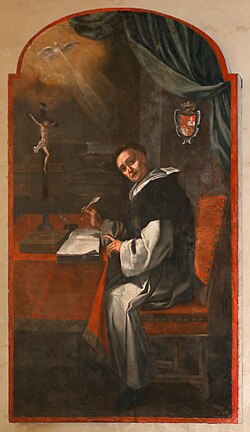
Thomas Aquinas's masterwork, the Summa Theologica (1265–1274), represents the height of Scholastic achievement. Aquinas departed from the Neoplatonic thinking of his predecessors to incorporate Aristotle's metaphysical and epistemological writings. He demonstrated that Greek rationalism could be synthesized with Christian doctrine without adopting the errors of later commentators like Averroes.
Post-Scholasticism and Later Traditions
Following the death of William of Ockham in 1349, a period of "post-scholasticism" emerged. Philosophers such as Marsilius of Padua and John Wycliffe retained the Scholastic method but moved toward institutional criticism and materialism.
The tradition continued to evolve into various branches, including Lutheran and Reformed scholasticism. In the 19th century, a revival known as Neo-Thomism emerged. This includes "Strict Observance Thomism," which seeks to apply a rigorous system of orthodox Thomism to critique contemporary thought, focusing on the actus essendi (the act of existence).
| Tradition | Key Figures | Philosophical Emphasis |
|---|---|---|
| Early Scholasticism | Anselm, Peter Abelard, Eriugena | Recovery of Greek texts; early harmonization. |
| Franciscan Scholasticism | Bonaventure, Duns Scotus | Augustinian theology; Neoplatonism; faith-led reason. |
| Dominican Scholasticism | Thomas Aquinas, Albertus Magnus | Aristotelian logic; synthesis of reason and revelation. |
| Neo-Thomism | Jacques Maritain, Étienne Gilson | Modern revival of Aquinas's rigorous system. |
Frequently Asked Questions
What exactly was the goal of Scholasticism?
The primary goal was to reconcile classical philosophy, particularly the logic and metaphysics of Aristotle, with the theological doctrines of the Catholic Church.
Who is considered the most important Scholastic philosopher?
Thomas Aquinas is widely regarded as the pinnacle of the movement, specifically for his work in the Summa Theologica, which synthesized Greek rationalism with Christian faith.
How did the Franciscans and Dominicans differ in their approach?
The Franciscans generally leaned toward Neoplatonism and the theology of St. Augustine, emphasizing that faith must illuminate reason. The Dominicans placed a stronger emphasis on the use of reason and the direct application of Aristotelian logic.
Where did the knowledge of Aristotle come from during this time?
Much of this knowledge was rediscovered through translations of Arabic and Judeo-Islamic texts, particularly via the Toledo School of Translators in Spain and translation centers in Italy and Sicily.
What is Neo-Thomism?
Neo-Thomism is a revival of the philosophical and theological tradition of St. Thomas Aquinas that began in the second half of the 19th century, often used as a tool to critique modern thought.