Jerome Emser: The Catholic Antagonist of Martin Luther
In the volatile intellectual landscape of the early 16th century, few figures embodied the clash between traditional Catholicism and the rising tide of the Reformation as vividly as Jerome Emser (also known as Hieronymus Emser). A German theologian and scholar, Emser transitioned from a humanist sympathizer to one of the most vigorous defenders of the Roman Catholic Church, engaging in a bitter, lifelong polemical war with Martin Luther.
Born on March 20, 1477, in Ulm to a prominent family, Emser's early academic journey was marked by a broad pursuit of knowledge. He studied Greek at Tübingen and jurisprudence (the theory and philosophy of law) at Basel. His early career included a three-year tenure as chaplain and secretary to Raymond Peraudi, the cardinal of Gurk, before he began lecturing on classics at Erfurt in 1504.
Rise to Influence and Patronage
Emser's career was significantly shaped by his relationship with Duke George of Albertine Saxony. In 1504, Emser became the Duke's secretary. Unlike his cousin Frederick the Wise, Duke George remained a steadfast defender of Roman Catholicism in northern Germany. Under the Duke's patronage, Emser pursued several scholarly goals, including the research and publication of a biography of Bishop Benno of Meissen in both German and Latin.
To support his research, Emser traveled through Saxony and Bohemia and visited Rome in 1510. His financial stability and leisure for study were secured through prebends (stipends granted to a cathedral official) at Dresden in 1509 and later at Meissen, both obtained through the influence of Duke George.
The Breach with Martin Luther
Initially, Emser's views aligned with the early reformers. Like Duke George, he advocated for a practical reformation of the clergy but rejected any doctrinal break from the established Church. His sympathies were primarily humanistic—a movement emphasizing the study of classical texts and critical thinking—similar to those of Erasmus. For a time, the relationship between Emser and Luther was cordial; as late as 1519, Luther referred to him as "Emser noster" (our Emser).
However, the 1519 Leipzig Debate served as the turning point. The ideological divide became an irreparable breach, leading to a series of aggressive exchanges. Emser warned his contacts in Bohemia against Luther's teachings, prompting Luther to respond with some of his most scurrilous polemical writings. Emser retaliated by claiming that Luther's movement was fueled by a personal enmity toward the Dominicans. The conflict escalated to the point where Luther publicly burned Emser's books alongside Pope Leo X's bull of excommunication.
Defending the Old Church
From 1521 onward, Emser dedicated his writing to countering the Reformation. He published a direct attack on Luther's Appeal to the German Nobility and authored eight subsequent works defending the primacy of the pope and the Roman doctrine of the Mass. At the request of Duke George, he also translated Henry VIII's Assertio Septem Sacramentorum contra Lutherum into German.
Emser's efforts extended to biblical scholarship. He criticized Luther's translation of the New Testament and, in 1527, published his own German version of the New Testament as a counter-response. While he was a vigorous controversialist, historians note that his version was largely an adaptation of Luther's work to fit the requirements of the Vulgate (the late-4th-century Latin translation of the Bible).
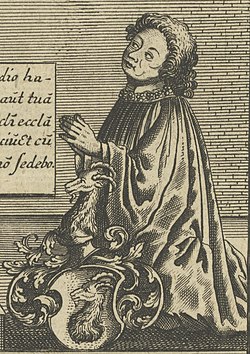
Throughout their rivalry, Luther frequently mocked Emser's family crest, which featured a goat's head, calling him "Bock-Emser" and "Ægoceros" (goat-horned).
Key Facts
- Lifespan: March 20, 1477 – November 8, 1527.
- Primary Patron: Duke George of Albertine Saxony.
- Key Conflict: A fierce theological rivalry with Martin Luther following the 1519 Leipzig Debate.
- Major Contribution: Published a German translation of the New Testament in 1527 to oppose Luther's version.
- Academic Focus: Greek, jurisprudence, classics, theology, and canon law.
| Period/Category | Details |
|---|---|
| Education | Greek (Tübingen), Jurisprudence (Basel) |
| Key Roles | Secretary to Duke George; Lecturer at Erfurt and Leipzig |
| Major Works | Life of Bishop Benno; German New Testament (1527) |
| Theological Stance | Defender of the Mass and Papal Primacy |
| Death/Burial | November 8, 1527; buried at Dresden |
Frequently Asked Questions
What was the relationship between Jerome Emser and Martin Luther?
Initially, they shared some common ground regarding the need for clerical reform. However, after the Leipzig Debate in 1519, they became bitter enemies, engaging in a series of aggressive written attacks and public disputes.
Who was Jerome Emser's primary supporter?
His primary patron was Duke George of Albertine Saxony, a staunch defender of Roman Catholicism who provided Emser with the positions and funding necessary to pursue his studies and polemical writing.
How did Emser challenge Luther's translation of the Bible?
Emser criticized Luther's New Testament and published his own German version in 1527. His version was designed to align more closely with the Vulgate, the official Latin text of the Church.
Why did Luther call Emser "Bock-Emser"?
Luther used this nickname as a mockery of Emser's family crest, which featured a goat's head ("Bock" meaning buck or goat in German).
What was Emser's view on church reform?
Emser believed in a practical reformation of the clergy to improve conduct and administration, but he strongly opposed any changes to the core doctrines of the Roman Catholic Church.