Satyendra Nath Bose: The Architect of Quantum Statistics
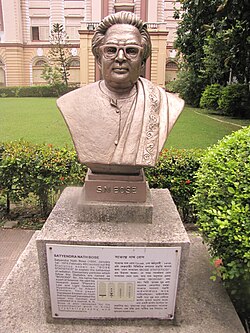
Satyendra Nath Bose was a visionary Indian theoretical physicist and mathematician whose work in the early 1920s fundamentally altered our understanding of the subatomic world. By challenging existing norms of classical physics, Bose laid the groundwork for quantum statistics—the study of how particles behave at the quantum level—and provided the theoretical basis for a new state of matter.
His collaboration with Albert Einstein not only elevated his international standing but also led to the naming of a whole class of fundamental particles: the boson. From his academic triumphs in Calcutta to his influential tenure in Dhaka, Bose's journey is a testament to intellectual courage and scientific rigor.
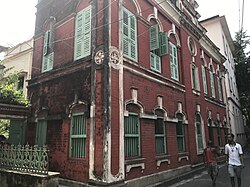
Key Facts
- Primary Contribution: Developed the foundation for Bose–Einstein statistics and the theory of the Bose–Einstein condensate.
- The Boson: Particles with integer spin are named "bosons" in his honor.
- Academic Record: Set a record for the highest marks in the MSc mixed mathematics exam at the University of Calcutta.
- Major Honors: Awarded the Padma Vibhushan in 1954 and elected as a Fellow of the Royal Society in 1958.
- Political Service: Served as a nominated member of the Rajya Sabha (Indian Parliament) from 1952 to 1960.
Early Life and Academic Excellence
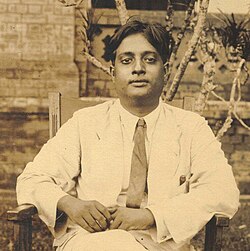
Born on January 1, 1894, in Calcutta, Bengal Presidency, Satyendra Nath Bose displayed an extraordinary aptitude for mathematics from a young age. He attended the Hindu School and later Presidency College, where he earned his Bachelor of Science in mixed mathematics in 1913, finishing first in his class.
Bose continued his studies at the newly formed Science College, Calcutta University. In 1915, he completed his Master of Science (MSc) in mixed mathematics, achieving a record-breaking score that remains unsurpassed in the university's history. Under the guidance of mentors like Jagadish Chandra Bose and Prafulla Chandra Ray, he began exploring the theory of relativity during a period of rapid scientific evolution.
The Breakthrough in Quantum Statistics
While serving as a lecturer at Rajabazar Science College and later as a Reader at the University of Dhaka, Bose focused on the behavior of light and matter. In 1924, he authored a seminal paper that derived Planck's quantum radiation law. Crucially, he did this without relying on classical physics, instead using a novel method of counting states for identical particles.
When the paper was initially rejected for publication, Bose took the bold step of sending it directly to Albert Einstein. Recognizing the brilliance of the work, Einstein translated the paper into German and submitted it to the Zeitschrift für Physik. This partnership led to the development of Bose–Einstein statistics, which describes the distribution of particles that do not obey the Pauli exclusion principle.
The Bose–Einstein Condensate
Einstein extended Bose's theories to atoms, predicting a phenomenon known as the Bose–Einstein condensate (BEC). A BEC is a dense collection of bosons that, when cooled to temperatures near absolute zero, collapse into a single quantum state, behaving as one "super-atom." This theoretical prediction remained a mystery for decades until it was experimentally demonstrated in 1995.
![Velocity-distribution data of a gas of rubidium atoms, confirming the discovery of a new phase of matter, the Bose–Einstein condensate.[28] Left: just before the appearance of a Bose–Einstein condensate. Center: just after the appearance of the condensate. Right: after further evaporation, leaving a sample of nearly pure condensate.](/images/de/7f/de7f94856cd13fbf52573855efcc08b5406a95c76eb088e1148ffc796959bc81.png)
Professional Journey and Later Years
Following a productive two-year period in Europe working alongside luminaries such as Marie Curie and Louis de Broglie, Bose returned to the University of Dhaka in 1926. Despite lacking a doctorate, he was appointed Head of the Department of Physics based on Einstein's strong recommendation. He served as the Dean of the Faculty of Science there until 1945.
With the partition of India in 1947, Bose returned to Calcutta. He became a professor emeritus and later served as the Vice-Chancellor of Visva-Bharati University in Santiniketan. In his final years, he continued his research in nuclear physics and organic chemistry, and even explored the extraction of helium from hot springs in Bakreshwar.
Honors, Legacy, and Recognition
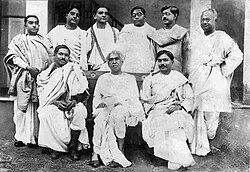
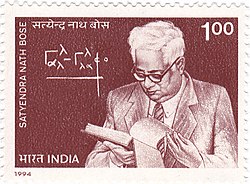
Bose's contributions were recognized globally and domestically. He was appointed National Professor—the highest scholarly honor in India—for 15 years. In 1986, the S.N. Bose National Centre for Basic Sciences was established in his honor in Salt Lake, Calcutta.
Despite being nominated for the Nobel Prize in Physics multiple times between 1956 and 1962, he never received the award. However, his productivity was highly regarded by peers; Soviet physicist Lev Landau ranked Bose alongside the founding fathers of quantum mechanics, such as Niels Bohr and Werner Heisenberg. When asked about the Nobel Prize, Bose modestly remarked, "I have got all the recognition I deserve."
| Category | Details |
|---|---|
| Lifespan | January 1, 1894 – February 4, 1974 |
| Key Discovery | Bose–Einstein Statistics & Condensate |
| Major Institutions | University of Calcutta, University of Dhaka, Visva-Bharati |
| Key Collaborator | Albert Einstein |
| Civilian Award | Padma Vibhushan (1954) |
| Scientific Legacy | The 'Boson' particle class |
Frequently Asked Questions
What is a boson?
A boson is a type of subatomic particle that possesses an integer spin (such as 0, 1, or 2). They are named after Satyendra Nath Bose because they follow the rules of Bose–Einstein statistics, allowing multiple bosons to occupy the same quantum state simultaneously.
How did Albert Einstein help Satyendra Nath Bose?
Einstein recognized the importance of Bose's 1924 paper on quantum radiation law. He translated the work into German and ensured its publication in the Zeitschrift für Physik, which brought Bose international recognition and opened doors for him to work in Europe.
What is a Bose–Einstein condensate?
It is a state of matter formed by bosons cooled to temperatures very close to absolute zero. In this state, a large fraction of the bosons occupy the lowest quantum state, resulting in macroscopic quantum phenomena.
Why didn't Satyendra Nath Bose win the Nobel Prize?
Although nominated several times for his work on quantum statistics and unified field theory, the Nobel Committee's evaluators at the time, including Oskar Klein, deemed his work not worthy of the prize. However, many modern physicists consider his achievements to be of Nobel-class importance.
What was Bose's role in the Indian government?
Beyond his scientific work, Bose served as a nominated member of the Rajya Sabha, the upper house of the Indian Parliament, from April 3, 1952, to April 2, 1960, representing the field of Education.