Satrapies: The Evolution of Provincial Governance in Ancient Empires
The concept of the satrapy—a provincial administrative district governed by a representative of the central authority—represents one of the most influential developments in the history of imperial management. While most famously associated with the Persian Achaemenid Empire, this system of governance evolved over centuries, adapting to the needs of various dynasties across Asia and the Near East.
The Medo-Persian Foundations
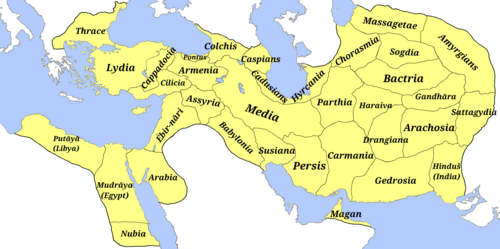
Although the Achaemenid Empire under Cyrus the Great (beginning around 530 BCE) is credited with the first large-scale implementation of satrapies, the roots of provincial organization date back to the Median era, as early as 648 BCE. Before Cyrus, emperors typically managed conquered lands through governors or client kings.
The Persian approach introduced a critical distinction: kingship was viewed as indivisible from divinity. Consequently, the twenty-six satraps established by Cyrus were not kings, but viceroys ruling in the name of the Great King. Later, Darius the Great formalized this structure, expanding the number of satrapies to thirty-six and establishing fixed annual tributes, as recorded in the Behistun inscription.
The Role and Power of the Satrap
A satrap acted as the supreme administrator of his province. His responsibilities were vast, encompassing the collection of taxes, the management of local officials, and the oversight of subject cities and tribes. He served as the highest judicial authority in his region, handling both civil and criminal cases. Additionally, the satrap was responsible for maintaining road safety and suppressing rebellions or banditry.
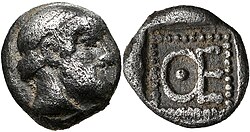
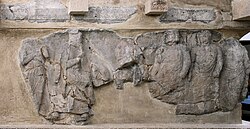
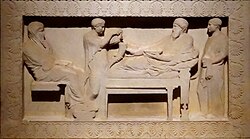
![A dignitary of Asia Minor in Achaemenid style, c. 475 BC; Karaburun tomb near Elmalı, Lycia[12]](/images/07/f4/07f4ba5598496ec457beb7227f3839a52642b5387a5891348990d9c6d36a2dc5.jpg)
Checks and Balances
To prevent satraps from becoming too powerful, the Achaemenid kings implemented a sophisticated system of checks and balances:
- The Eye of the King: Royal emissaries who conducted annual inspections to ensure loyalty and efficiency.
- Administrative Separation: The chief financial official (known as the ganzabara) and the general in charge of the regular army reported directly to the Shah, independent of the satrap.
- Royal Secretariats: A royal secretary and a council of Persians assisted the satrap while maintaining a link to the central government.
Despite these measures, the system faced challenges. Satrapies were often defined by former state borders or ethno-religious identities. While the Achaemenids were generally tolerant of local cultures—a strategy that helped them meld diverse elements into a unique imperial style at Persepolis—the temptation for power remained. Over time, some satrapies became hereditary, leading to frequent rebellions from the mid-5th century BCE, including the significant Revolt of the Satraps during the reign of Artaxerxes II.
Succession and Adaptation: Seleucid and Parthian Eras
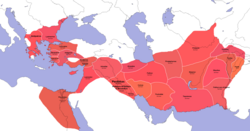
Following the conquest of the Achaemenid Empire, Alexander the Great retained the satrapic administration. His successors, the Diadochi, continued this practice, particularly within the Seleucid Empire. In this era, satraps were often designated as strategos (military generals), though their provinces were smaller than those of the Persians.
The Parthian Empire shifted toward a more decentralized model. Power rested with noble families who managed large estates and provided tribute and soldiers to the king, while city-states maintained a degree of self-government.
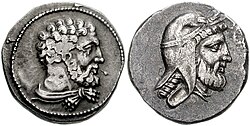
![Bagadates I (Minted 290–280 BC), the first indigenous satrap to be appointed by the Seleucid Empire[14][15]](/images/9a/2c/9a2ceb3c0303962a2c098826dd79ff7b36ea7b432757cff906af2fe8062db0f9.jpg)
In contrast, the Sassanid Empire returned to a centralized approach. They replaced semi-independent kingdoms with "royal cities" governed by centrally appointed officials called shahrabs, who managed both the city and its surrounding rural districts. Interestingly, the Byzantine Empire also adopted the term "satrap" for semi-autonomous princes governing Armenian provinces.
The Western Satraps of India
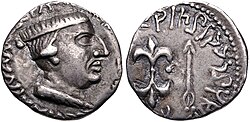
The satrapic model extended into the Indian subcontinent through the Western Satraps, or Kshatrapas (35–405 CE). These Saka rulers governed the Sindh region of Pakistan and the Malwa and Saurashtra regions of western India. They existed alongside other major powers, including the Kushans to the north and the Satavahanas to the south and east.
Key Facts
- Origin: Provincial organization began in the Median era (648 BCE) but was scaled by Cyrus the Great (c. 530 BCE).
- Organization: Darius the Great expanded the system to 36 satrapies with fixed annual tributes.
- Governance: Satraps were viceroys, not kings, though some later attempted to establish independent power bases.
- Oversight: The "Eye of the King" and independent financial officers (ganzabara) provided central oversight.
- Evolution: The title evolved into the strategos under the Seleucids and shahrabs under the Sassanids.
- Indian Influence: The Saka rulers in India adopted the system as Kshatrapas between 35 and 405 CE.
| Empire | Primary Official | Key Characteristic |
|---|---|---|
| Achaemenid | Satrap | Large provinces; strict checks via "Eye of the King." |
| Seleucid | Strategos | Smaller provinces; military-focused leadership. |
| Parthian | Noble Families | Decentralized; high degree of city-state autonomy. |
| Sassanid | Shahrab | Centralized; governed via "royal cities." |
| Western Satraps | Kshatrapa | Saka rule in western India and Pakistan. |
Frequently Asked Questions
What was the primary difference between a satrap and a client king?
Unlike client kings, satraps were viceroys who ruled in the name of the Great King. In Persian culture, divine authority belonged solely to the king, meaning satraps were administrators rather than independent sovereigns.
How did the Achaemenid Empire prevent satraps from rebelling?
The empire used a system of divided authority. The satrap managed the land, but the military general and the chief financial officer (ganzabara) reported directly to the Shah. Additionally, royal inspectors known as the "Eye of the King" performed annual audits.
Did the satrapic system survive the fall of the Persian Empire?
Yes, Alexander the Great and the subsequent Seleucid Empire maintained the system, though they often renamed the officials as strategos and reduced the size of the provinces.
Who were the Western Satraps?
The Western Satraps, or Kshatrapas, were Saka rulers who governed parts of modern-day Pakistan and western India from 35 to 405 CE, operating alongside the Kushan and Satavahana empires.
What happened when central authority weakened in the Achaemenid Empire?
When the central government weakened, satraps often gained practical independence. This was exacerbated when the office became hereditary or when satraps were granted control over the army, leading to frequent rebellions.