Iran History: From Ancient Empires to the Modern Islamic Republic
The history of Iran, historically known as Persia, is the story of one of the world's oldest continuous civilizations. Centered on the Iranian plateau, this history extends into the concept of Greater Iran—a vast region encompassing areas where Iranian peoples and languages, primarily Persian, have exerted significant cultural and political influence. From the Indus Valley in the east to Anatolia in the west, Iran has served as a bridge between the great civilizations of India, China, Greece, Rome, and Egypt.
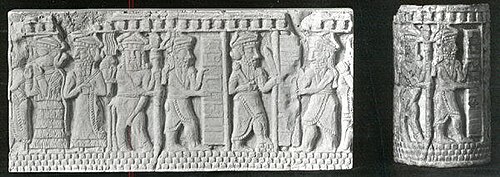
With urban settlements dating back to the 5th millennium BC, the region's early landscape was shaped by diverse groups including the Elamites, Kassites, Gutians, Urartians, and Mannaeans.
Key Facts
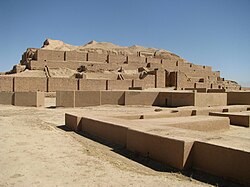
- Ancient Roots: Urban settlements in the region date back to the 5th millennium BC.
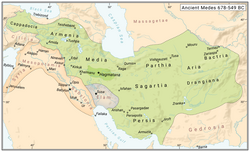
- First Unification: The Medes unified Iran as a nation in the 7th century BC.
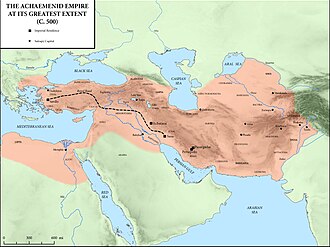
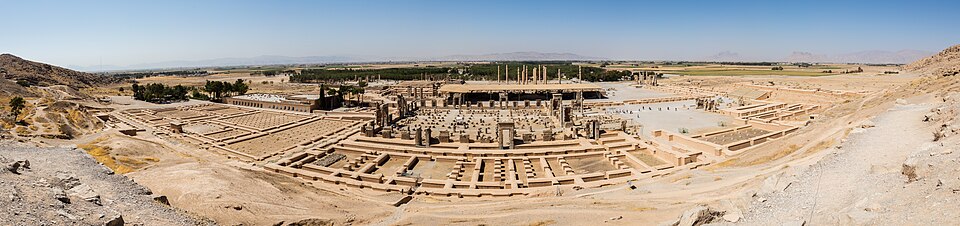
- Imperial Peak: The Achaemenid Empire became the largest empire of its time, spanning West Asia, Central Asia, parts of Europe, and North Africa.
- Religious Shifts: The region transitioned from Zoroastrianism to Islam following the 7th-century conquests, later shifting to Shia Islam under the Safavids in 1501.
- Modern Transition: The 1979 Revolution replaced the Pahlavi monarchy with the current Islamic Republic.
The Era of Great Empires
![Rhyton in the shape of a ram's head, gold – Saqqez - Kurdistan - western Iran[5] –, late 7th–early 6th century BCE](/images/e9/33/e933f38ffb036e9d8aa70bcb14ea47fa45bf4d8eddbdec75dae97b1bd3b2a3ab.jpg)
The Median and Achaemenid Empires
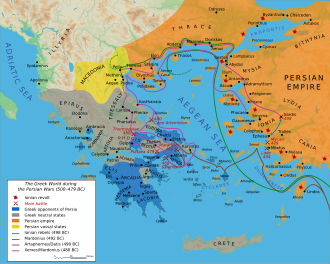
The trajectory of the Iranian empire began in the Iron Age with the Medes. However, by 550 BC, Cyrus the Great established the Achaemenid Empire, sidelining the Medes and initiating a period of unprecedented expansion. Under Cyrus and his successors, the empire grew to encompass most of West and Central Asia, reaching into Southeast Europe and North Africa.
Greek Conquest and the Parthian Rise
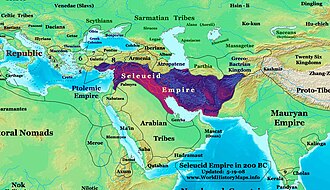
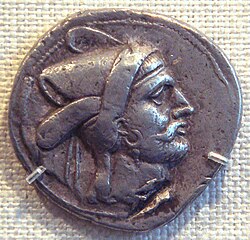
The Achaemenid era ended in the 4th century BC when Alexander the Great of Macedonia conquered the empire. Following Alexander's death, the Seleucid Empire maintained Greek rule over much of the territory. This period of foreign dominance ended with the rise of the Parthian Empire, which reclaimed large portions of Anatolia, Mesopotamia, and Central Asia.
The Sasanian Empire
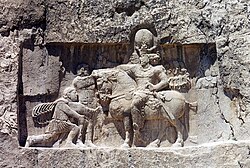
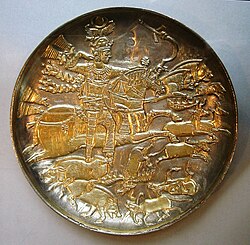
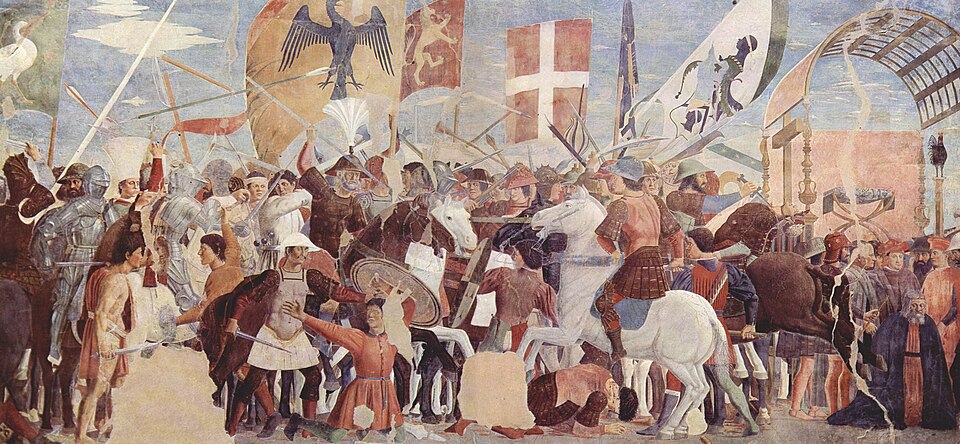
In the 2nd century, the Sasanian Empire succeeded the Parthians. For the next millennium, Iran remained a global superpower, though this era was defined by frequent and grueling conflicts known as the Roman–Persian Wars.
The Islamic Transition and Medieval Period
The Muslim Conquest
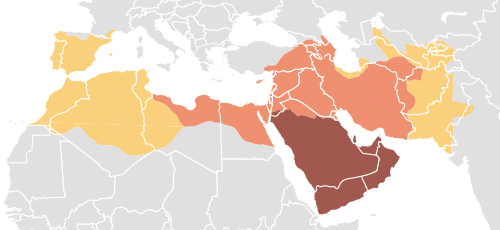
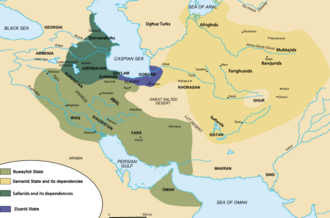
The 7th century marked a pivotal turning point as the Rashidun Caliphate annexed the Sasanian Empire. This began the process of Islamization—the gradual adoption of Islam by the Iranian population. While this led to the decline of Zoroastrianism, the majority religion of the time, Iranian administrative and cultural achievements were absorbed into the new Islamic empires, fueling the Islamic Golden Age.
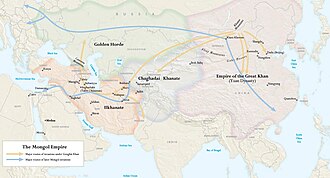
Mongol Invasions and the Ilkhanate
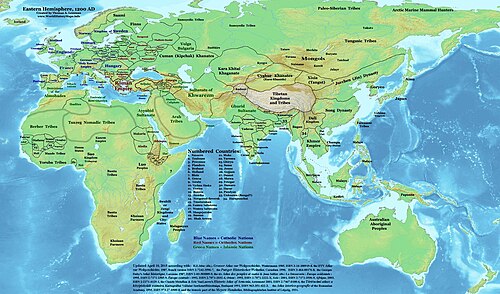
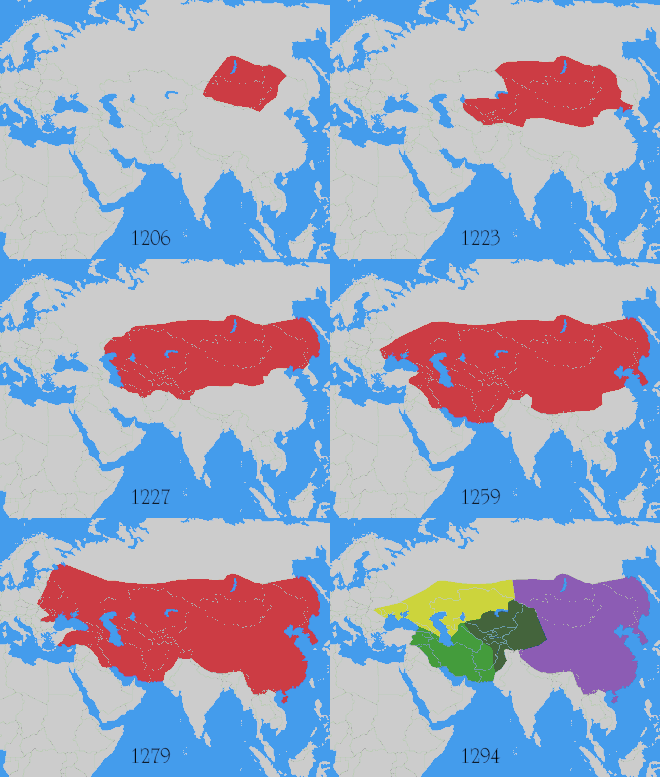
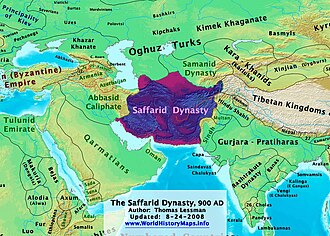
Despite the resilience of Iranian national identity, the region suffered significant disruptions during the Late Middle Ages. The 13th century brought the devastating Mongol invasions, leading to the establishment of the Ilkhanate and later the Timurid Empire.
Early Modern and Modern Iran
The Safavid Dynasty and Shia Islam
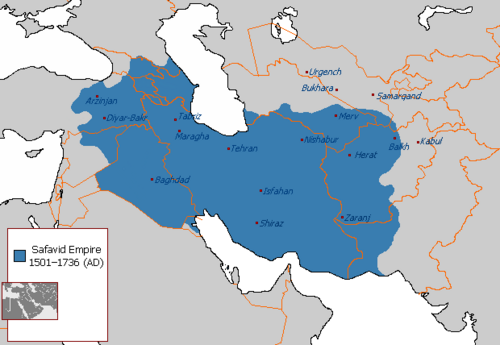
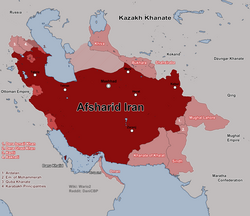
In 1501, the Safavid dynasty reunified the nation. They implemented the most significant religious shift since the original Muslim conquest by converting Iran to Shia Islam. This established a distinct national identity and placed Iran in a long-standing rivalry with the Ottoman Empire.
The Qajar and Pahlavi Eras
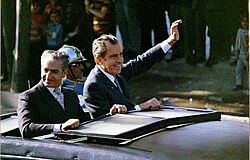
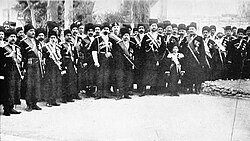
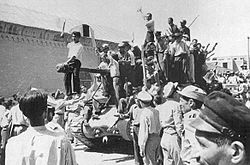
The 19th century was marked by conflict with the Russian Empire, resulting in the loss of the South Caucasus. The subsequent Qajar dynasty gave way to the Pahlavi era (1925–1979). This period saw modernization efforts under Reza Shah and later Mohammad Reza Shah, though it was also marked by political instability, including the 1953 US-aided coup that removed Prime Minister Mosaddeq.
![The V-Dem Democracy Indices for electoral democracy (solid) and liberal democracy (dotted)[172] show Iranian electoral democracy starting with the Constitutional Revolution.](/images/44/88/4488692cdddbdae391dbc64af19d8aab8db89a65feb0d2207f081fffa2d2da33.webp)
The Islamic Republic
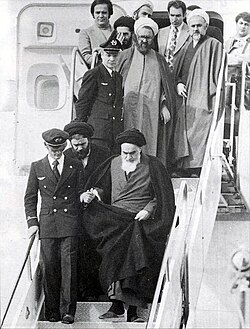
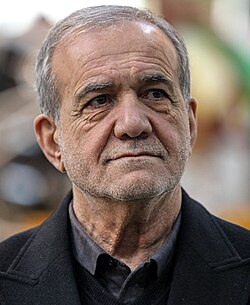
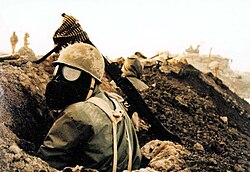
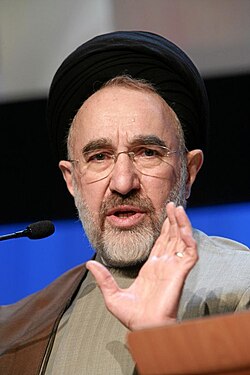
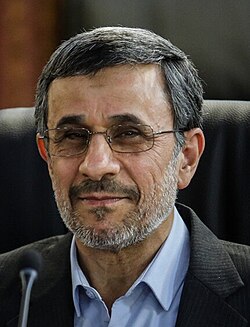
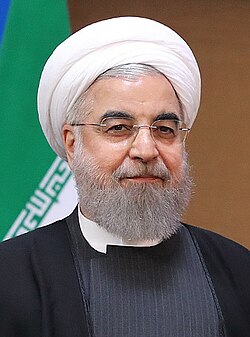
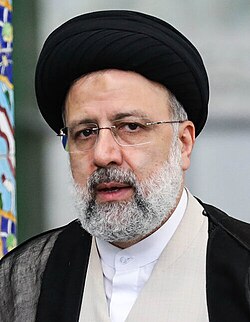
The 1979 Iranian Revolution ended the monarchy and established the Islamic Republic under Ayatollah Khomeini. The early years of the republic were defined by the Iran hostage crisis and the brutal Iran–Iraq War (1980–1988). Since then, the nation has been led by a series of presidents with varying ideologies, from the reformist approach of Mohammad Khatami to the hardline conservatism of Mahmoud Ahmadinejad.
Historical Summary Table
| Era/Empire | Approximate Period | Key Characteristic |
|---|---|---|
| Median Empire | 7th Century BC | First unification of Iran as a nation. |
| Achaemenid Empire | 550–330 BC | Largest empire of the ancient world. |
| Parthian Empire | 248 BC–224 AD | End of Greek rule on the plateau. |
| Sasanian Empire | 224–651 AD | Leading power; conflicts with Rome. |
| Islamic Caliphates | 7th Century AD onwards | Transition to Islam and Golden Age. |
| Safavid Empire | 1501–1736 | Establishment of Shia Islam as state religion. |
| Pahlavi Dynasty | 1925–1979 | Modernization and eventual revolution. |
| Islamic Republic | 1979–Present | Theocratic governance. |
Frequently Asked Questions
![Persian manuscript describing how an ambassador from India, probably sent by the Maukhari King Śarvavarman of Kannauj, brought chess to the Persian court of Khosrow I.[87][88]](/images/71/f5/71f54e90835be7a913c9ad31bfc576c0d92c969a8aadf970fb0989c3f9605332.jpg)
![Seljuq empire at the time of its greatest extent, at the death of Malik Shah I[citation needed]](/images/f5/d8/f5d8cf53e2710e85b8c5c3a7cec583ba33c4be2b8b948855ee410c2b5e2b1ae1.webp)
![Portrait of Shah Abbas I. Chehel Sotoun, painted c. 1647.[128]](/images/68/48/684809445c11235b33e7b3c0e795696db91f578f295c418b33fa03d4712b23e8.jpg)
What is Greater Iran?
Greater Iran refers to the geographical and cultural region encompassing all areas that have experienced significant settlement or influence by Iranian peoples and languages, extending beyond the borders of modern Iran into Central Asia, the Caucasus, and the Levant.
Who was Cyrus the Great?
Cyrus the Great was the founder of the Achaemenid Empire around 550 BC. He is credited with expanding Persian rule across most of West and Central Asia, creating the largest empire the world had seen up to that point.
How did the religion of Iran change over time?
Iran was originally dominated by Zoroastrianism. Following the Muslim conquests in the 7th century, the population gradually converted to Islam. In 1501, the Safavid dynasty further transformed the nation by establishing Shia Islam as the official state religion.
What caused the 1979 Revolution?
The revolution was a movement that overthrew the monarchy of Shah Mohammad Reza Pahlavi, replacing it with a theocratic government known as the Islamic Republic, led by Ayatollah Khomeini.
What was the significance of the Sasanian Empire?
The Sasanian Empire was the last great pre-Islamic Persian empire. It maintained Iran's status as a leading global power for centuries and is best known for its long-term rivalry and wars with the Roman Empire.