Santo Domingo: The Historic Heart of the Caribbean
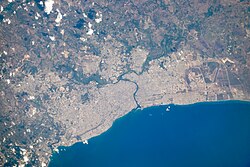
Known officially as Santo Domingo de Guzmán, Santo Domingo is the capital and largest city of the Dominican Republic. As the largest metropolitan area in the Caribbean by population, it serves as the political, economic, and cultural hub of the nation. The city is coterminous with the Distrito Nacional (D.N.) and is surrounded on three sides by the Santo Domingo Province.
Often referred to by its motto, "Ciudad Primada de América" (First City of America), Santo Domingo holds a unique place in global history as the oldest continuously inhabited European settlement in the Americas. From its origins as a strategic Spanish outpost to its current status as a bustling modern metropolis, the city blends centuries-old colonial charm with contemporary urban development.
Key Facts
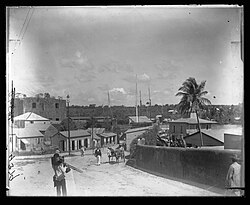
- Founded: August 5, 1496, by Bartholomew Columbus.
- Status: Oldest European settlement in the Americas.
- UNESCO Site: The Colonial City of Santo Domingo was designated a World Heritage Site in 1990.
- Population: Approximately 1,029,110 in the city center and 4,274,651 in the metropolitan area (2022).
- Economy: Metro area GDP (PPP) reached $73.7 billion in 2023.
- Geography: Located at an elevation of 14 meters (46 ft) with a total city area of 1,502 km².
A Legacy of Firsts: History and Heritage
Santo Domingo was established in 1496 and was initially named La Nueva Isabela. By 1495, it was renamed in honor of Saint Dominic. For decades, it served as the Captaincy General of Santo Domingo, the primary seat of Spanish colonial rule in the New World. This strategic importance made the city the "Gateway to the Caribbean," serving as the launch point for expeditions that led to the colonization of Puerto Rico and Cuba, the conquest of Mexico, and the first European sighting of the Pacific Ocean.
The city is a treasure trove of historical "firsts," housing the first university, cathedral, castle, monastery, and fortress ever built in the Americas.
![The Ozama Fortress is one of the surviving sections of the Walls of Santo Domingo, which is recognized by UNESCO as being the oldest military construction of European origin in the Americas.[10]](/images/ca/e7/cae7d404897e6648edeb0dd13d9e9aee2b155beb87d6c6d696346c358d0f38fc.jpg)
The Colonial Zone
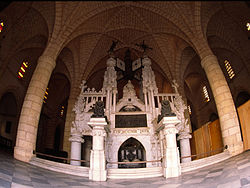
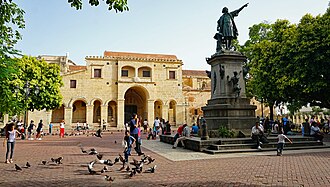
The heart of the city's history lies in the Colonial Zone. Key architectural landmarks include the Fortaleza Ozama, the oldest military construction of European origin in the Americas, and the Basilica Cathedral of Santa María la Menor, a Gothic-style structure and the first cathedral in the New World.
Other significant sites include the Alcázar de Colón, the only known residence of a member of Christopher Columbus' family (his son Diego), and the Palace of the Real Audiencia, which was the first headquarters of Spanish power in the Americas and now serves as the Museo de las Casas Reales.
![The Palace of the Real Audiencia of Santo Domingo was the first (oldest) headquarters of Spanish power in the New World.[10] Now houses the Museo de las Casas Reales](/images/3d/3b/3d3be533378ccebd4bb8b165e6bb77cee2bd6ec5bc6fcda32b1ca1c47756ffdd.jpg)
![Alcázar de Colón is the only known residence of a member of Christopher Columbus' family: his first son Diego Columbus.[41]](/images/69/5a/695a8281095d2929383af26e602b8b1efe480530dc6e324905dc8b049260a727.jpg)
Modern Transitions
The city's identity has shifted over time. Between 1936 and 1961, under the dictatorship of Rafael Leónidas Trujillo, the city was renamed Ciudad Trujillo. Following his assassination in 1961, the city reverted to its original name. In 1992, the city celebrated El Quinto Centenario (the 500th anniversary of Columbus' arrival) with the construction of the Columbus Lighthouse (Faro a Colón).
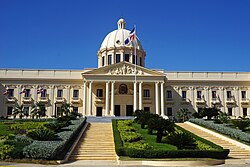
Geography and Climate
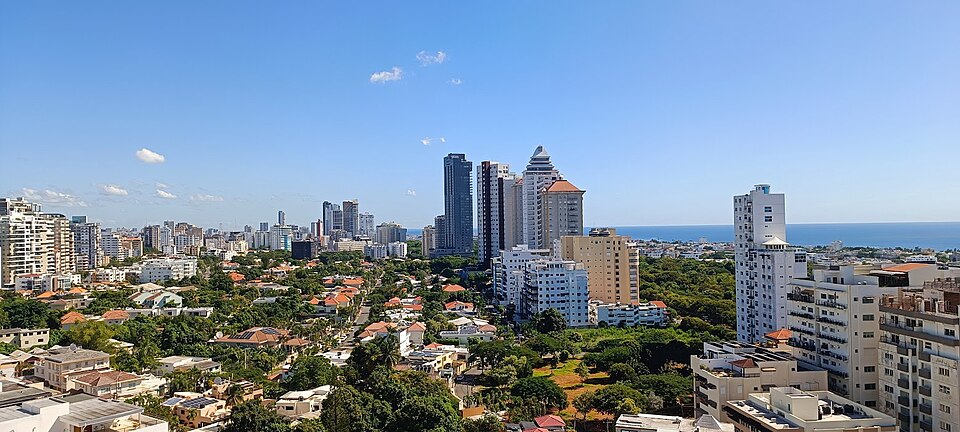
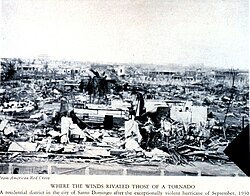
Santo Domingo is situated on the coast of the Caribbean, making it highly susceptible to hurricanes. A notable example was Hurricane San Zenón in 1930, which caused massive destruction and claimed up to 8,000 lives. More recently, Hurricane Georges caused severe damage in September 1998.
The climate is tropical, with temperatures typically ranging from a record low of 11.0 °C (51.8 °F) to a record high of 39.5 °C (103.1 °F). The city experiences significant rainfall, particularly between May and November.
| Metric | Lowest (Jan/Feb) | Highest (Jul/Aug) | Annual Total/Avg |
|---|---|---|---|
| Mean Daily Max Temp | ~30.0 °C (86.0 °F) | ~32.4 °C (90.3 °F) | Variable |
| Mean Daily Min Temp | ~21.2 °C (70.2 °F) | ~23.8 °C (74.8 °F) | Variable |
| Avg Precipitation | 59.1 – 68.1 mm | 156.7 – 195.0 mm | 1,482.2 mm |
| Avg Relative Humidity | ~81% | ~84% | High |
Urban Landscape and Infrastructure
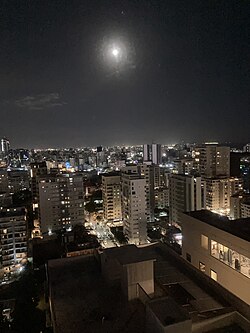
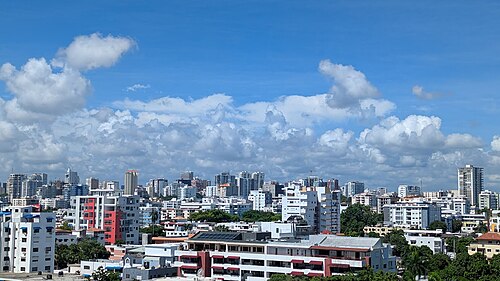
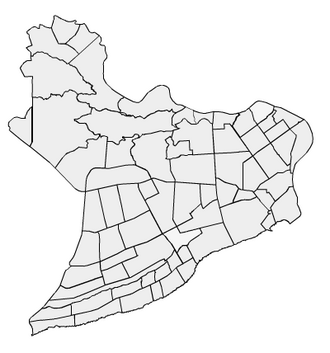
Modern Santo Domingo is a blend of historic districts and rapidly growing urban centers. The city features diverse neighborhoods, from the traditional Colonial Zone to the modern Piantini district.
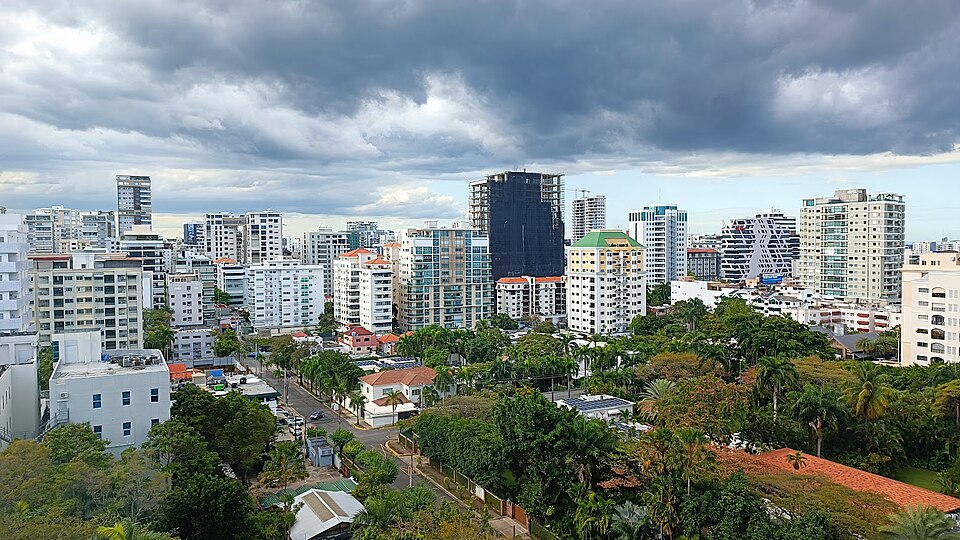
Transportation and Connectivity
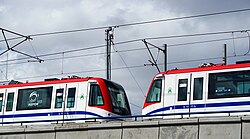
The city has invested heavily in modern transit to alleviate congestion. The Santo Domingo Metro is complemented by a growing Teleférico (aerial cable car) system. The first line opened in 2018 to serve low-income areas like Sabana Perdida, and a second line opened in 2023 connecting Los Alcarrizos to the metro. A third line is expected to open in 2027 connecting the Herrera neighborhood.
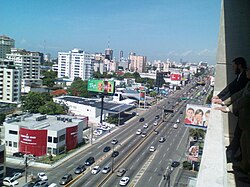
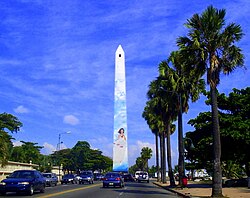
Major thoroughfares such as Avenida 27 de Febrero and Avenida George Washington serve as the city's primary arteries, while the OMSA bus system and private corridors provide additional transit options.
Education and Culture
Santo Domingo is a center for higher learning, home to the Autonomous University of Santo Domingo (UASD) and numerous other institutions including PUCMM, UNIBE, and INTEC.
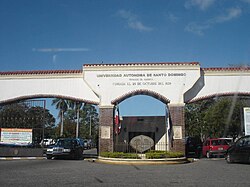
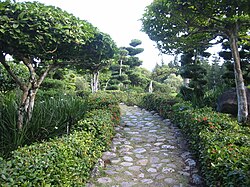
The city also offers vast recreational spaces, including the National Botanical Garden, Mirador Sur, and the El Malecón waterfront.
Frequently Asked Questions
Why is Santo Domingo called the "First City of America"?
It is known as the "Ciudad Primada de América" because it is the oldest continuously inhabited European settlement in the Americas, founded by the Spanish Empire in 1496.
What is the significance of the Colonial Zone?
The Colonial Zone is a UNESCO World Heritage Site that contains the first cathedral, fortress, and university of the New World, preserving the architectural legacy of early Spanish colonization.
How does the Teleférico system work in Santo Domingo?
The Teleférico is an aerial cable car system designed to provide transit for low-income areas, acting as a feeder for the Santo Domingo Metro. It allows for unlimited free transfers to the metro system.
Who was the city named after?
The city was named in honor of Saint Dominic de Guzmán.
What happened to the city during the Trujillo era?
From 1936 to 1961, the city was renamed Ciudad Trujillo as part of a personality cult imposed by the dictator Rafael Leónidas Trujillo. It returned to its original name after his assassination.