Santa Marta: The Historic Pearl of Colombia's Caribbean Coast
Known affectionately as America's Pearl (La Perla de America), Santa Marta is a vibrant port city located on the northern coast of Colombia. Officially designated as the Historic, Cultural & Tourist District of Santa Marta, this city serves as the capital of the Magdalena Department and stands as one of the most significant urban centers in the Caribbean Region.
Founded on July 29, 1525, by the Spanish conqueror Rodrigo de Bastidas, Santa Marta holds the distinction of being the oldest surviving city in Colombia and the second-oldest in all of South America. Its strategic location on a scenic bay makes it a premier destination for travelers seeking a blend of colonial history and tropical beauty.
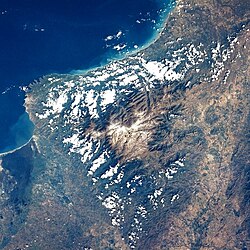
Key Facts
- Founded: July 29, 1525, by Rodrigo de Bastidas.
- Significance: The oldest surviving city in Colombia and the place of death of Simón Bolívar.
- Geography: Located in the Magdalena Department on the Caribbean coast.
- Climate: Tropical savanna climate with distinct wet and dry seasons.
- Economy: Driven primarily by tourism, trade, port activities, fishing, and agriculture.
Historical Legacy
Pre-Columbian Era
Long before European arrival, the region was home to the Tairona, an advanced indigenous civilization. The Tairona developed sophisticated population centers featuring stone pathways, terraces, and protected waterways. Their economy was rooted in agriculture—cultivating corn, pineapple, and yucca—and the processing of salt, which served as a vital trading commodity with other coastal and interior groups.
The Era of Spanish Conquest
The city's Spanish roots began in the early 16th century. Among its most enduring landmarks is the Cathedral Basilica of Santa Marta, an 18th-century structure that once housed the remains of both the city's founder, Rodrigo de Bastidas, and the liberator Simón Bolívar.
The Final Days of Simón Bolívar
Santa Marta holds immense historical weight as the site where Simón Bolívar, the liberator of much of South America, spent his final weeks. He passed away from tuberculosis in 1830 at the age of 47 at the Quinta de San Pedro Alejandrino. While he was initially buried in the city's cathedral, his remains were later moved to Caracas.
Geography and Climate
Santa Marta is situated on the Caribbean Sea, approximately 93 km from Barranquilla and 992 km from the capital, Bogotá. It is bordered by the Caribbean to the north and west, and the municipalities of Ciénaga and Aracataca to the south.
The city experiences a tropical savanna climate (Köppen Aw), characterized by uniform temperatures throughout the year. The weather is divided into two primary seasons: a dry season from December to April and a wet season from May to November.
Regional Climate Variations
Due to the dramatic change in elevation from the coast to the mountains, climate varies significantly by location:
- Coastal Areas: Warm and humid, with mean daily temperatures around 28.6°C.
- Highlands (e.g., San Lorenzo): Much cooler, with mean daily temperatures around 13.6°C and significantly higher precipitation.
| Feature | Detail |
|---|---|
| Coordinates | 11°14′31″N 74°12′19″W |
| Elevation (City) | 15 m (49 ft) |
| Total Area | 2,393.65 km² |
| Population (2018) | 566,150 |
| Primary Industries | Tourism, Port Trade, Agriculture |
Economy and Infrastructure
The economic heartbeat of Santa Marta is its status as a major port. While tourism is the primary driver, the city also relies on trade, fishing, and a robust agricultural sector. Key crops include bananas, coffee, mango, cocoa, cassava, and various citrus cultivars.
In terms of infrastructure, the city is served by the Simón Bolívar International Airport (SMR), located 16 km from the city center. The urban landscape includes the coastal area of Rodadero, which, while technically a separate locality, is integrated into the city's functional area.
Notable Figures
Santa Marta has been the birthplace or home to many influential figures across sports and the arts, including:
- Sports: Football stars Radamel Falcao, Carlos Valderrama, and Luis Javier Suárez.
- Music: Vallenato singer Carlos Vives and reggaeton artist Lalo Ebratt.
- Politics: Jaime Bateman Cayón, founder of the M19 movement.
Frequently Asked Questions
Who founded Santa Marta and when?
Santa Marta was founded on July 29, 1525, by the Spanish conqueror Rodrigo de Bastidas.
Why is Santa Marta historically significant in South America?
It is the oldest surviving city in Colombia and the second-oldest in South America. It is also world-renowned as the place where Simón Bolívar, the liberator of several South American nations, died in 1830.
What is the best time to visit based on the weather?
The dry season lasts from December to April, which is generally the most favorable time for tourism, whereas the wet season occurs from May to November.
What are the main economic activities of the city?
The economy is primarily based on tourism, followed by trade, port operations, fishing, and the production of agricultural goods like coffee and bananas.
Who were the Tairona people?
The Tairona were an advanced pre-Columbian indigenous group known for their sophisticated stone architecture, agricultural terraces, and salt trading networks.