Saint Pierre and Miquelon: Economy, Industry, and Tourism
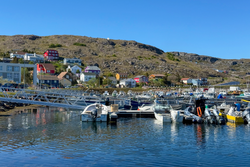
Located off the coast of Newfoundland, the islands of Saint Pierre and Miquelon serve as a unique outpost of France in North America. Historically, the islands' economic lifeblood has been the sea, specifically the fishing fleets that operate in the surrounding Atlantic waters. While the region has faced significant economic challenges due to shifting fishing quotas and environmental changes, it is currently transitioning toward a more diversified economic model.
The islands maintain a strong connection to France, which provides heavy subsidies that support the local standard of living. Today, the territory is leveraging its identity as "France in North America" to attract visitors and explore new industrial frontiers.
Key Facts
- Official Currency: Euro (€), though Canadian Dollars (CAD) are widely accepted.
- Primary Economic Sector: Services, accounting for 83% of the GDP.
- Recent Unemployment: 2.9% (2023 estimate).
- Exclusive Economic Zone: 12,348 square kilometres awarded in 1992.
- Major Imports: Meat, clothing, fuel, electrical equipment, and machinery.
- Major Exports: Fish products, soybeans, animal feed, and pelts.
Economic Structure and GDP
The economy of Saint Pierre and Miquelon is heavily weighted toward the service sector. Based on 2006 estimates, services comprise 83% of the GDP, followed by industry at 15% and agriculture at 2%. The GDP per capita was estimated at $46,200 in 2006, with a total GDP of approximately $261.3 million (2015 PPP estimate).
| Indicator | Value/Detail | Year/Note |
|---|---|---|
| GDP (PPP) | $261.3 million | 2015 est. |
| GDP per capita | $46,200 | 2006 est. |
| Inflation (CPI) | 1.5% | 2015 est. |
| Unemployment Rate | 2.9% | 2023 est. |
| Labour Force | 4,429 | 2015 est. |
The Fishing Industry and Agriculture
For generations, deep-sea fishing was the primary occupation for islanders. However, the industry entered a steep decline starting in 1992 due to the depletion of fish stocks caused by overfishing, as well as a Canadian government ban on cod fishing. These challenges were compounded by disputes over fishing quotas.
To resolve territorial tensions, an arbitration panel in 1992 granted the islands an exclusive economic zone (a sea zone over which a state has special rights regarding the exploration and use of marine resources) of 12,348 square kilometres. While this was only 25% of what France had requested, it provided a legal framework for resource management.
Agriculture remains minimal due to severe weather and poor soil quality. The land is largely infertile, containing significant peat and clay, which limits the growing season to just a few weeks per year.
Labour Market and Diversification
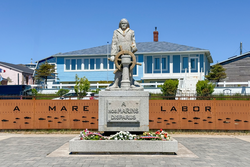
The labour market is characterized by high seasonality, meaning employment levels fluctuate based on the time of year. Traditionally, outdoor activities like construction and agriculture ceased between December and April due to climatic hazards. While unemployment peaked in the late 1990s, it has seen a significant decrease in recent years, reaching 2.9% in 2023.
To counter the decline of the fishing industry, the French state has provided financial aid for the retraining of individuals and businesses. Diversification efforts include:
- Aquaculture: Development of fish farming and crab fishing.
- Infrastructure: The construction of an airport in 1999 boosted public works and construction.
- Energy: Test drilling for oil and gas to potentially establish an energy sector.
- Commerce: Growth in retail, crafts, and public services.
Tourism and Local Commerce
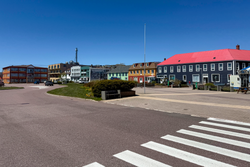
Tourism is a growing pillar of the economy. By positioning itself as a slice of France in North America, the territory attracts visitors interested in authentic French cuisine and culture. As of mid-2024, Saint-Pierre hosts six hotels, along with various B&Bs and Airbnb rentals. The culinary scene is vibrant, with 13 restaurants and bistros in Saint-Pierre and one on Île aux Marins.
Currency and Financial History
The official currency is the euro, adopted on January 1, 1999, with coins and banknotes entering circulation on January 1, 2002. The Institut d'Émission des Départements d'Outre-Mer (IEDOM) has managed currency issuance in the territory since 1978.
The islands have a diverse monetary history:
- Pre-1890: Mexican dubloons and Canadian dollars circulated.
- 1889–WWI: Local franc banknotes from the Banque des Îles Saint-Pierre-et-Miquelon were used.
- 1945–1973: The CFA franc (used in French African colonies) was utilized.
- 1973–1999: The "new" French franc was the standard.
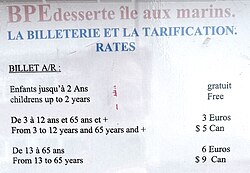
In modern practice, most businesses accept Canadian dollars (CAD), though typically at a rate lower than the interbank exchange rate, with change provided in euros.
Frequently Asked Questions
What is the main driver of the economy today?
While historically dependent on fishing, the economy is now dominated by the services sector (83% of GDP) and is increasingly relying on tourism and French government subsidies.
Can I use Canadian dollars in Saint Pierre and Miquelon?
Yes, most businesses accept Canadian dollars, although they may use an exchange rate lower than the official interbank rate, and change is usually given in euros.
Why did the fishing industry decline?
The decline was caused by the depletion of fish stocks due to overfishing, limitations on fishing areas, and a ban on cod fishing imposed by the Canadian government.
What are the islands' main imports and exports?
The islands export fish products, soybeans, animal feed, and pelts. They import essential goods including meat, clothing, fuel, machinery, and building materials, with about 70% of supplies coming from Canada or France via Nova Scotia.
Does the territory issue its own stamps?
Yes, the islands have issued their own stamps from 1885 to the present, with the only exception being a period between April 1, 1978, and February 3, 1986.