Russian Revolution of 1917: The Fall of the Monarchy and Rise of the Soviet Union
The Russian Revolution was a seismic period of political and social upheaval that fundamentally reshaped the global landscape of the 20th century. Beginning in 1917, this era of turmoil saw Russia dismantle its centuries-old monarchy and transition toward a socialist form of government. This transformation was not a single event, but a series of successive revolutions and a brutal civil war that eventually led to the establishment of the Soviet Union.
The impact of these events extended far beyond Russia's borders, serving as a precursor to other post-World War I uprisings, including the German Revolution of 1918–1919.
Key Facts
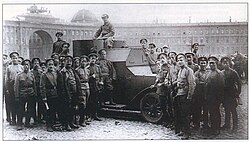
- Timeline: Spanned from March 8, 1917, to October 25, 1922.
- Major Phases: Included the February Revolution, a period of Dual Power, the October Revolution, and the Russian Civil War.
- Political Outcome: Abolition of the Russian monarchy and the dissolution of the Russian Empire.
- Geopolitical Shifts: Led to the independence of Finland, Poland, Estonia, Latvia, and Lithuania.
- Global Impact: Ended Russia's involvement in World War I and created the first socialist state.
The Roots of Rebellion
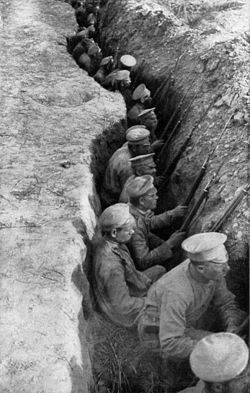
The events of 1917 did not occur in a vacuum. A critical precursor was the Russian Revolution of 1905, which was sparked by the tragedy of Bloody Sunday. This event triggered widespread soldier mutinies and nationwide protests, leading to the creation of the St. Petersburg Soviet—a council of workers that provided a blueprint for future revolutionary organization.
Although the 1905 uprising was eventually suppressed, it forced the creation of the Duma (a national parliament), which would later play a pivotal role in the formation of the Provisional Government in 1917.
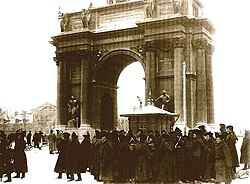
Economic and Social Unrest
The drive toward revolution was fueled by a dramatic increase in labor unrest. The frequency of strikes grew exponentially over several decades, reflecting deep-seated social dissatisfaction:
| Period | Average Annual Strikes |
|---|---|
| 1862–1869 | 6 |
| 1870–1884 | 20 |
| 1885–1894 | 33 |
| 1895–1905 | 176 |
The February Revolution and Dual Power
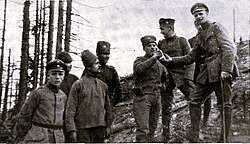
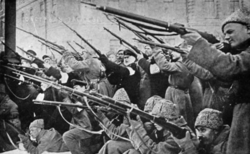
The February Revolution (occurring in March by the modern calendar) saw the collapse of the tsarist regime. Protests erupted in the streets of Petrograd, driven by economic hardship and the pressures of World War I.
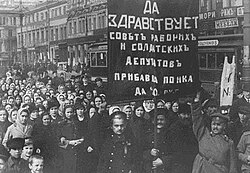
Following the collapse of the monarchy, Russia entered a precarious state known as Dvoyevlastiye, or Dual Power. This was a period where two competing bodies claimed authority:
- The Provisional Government: Formed from members of the Duma, attempting to maintain order and state functions.
- The Petrograd Soviet: A council of workers' and soldiers' deputies that claimed to represent the true will of the people and held the actual power to mobilize the masses.
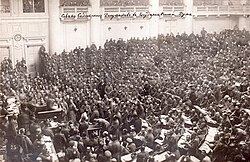
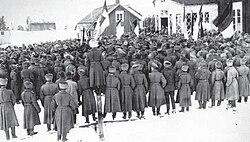
While the Provisional Government held formal titles, the Petrograd Soviet, organized by socialist activists and deputies from the Mensheviks and Socialist Revolutionaries, exerted significant influence over the military and labor force.
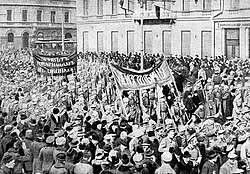
The October Revolution and Bolshevik Ascent
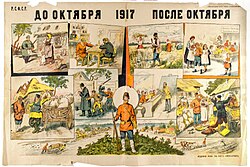
The tension of Dual Power culminated in the October Revolution. The Bolsheviks, a radical socialist faction, sought to seize total control. Although the November 1917 elections for the Russian Constituent Assembly showed the Bolsheviks gained only 25% of the vote—indicating limited support outside major industrial hubs like Moscow and Saint Petersburg—they moved to consolidate power by force.
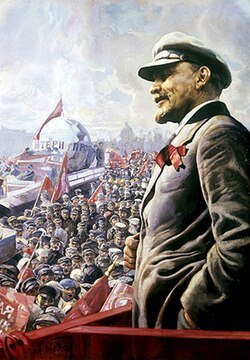
In January 1918, the Bolsheviks dissolved the Constituent Assembly, barring non-Bolsheviks from Soviet membership and establishing a one-party socialist state.
Civil War and the New Order
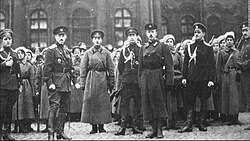
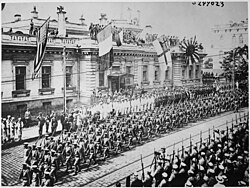
The seizure of power triggered a devastating Russian Civil War. This conflict pitted the Red Army (Bolsheviks) against the White Army (a loose coalition of monarchists, capitalists, and other socialists). The war saw significant foreign intervention, with American, British, and Japanese troops providing armed support to the White Army in regions like Vladivostok.
The conflict was marked by extreme violence, including the murder of the Romanov imperial family, effectively ending any hope of a monarchist restoration.
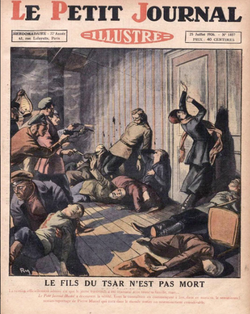
By October 25, 1922, the Bolsheviks emerged victorious, leading to the formal establishment of the Soviet Union.
Frequently Asked Questions
What was the difference between the February and October Revolutions?
The February Revolution was a spontaneous uprising that led to the abdication of the Tsar and the end of the monarchy. The October Revolution was a planned seizure of power by the Bolsheviks, who overthrew the Provisional Government to establish a socialist state.
What was the 'Dual Power' period?
Dual Power (Dvoyevlastiye) refers to the period between March and November 1917 when the Provisional Government and the Petrograd Soviet shared authority, often conflicting over the direction of the country and the continuation of World War I.
Who were the Bolsheviks?
The Bolsheviks were a radical faction of the Russian Social Democratic Labour Party, led by Vladimir Lenin, who advocated for a professional revolutionary vanguard to lead the proletariat toward a socialist society.
Which countries gained independence as a result of the revolution?
The dissolution of the Russian Empire allowed for the independence of several nations, specifically Poland, Finland, Estonia, Latvia, and Lithuania.
How did World War I contribute to the revolution?
The war placed immense economic and social strain on Russia, leading to food shortages, massive military casualties, and a loss of faith in the Tsar's leadership, which accelerated the collapse of the imperial system.