Vladimir Lenin: The Architect of the Soviet Union
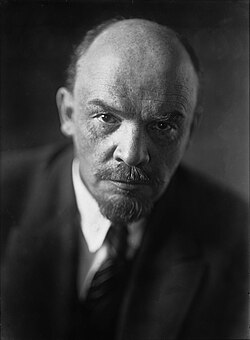
Vladimir Lenin, born Vladimir Ilyich Ulyanov, was the primary driving force behind the creation of the Soviet Union. As a revolutionary strategist and political theorist, he transformed the theories of Marxism—the socio-economic analysis of class struggle—into a practical political program that dismantled the Russian Empire and established the world's first socialist state.
From his early days as a radical student to his role as the Premier of the Soviet Union, Lenin's life was defined by a relentless pursuit of systemic political change. His leadership during the October Revolution and the subsequent Russian Civil War fundamentally altered the course of 20th-century history.
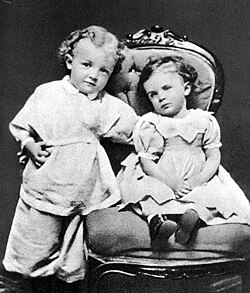
Key Facts
- Full Name: Vladimir Ilyich Ulyanov.
- Primary Role: Chairman of the Council of People's Commissars of the Russian SFSR and Premier of the Soviet Union.
- Political Affiliation: Leader of the Bolshevik faction of the RSDLP and later the RCP(b).
- Major Achievement: Led the October Revolution of 1917 to establish Soviet power.
- Ideology: Developed Marxism-Leninism, adapting Karl Marx's theories to the Russian context.
- Death: Died on January 21, 1924, and is interred in Lenin's Mausoleum in Moscow.
Early Life and Political Awakening
Born on April 22, 1870, in Simbirsk, Russian Empire, Lenin's early years were marked by a growing interest in social justice and political reform. He pursued higher education at Kazan Imperial University and Saint Petersburg Imperial University, where he became increasingly radicalized.
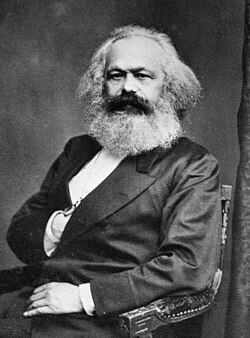
During this period, Lenin was deeply influenced by the works of Karl Marx. He began organizing revolutionary activities, which quickly brought him into conflict with the Tsarist authorities. His early activism led to imprisonment and exile, experiences that only strengthened his resolve to overthrow the existing imperial order.
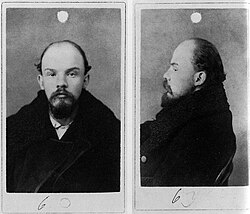
The Path to Revolution
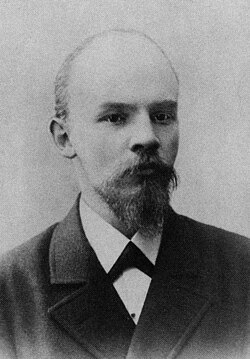
By the late 1890s, Lenin had become a central figure in the League of Struggle for the Emancipation of the Working Class (SBORK). In 1898, he helped found the Russian Social Democratic Labour Party (RSDLP), which later split in 1903 into two factions: the Bolsheviks (the majority) and the Mensheviks (the minority). Lenin led the Bolsheviks, advocating for a disciplined, professional revolutionary party.
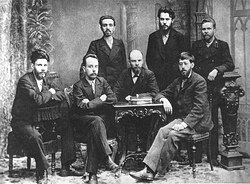
Between 1900 and 1914, Lenin spent significant time in exile in cities such as Munich, London, and Geneva. He used these locations to publish political tracts and organize the party, navigating the aftermath of the 1905 Revolution and preparing for a larger systemic collapse.
The 1917 Revolutions and the Rise to Power
The outbreak of World War I provided the catalyst Lenin had been waiting for. He viewed the war as an imperialist conflict that would weaken the Tsarist regime and ripen the conditions for revolution.
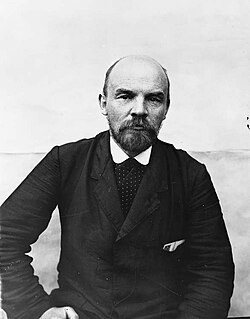
Following the February Revolution of 1917, which saw the abdication of the Tsar, Lenin returned to Russia from Zurich in April 1917. His journey was facilitated by the German government, which hoped he would destabilize Russia and force its exit from the war.
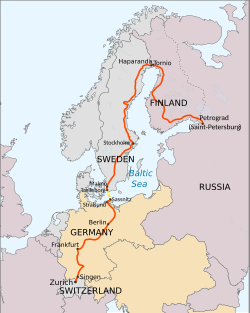
Upon arriving at Petrograd's Finland Station, Lenin called for "All Power to the Soviets," urging the working class to seize control from the Provisional Government. This momentum culminated in the October Revolution of 1917, where the Bolsheviks seized key government installations in Petrograd.
![The engine that pulled the train on which Lenin arrived at Petrograd's Finland Station in April 1917 was not preserved. So Engine No. 293, by which Lenin escaped to Finland and then returned to Russia later in the year, serves as the permanent exhibit, installed at a platform on the station.[133]](/images/2b/20/2b20cd52c5a1c89334c3b96233d341b7b67247a570f9fec36978e0271d3472d5.jpg)
Governing the New Soviet State
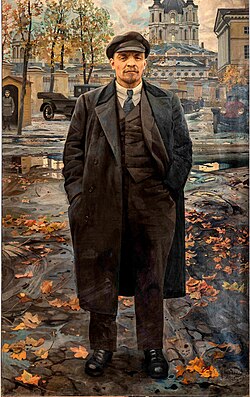
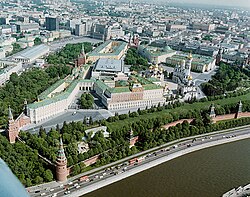
Once in power, Lenin faced the monumental task of organizing a new government while the country was still embroiled in war. He moved the seat of power to the Moscow Kremlin in 1918 and established the Council of People's Commissars.
Peace and Internal Conflict
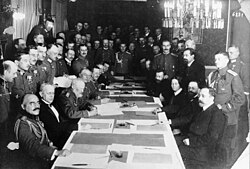
One of Lenin's first priorities was ending Russia's involvement in World War I. This led to the signing of the Treaty of Brest-Litovsk in December 1917, a peace agreement with the Central Powers that cost Russia significant territory but allowed the Bolsheviks to focus on internal stability.
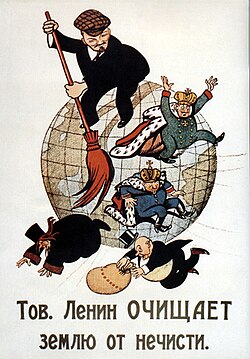
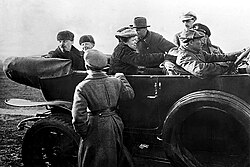
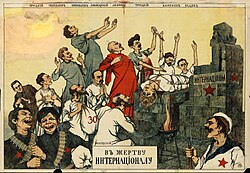
However, stability remained elusive. The new regime faced fierce opposition, leading to the Russian Civil War (1918–1920) and the Polish-Soviet War. To maintain control, Lenin implemented the Red Terror, utilizing the Cheka (secret police) to eliminate perceived class enemies and political opponents.
Economic Shifts and the NEP
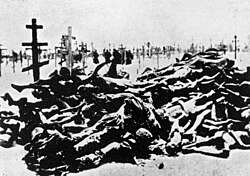
The devastation of the Civil War and a severe famine in 1921 forced Lenin to pivot his economic strategy. He introduced the New Economic Policy (NEP), a strategic retreat from strict communism that allowed for some private enterprise and market activity to revive the collapsed economy.
Global Ambitions and Final Years
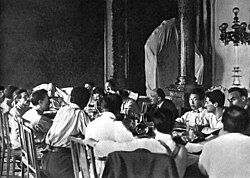
Lenin did not view the Russian Revolution as an isolated event but as the first spark of a global proletarian revolution. In 1919, he helped establish the Comintern (Communist International), an organization dedicated to coordinating communist parties worldwide.
Despite his political successes, Lenin's health began to decline rapidly after 1920. A series of strokes left him increasingly incapacitated, limiting his ability to govern and leading to growing internal conflicts within the party, most notably with Joseph Stalin.
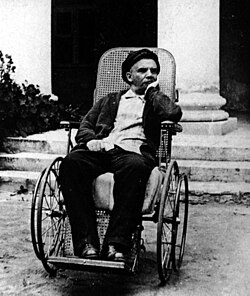
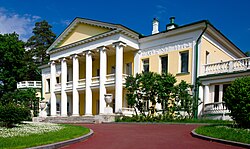
Lenin spent his final years at his Gorki mansion, where he attempted to address the direction of the party in his final writings. He died on January 21, 1924, at the age of 53.
Legacy and Commemoration
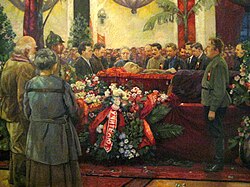
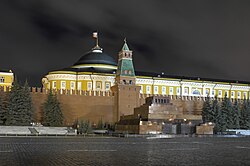
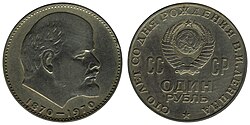
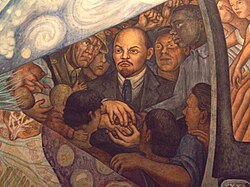
Lenin's impact on the 20th century is immense. Within the Soviet Union, he was elevated to a near-mythic status, with his body preserved in a mausoleum in Red Square. Internationally, his adaptation of Marxism influenced numerous revolutionary movements across Asia, Africa, and Latin America.
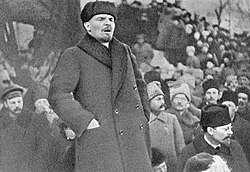
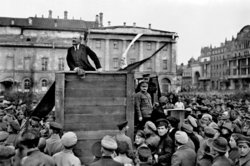
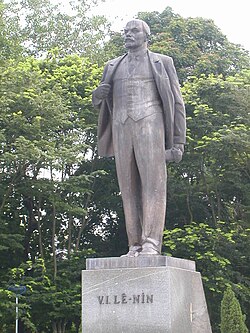
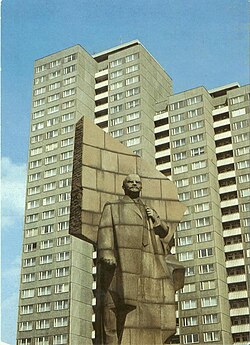
Today, his legacy remains a subject of intense debate, represented by both the statues that still stand in various parts of the world and the monuments that have been removed following the collapse of the Soviet Union.
| Period | Role/Affiliation | Key Event/Policy |
|---|---|---|
| 1895–1898 | SBORK Member | Early revolutionary organizing |
| 1903–1917 | Bolshevik Leader | Split of the RSDLP |
| 1917 | Revolutionary Leader | October Revolution |
| 1917–1924 | Chairman of Council of People's Commissars | Establishment of Soviet State |
| 1918 | Head of Government | Treaty of Brest-Litovsk |
| 1921–1924 | Premier/Leader | New Economic Policy (NEP) |
Frequently Asked Questions
What was the difference between the Bolsheviks and Mensheviks?
The Bolsheviks, led by Lenin, believed in a small, highly disciplined party of professional revolutionaries to lead the working class. The Mensheviks favored a broader, more inclusive party and believed that Russia needed to undergo a bourgeois-democratic phase before transitioning to socialism.
What was the New Economic Policy (NEP)?
The NEP was an economic strategy introduced by Lenin in 1921 to recover from the devastation of the Civil War. It allowed for a limited return to capitalism, permitting peasants to sell their surplus produce and allowing small private businesses to operate.
Why did Lenin sign the Treaty of Brest-Litovsk?
Lenin believed that the Bolshevik government could not survive if it continued to fight World War I. He signed the treaty to secure peace with the Central Powers, despite the loss of vast territories, to ensure the survival of the revolution at home.
What is Marxism-Leninism?
Marxism-Leninism is the development of Karl Marx's theories by Lenin. It emphasizes the role of a vanguard party to lead the proletariat in a revolution and the necessity of a centralized state to manage the transition to a communist society.
Where is Vladimir Lenin buried?
Vladimir Lenin is interred in Lenin's Mausoleum, located in Red Square in front of the Moscow Kremlin, where his embalmed body remains on public display.