Bolsheviks: The Rise and Evolution of the Radical Marxist Faction
The Bolsheviks were a radical faction of the Marxist Russian Social Democratic Labour Party (RSDLP) that fundamentally reshaped the global political landscape in the 20th century. Led by Vladimir Lenin, this group transitioned from a small circle of professional revolutionaries to the ruling party of the Soviet Union, implementing an ideology known as Bolshevism.
The movement was defined by its commitment to revolutionary socialism and a far-left political position. By seizing power during the October Revolution of 1917, the Bolsheviks ended centuries of imperial rule in Russia and established a centralized state based on Leninist and later Marxist-Leninist principles.
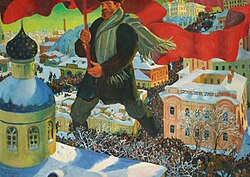
Key Facts
- Founder: Vladimir Lenin.
- Founded: 1903 (as a faction); formally established as an independent party in 1912.
- Core Ideology: Leninism, Bolshevism, and Revolutionary Socialism.
- Key Principles: Vanguardism (leadership by a professional elite) and democratic centralism.
- Evolution: Later became the Russian Communist Party, the All-Union Communist Party, and finally the Communist Party of the Soviet Union.
- Official Newspaper: Pravda.
The Great Split: Bolsheviks vs. Mensheviks
The origins of the Bolsheviks lie in a 1903 schism during the Second Party Congress of the RSDLP. The split was primarily driven by Vladimir Lenin's vision for the party's structure. While the Mensheviks advocated for a broad, inclusive membership, Lenin insisted on a small, disciplined party composed of professional revolutionaries.
Lenin detailed this vision in his 1901 pamphlet, What Is to Be Done?, arguing that a revolution could only succeed under a strong leadership dedicated to Marxist theory. He believed that without such a vanguard, the workers' struggle would drift away from its revolutionary objectives. This approach, known as vanguardism, ensured that the party remained focused and organized across Russia.
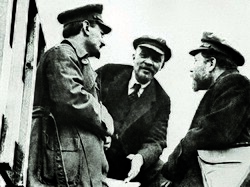
Demographics and Membership
The Bolsheviks attracted a notably young and diverse membership. By 1907, nearly 60% of the party were under the age of 25. While the majority were industrial workers (62% by 1905), the party also included a significant number of gentry and uprooted peasants. In terms of ethnicity, the 1907 membership was predominantly Russian (78%) and Jewish (10%).
The Path to Power (1905–1917)
The Bolsheviks played a modest role in the 1905 Revolution, dominating the Moscow Soviet but remaining a minority in the Saint Petersburg Soviet. Over the following decade, the faction faced internal struggles, including a philosophical clash between Lenin and Alexander Bogdanov over materialism and empirio-criticism.
By 1912, the Bolsheviks formally broke away from the RSDLP to become the Russian Social Democratic Labour Party (Bolsheviks) or RSDLP(b). To fund their operations and pay salaries to full-time revolutionaries, Lenin occasionally resorted to illegal means, including bank robberies; one such operation in 1907 netted over 250,000 roubles.
The outbreak of World War I provided a critical opportunity. Lenin theorized that the chain of global capitalism would break at its "weakest link"—Russia. He viewed the poorer peasantry as essential allies to the small industrial proletariat in overthrowing the state.
![The elections to the Russian Constituent Assembly took place in November 1917 in which the Bolsheviks came second with 23.9% of the vote and dissolved the Assembly in January 1918[29]](/images/3a/9f/3a9fc653b0a90810fc84f3bddcd0ea7a0c257f85d3633cea42a027a23fa91cef.webp)
The October Revolution
Following the February Revolution of 1917, Lenin returned to Russia and issued the April Theses, demanding "all power to the soviets" and no support for the Provisional Government. This message resonated with radicalized workers, leading to the October Revolution that overthrew the government.
Although the Bolsheviks initially shared power with the Left Socialist-Revolutionaries, they rapidly centralized control. Following the Russian Civil War, they became the sole legal party in the Soviet Union. Under Joseph Stalin, the ideology evolved to emphasize "socialism in one country," rapid industrialization, and forced collectivization of agriculture.
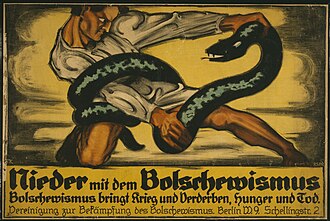
Summary of Party Evolution
| Period | Party Name | Key Focus/Ideology |
|---|---|---|
| 1903–1912 | RSDLP (Bolshevik Faction) | Vanguardism and professional revolution |
| 1912–1918 | RSDLP(b) | Independent party formation |
| 1918–1925 | Russian Communist Party (Bolsheviks) | Establishment of Soviet state |
| 1925–1952 | All-Union Communist Party (Bolsheviks) | Consolidation of the USSR |
| 1952–1991 | Communist Party of the Soviet Union | Centralized state control and Stalinism |
Frequently Asked Questions
What is the difference between Bolsheviks and Mensheviks?
The primary difference was party organization. Bolsheviks, led by Lenin, wanted a small, disciplined party of professional revolutionaries. Mensheviks preferred a broad, mass-membership party open to all workers.
What was the role of the "vanguard" in Bolshevism?
The vanguard was a professional leadership elite that would guide the working class toward revolution, ensuring the movement stayed true to Marxist principles rather than drifting into reformism.
How did the Bolsheviks fund their activities?
While they received donations from wealthy supporters, the Bolsheviks also used membership dues and, under Lenin's direction, committed bank robberies to fund salaries for revolutionaries and the printing of propaganda.
What happened to the Bolsheviks after the Russian Civil War?
After defeating the "Whites" and other opponents, the Bolsheviks established the Soviet Union in 1922 and became the sole legal political party in the country.
Did the Bolsheviks win the 1917 elections?
No. In the November 1917 elections for the Russian Constituent Assembly, the Bolsheviks came in second with 23.9% of the vote. They subsequently dissolved the Assembly in January 1918.