Treaty of Brest-Litovsk: The Separate Peace that Reshaped Eastern Europe
The Treaty of Brest-Litovsk was a pivotal separate peace agreement signed on March 3, 1918. It marked the official withdrawal of Russia from World War I, ending its involvement in the conflict with the Central Powers—comprising Germany, Austria-Hungary, the Ottoman Empire, and Bulgaria. Signed in Brest-Litovsk (modern-day Brest, Belarus), the treaty followed months of tense negotiations and a fragile armistice on the Eastern Front.
The agreement was not merely a cessation of hostilities but a massive territorial and economic concession. For the fledgling Soviet government, it was a desperate measure to ensure survival; for the Central Powers, it was a strategic victory that cleared the Eastern Front, allowing them to concentrate their military might in the West.
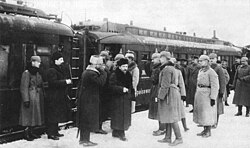
Key Facts
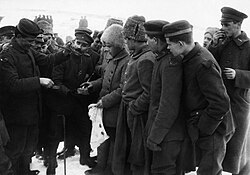
- Date Signed: March 3, 1918.
- Parties Involved: Soviet Russia vs. Germany, Austria-Hungary, Bulgaria, and the Ottoman Empire.
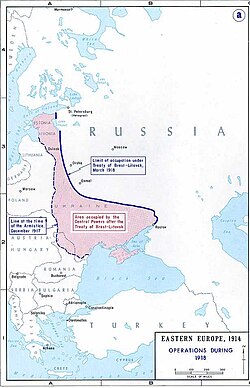
- Major Territorial Losses: Russia ceded control of Ukraine, Poland, Belarus, Lithuania, Latvia, Estonia, and the Caucasian provinces of Kars and Batum.
- Economic Impact: Russia lost 54% of its industrial land and 89% of its coalfields.
- Financial Penalty: A supplementary protocol in August 1918 required Russia to pay Germany six billion marks in reparations.
- Outcome: The treaty was annulled on November 11, 1918, following Germany's surrender to the Allied Powers.
The Road to Peace: Background and Conflict
By 1917, the Russian Empire was on the brink of collapse. A stalemate on the Eastern Front, combined with severe food shortages and economic ruin, triggered the February Revolution, forcing Tsar Nicholas II to abdicate. While the succeeding Provisional Government attempted to continue the war, they faced fierce opposition from the Petrograd Soviet of Workers' and Soldiers' Deputies.
Seeing an opportunity to destabilize Russia, Germany facilitated the return of Vladimir Lenin from exile in Switzerland via a sealed train in April 1917. Lenin's "April Theses" called for an immediate end to the war and the transfer of power to workers' and soldiers' councils (soviets). As military discipline evaporated and the Kerensky offensive failed, the Bolsheviks seized power, promising "Peace, Land, and Bread."
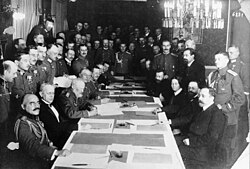
The Negotiation Struggle: "No War, No Peace"
Negotiations began in December 1917, but the Soviet leadership was deeply divided. Leon Trotsky proposed a strategy of announcing the termination of the war and demobilization without signing a formal peace treaty—a stance known as "no war, no peace." This was intended to stall for time, hoping that socialist revolutions would soon erupt within the Central Powers.
However, the Central Powers grew impatient. On February 16, 1918, German forces launched a massive offensive with 53 divisions advancing against nearly empty Soviet trenches. Facing total military humiliation, Lenin urged the Central Committee to sign the "shameful peace" to save the global revolutionary movement, arguing that Russia must concede space to win time.
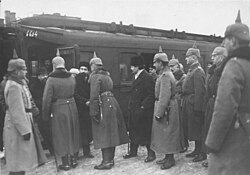
The Final Ultimatum
After the German advance, the Soviets were given a strict deadline to conclude negotiations. Despite intense opposition from the Left Socialist-Revolutionaries, who viewed Lenin as a traitor, the measure passed in the All-Russian Central Executive Committee. The treaty was officially signed at 17:50 on March 3, 1918.
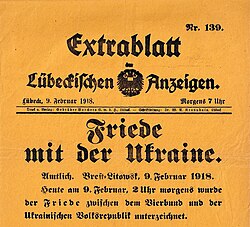
Terms and Territorial Cessions
The terms of the treaty were devastating for Russia, resulting in a significant contraction of its borders and resources.
Eastern European Losses
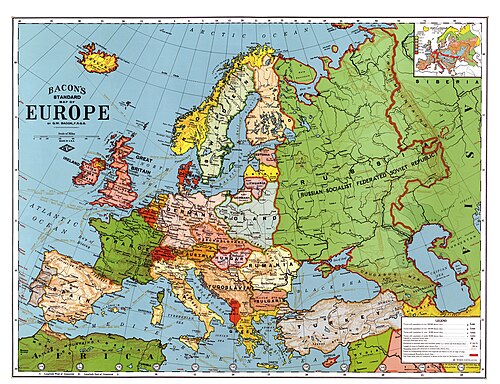
Russia relinquished control over vast territories, including Ukraine, Poland, Belarus, and the Baltic states (Lithuania, Latvia, and Estonia). The Soviet government also confirmed the independence of Finland. These losses represented a massive blow to the nation's infrastructure and population.
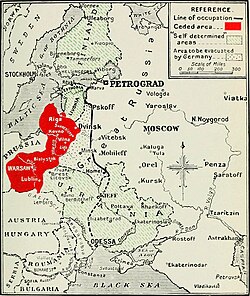
Caucasian Cessions
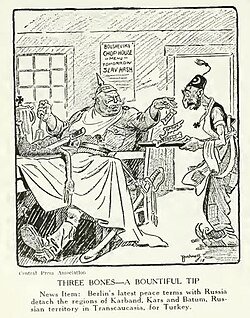
At the insistence of the Ottoman Empire, Russia returned the territories of Ardahan, Kars, and Batumi—lands that had been acquired during the Russo-Turkish War of 1877–1878. At the time of signing, these areas were largely under the control of Georgian and Armenian forces.
| Category | Percentage/Amount Lost |
|---|---|
| Population | 34% |
| Industrial Land | 54% |
| Coalfields | 89% |
| Railways | 26% |
| War Reparations | 6 Billion Marks |
Aftermath and Lasting Effects
The treaty created a deep rift within the Soviet government, leading to the Left SR Uprising. Externally, it provided a unifying cause for the White movement during the Russian Civil War. The peace was short-lived; the Ottoman Empire violated the agreement by invading Armenia in May 1918, and Russian diplomats in Berlin were expelled in November 1918 after being caught distributing revolutionary propaganda.
The treaty was formally annulled by the Armistice of November 11, 1918, when Germany surrendered to the Allies. In the chaotic years that followed, the Red Army attempted to reclaim lost lands. While the Baltic states remained independent, the Soviets regained control of Ukraine, Belarus, Georgia, Armenia, and Azerbaijan by 1921.
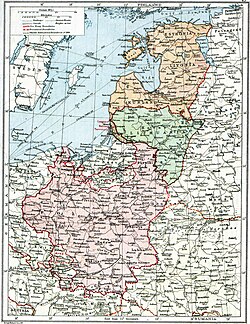
The final resolution of claims between Russia and Germany came with the Treaty of Rapallo in 1922, where both nations renounced territorial and financial claims against one another. Many of the borders established or contested during this era remained volatile until 1939, when the Soviet Union again expanded westward through the Nazi-Soviet pact and subsequent invasions.
Frequently Asked Questions
Why did Lenin insist on signing the Treaty of Brest-Litovsk?
Lenin believed that the Russian army was incapable of continuing the war and that a total military collapse would destroy the Bolshevik government. He argued that signing a "shameful peace" was necessary to buy time to consolidate the revolution internally.
What was the "no war, no peace" strategy?
Proposed by Leon Trotsky, this strategy involved ending the fighting and demobilizing the army without signing a formal peace treaty. The goal was to avoid making concessions while waiting for socialist revolutions to break out in Germany and Austria-Hungary.
How did the treaty affect the Russian economy?
The treaty was economically catastrophic, stripping Russia of 89% of its coalfields and over half of its industrial land, while imposing a massive debt of six billion marks in reparations to Germany.
Was the Treaty of Brest-Litovsk permanent?
No. It was annulled in November 1918 following the German surrender in World War I. However, the subsequent Russian Civil War and the Treaty of Riga (1921) eventually determined the new borders of the region.
Which territories did Russia lose under the treaty?
Russia lost control of Ukraine, Poland, Belarus, Lithuania, Latvia, Estonia, and the Caucasian provinces of Kars and Batum, while recognizing the independence of Finland.