Rudolstadt: A Historic Thuringian Town of Culture and Heritage
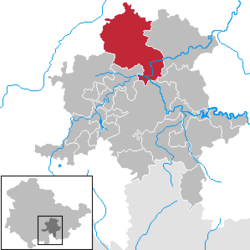
Nestled within the scenic landscapes of the Thuringian Forest, Rudolstadt is a town of deep historical significance and cultural vibrancy. Located in the German state of Thuringia, it sits along the banks of the River Saale in a wide, wooded valley, positioned southwest of the cities of Jena and Weimar. Once the capital of Schwarzburg-Rudolstadt, the town blends medieval roots with a rich artistic legacy.
The town's skyline is dominated by the Castle Heidecksburg, a landmark fortress perched on a hill overlooking the old town. From its founding in 776 to its acquisition of municipal law in 1326, Rudolstadt has evolved from a strategic settlement into a center for arts and industry.
Key Facts
- Founded: 776 AD as Rudolfestat.
- Location: Saalfeld-Rudolstadt district, Thuringia, Germany.
- Landmark: Castle Heidecksburg.
- Population: 24,852 (as of December 31, 2024).
- Total Area: 135.18 km².
- Key Industries: Historically known for porcelain and toy manufacturing (Richter company).
History and Evolution
Early Origins
Archaeological evidence indicates that the area has been inhabited since the late Urnfield culture and early Iron Age, with a hill fort located on the Weinberg in Oberpreilipp. This was followed by Celtic and Germanic settlements, eventually becoming part of the Duchy of Thuringia. By the 6th century, Slavic populations began settling in the region.
The first written record of the town appears in 776, when it was mentioned as Rudolfestat (meaning Rudolf's settlement) as a gift from Charlemagne to Hersfeld Abbey.
Modern Era and Challenges
In the post-1990 era, Rudolstadt faced significant social challenges. In 1994, the Neonazi-Gang "Thüringer Heimatschutz" (THS) was founded here by Tino Brandt. This SA-style street gang, consisting of approximately 170 right-wing extremists, eventually gave rise to the National Socialist Underground (NSU), a terrorist group responsible for ten murders over a decade.
Demographics and Population Trends
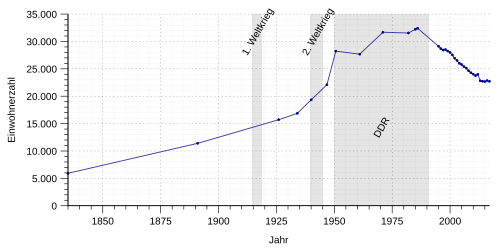
Rudolstadt's population has fluctuated over the last two centuries, peaking in the late 20th century before seeing a gradual decline.
| Year | Population |
|---|---|
| 1834 | 5,929 |
| 1900 (approx) | 11,398 (by 1890) |
| 1950 | 28,234 |
| 1984 | 32,232 |
| 2016 | 22,704 |
| 2024 | 24,852 |
Culture and Economy
Arts and Performance
Rudolstadt is a hub for music and theater. The Rudolstadt Festival (formerly Tanz&FolkFest) is a major annual event held every first full weekend of July. The town is also home to the Thüringer Landestheater Rudolstadt, which evolved from a court theatre established in 1792/93. Today, the Thüringer Landestheater and the Thüringer Symphoniker Saalfeld-Rudolstadt provide a professional ensemble and orchestra for the region.
Economic Profile
Historically, the town thrived on the production of porcelain—starting with the Volkstedt manufacture in 1762—and the Anchor Stone Blocks produced by the Richter toy company. In the modern era, Rudolstadt serves as the headquarters for the EPC Group, a global engineering and construction firm.
Notable Figures
The town has been associated with numerous influential figures across history, including:
- Music: Richard Wagner, Franz Liszt, Niccolò Paganini, and Philipp Heinrich Erlebach all worked as composers in residence for the local theatre.
- Literature and Philosophy: Arthur Schopenhauer wrote his dissertation here, and writer Hans Fallada attended school in the town.
- Politics: Simone Lange (SPD) and Princess Anna Sophie of Schwarzburg-Rudolstadt.
Frequently Asked Questions
What is the most famous landmark in Rudolstadt?
The most prominent landmark is the Castle Heidecksburg, which sits on a hill overlooking the town.
When was Rudolstadt founded?
The town was first documented in 776 as Rudolfestat, given by Charlemagne to Hersfeld Abbey.
What is the Rudolstadt Festival?
It is an annual music and dance event, formerly known as Tanz&FolkFest, taking place on the first full weekend of July.
Which famous composers have worked in Rudolstadt?
Several world-renowned composers, including Richard Wagner, Franz Liszt, and Niccolò Paganini, served as composers in residence for the Rudolstadt theatre.
What industries historically defined Rudolstadt's economy?
The town was well known for its porcelain factories, specifically the Volkstedt manufacture, and the Richter toy company's Anchor Stone Blocks.