Rudi Arndt: The Political Career of Frankfurt's 'Dynamite Rudi'
Rudi Arndt was a prominent figure in German post-war politics, serving in various high-level capacities within the state of Hesse and the city of Frankfurt. Known for his legal expertise and his decisive—and sometimes controversial—approach to urban development, Arndt left a lasting mark on the administrative and physical landscape of his home region.
Early Life and Legal Foundation
Arndt's professional journey began with a rigorous academic foundation. After completing his Abitur (the secondary school diploma required for university entrance in Germany), he pursued legal studies at the Goethe University Frankfurt. He successfully passed his first state examination in 1952 and his second in 1960.
His early career blended law with public service. Starting in 1953, he served as an advisor for the federal youth plan and youth law within the Hesse Ministry of the Interior, establishing a specialty in legal frameworks governing young citizens.
Rise Through the SPD and State Politics
Arndt's political trajectory was closely tied to the SPD (Social Democratic Party of Germany), which he joined in 1945. He quickly rose through the ranks of the party's youth wing, serving as the chairman of the Socialist Youth from 1948 to 1954.
His transition into elected office began in 1952 when he became a city councillor in Frankfurt. By 1956, he expanded his influence to the state level, winning election to the Landtag of Hesse (the state parliament), where he remained a member until 1972.
Ministerial Appointments
Arndt's expertise led him to several key ministerial roles. In 1964, following the resignation of Wilhelm Conrad, he was appointed the Economy and Transport Minister for Hesse. While he was considered a potential successor to Minister President Georg August Zinn in 1969, the position was ultimately awarded to Albert Osswald. Under Osswald's 1970 cabinet, Arndt transitioned to the role of Minister of Finance for Hesse.
Mayor of Frankfurt and the 'Dynamite Rudi' Era
On December 16, 1971, following the death of Walter Möller, Arndt was elected Mayor of Frankfurt, officially beginning his term in 1972. His tenure was characterized by a drive for modernization and the removal of remnants from the Second World War.
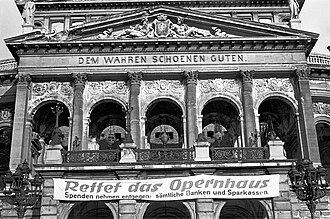
This enthusiasm for clearing ruins earned him the popular nickname "Dynamit-Rudi" (Dynamite Rudi). The most contentious aspect of this period was his campaign to demolish the ruined Alte Oper (Old Opera House), a plan that faced significant public opposition and ultimately failed.
Later Years and Legacy
The political tide shifted in March 1977 during the local elections, where the CDU (Christian Democratic Union) achieved a landslide victory. This resulted in Walter Wallmann becoming the new Mayor of Frankfurt, while Arndt transitioned to the role of opposition leader in the Hessen Landtag.
In his later life, Arndt returned to his legal roots, practicing as a lawyer. Following the 1990 German reunification, he continued his political commitment by volunteering for the SPD in Thuringia. Rudi Arndt passed away unexpectedly in 2004 during a river trip near Kyiv and is buried in the Frankfurt Main Cemetery.
Key Facts
- Political Party: SPD (joined 1945).
- Major Roles: Mayor of Frankfurt (1972–1977), Hesse Minister of Finance, and Hesse Minister of Economy and Transport.
- Nickname: "Dynamit-Rudi," stemming from his desire to demolish WWII ruins.
- Education: Law degree from Goethe University Frankfurt.
- Notable Conflict: The failed attempt to demolish the Alte Oper.
| Period/Year | Role/Event | Jurisdiction |
|---|---|---|
| 1948–1954 | Chairman of the Socialist Youth | SPD Youth |
| 1952–1956 | City Councillor | Frankfurt |
| 1956–1972 | Member of the Landtag | Hesse |
| 1964 | Economy and Transport Minister | Hesse |
| 1970 | Minister of Finance | Hesse |
| 1972–1977 | Mayor | Frankfurt |
Frequently Asked Questions
Why was Rudi Arndt called "Dynamite Rudi"?
He earned the nickname due to his strong enthusiasm for demolishing the ruins left behind by World War II to make way for new development.
What was the controversy surrounding the Alte Oper?
Arndt led a campaign to demolish the ruined Alte Oper opera house, but the plan was deeply controversial and ultimately unsuccessful.
Which political party did Rudi Arndt represent?
Rudi Arndt was a member of the SPD (Social Democratic Party of Germany), joining the party in 1945.
What happened to Arndt after his term as Mayor of Frankfurt?
After losing the 1977 election to Walter Wallmann, Arndt became the opposition leader in the Hessen Landtag and later worked as a lawyer.
Where did Rudi Arndt spend his final years?
In his later years, he practiced law and volunteered for the SPD in Thuringia following German reunification; he died in 2004 during a trip near Kyiv.