Royal Victorian Chain: The Monarch's Personal Mark of Distinction
The Royal Victorian Chain is one of the most exclusive decorations in the British honours system. Established in 1902, it serves as a personal award granted by the monarch of the Commonwealth realms. Unlike many other honours, the Chain is bestowed entirely at the monarch's pleasure, meaning it is not granted on the advice of government ministers.
While it is often associated with the Royal Victorian Order, the Chain is a distinct decoration that ranks above it. Originally intended for royal family members and high-ranking dignitaries, it remains a symbol of the highest esteem and personal recognition from the Sovereign.
Key Facts
- Established: 1902 by King Edward VII.
- Purpose: A personal decoration for Sovereigns, Princes, and eminent subjects.
- Eligibility: Open to men and women of any nationality.
- Precedence: Ranks above the Royal Victorian Order but does not confer a title or postnominal letters.
- Requirement: The decoration must be returned upon the death of the recipient.
History and Origin
King Edward VII created the Royal Victorian Chain in 1902, six years after his mother, Queen Victoria, had established the Royal Victorian Order. Edward intended the Chain to be a personal decoration for "Sovereigns, Princes, and other Royal personages," as well as a select few eminent British subjects.
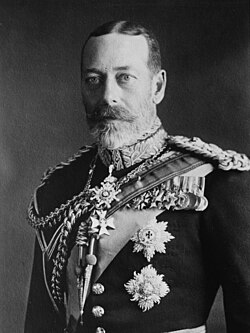
The first recorded award took place in August 1902, shortly after the King's coronation, when Frederick Temple, the Archbishop of Canterbury, received the honour in a private audience. Other early recipients included the King's son, George, Prince of Wales (later George V), and his brother, Prince Arthur, Duke of Connaught and Strathearn.
Design and Symbolism
The decoration is crafted from gold and features a rich array of symbolic motifs. The chain includes the Tudor rose (England), thistle (Scotland), shamrock (Ireland), and lotus flower (India). It also features the red enamelled cypher of King Edward VII—ERI (Edwardus Rex Imperator)—surrounded by a gold wreath.
The badge suspended from the chain is a gold, white enamelled Maltese cross. At its center is an oval medallion with Queen Victoria's royal and imperial cypher—VRI (Victoria Regina Imperatrix)—on a red background. This central piece is surrounded by a blue ring bearing the name "Victoria," with both the crown and cypher studded with diamonds.
Wearing the Decoration
The method of wearing the Chain differs by gender, though there are exceptions. Men wear the chain around the collar. Women traditionally wear the four motifs and select chain links fixed to a blue riband (ribbon) with red-white-red edges, worn as a bow on the left shoulder. Notably, Princess Margaret, Countess of Snowdon, chose to wear her chain around the collar in her later years.
Eligibility and Allocation
The Royal Victorian Chain is a mark of high distinction that does not grant the recipient any specific style, title, or postnominal letters. It also does not provide official precedence within the Commonwealth honours system.
The award is frequently granted to the Archbishop of Canterbury, typically following their retirement. Since its inception, only two Archbishops have not received it: William Temple, who died in office, and Justin Welby, who resigned in 2025.
For Canadians, the Chain has often served as the senior award because federal Cabinet policy generally makes Canadians ineligible for titular honours. To date, only two Canadians have received the decoration: former governors general Vincent Massey and Roland Michener.
Summary of the Royal Victorian Chain
| Feature | Details |
|---|---|
| Founded | 1902 by King Edward VII |
| Awarded By | The Monarch (Personal Gift) |
| Eligibility | Global (Men and Women) |
| Key Symbols | Tudor rose, thistle, shamrock, lotus flower |
| Status | Currently awarded; must be returned upon death |
Living Recipients
The Chain continues to be awarded to heads of state and high-ranking officials. Current living recipients include:
- Queen Margrethe II of Denmark (Awarded 1974)
- King Carl XVI Gustaf of Sweden (Awarded 1975)
- Princess Beatrix of the Netherlands (Awarded 1982)
- António Ramalho Eanes, President of Portugal (Awarded 1985)
- King Juan Carlos I of Spain (Awarded 1986)
- King Harald V of Norway (Awarded 1994)
- George Carey, Baron Carey of Clifton (Awarded 2002)
- Rowan Williams, Baron Williams of Oystermouth (Awarded 2012)
- William Peel, 3rd Earl Peel (Awarded 2021)
Frequently Asked Questions
Is the Royal Victorian Chain part of the Royal Victorian Order?
No. While it is often associated with the Royal Victorian Order and ranks above it, the Royal Victorian Chain is a separate decoration and is not officially part of the Order.
Who is eligible to receive the Royal Victorian Chain?
The Chain can be conferred upon men and women of any nationality, typically including foreign monarchs, heads of state, and high-ranking individuals like the Archbishop of Canterbury.
Does receiving the Chain grant a title or special status?
No. The Royal Victorian Chain does not confer any style, title, or postnominal letters, nor does it grant precedence within the Commonwealth honours system.
What happens to the Chain after a recipient passes away?
The Royal Victorian Chain must be returned upon the death of the recipient.
Why is the Chain significant for Canadian recipients?
Because Canadian federal policy generally restricts the acceptance of titular honours, the Royal Victorian Chain has served as the senior award for Canadians, such as former governors general Vincent Massey and Roland Michener.