British Coronation: History, Rituals, and Traditions of the Monarchy
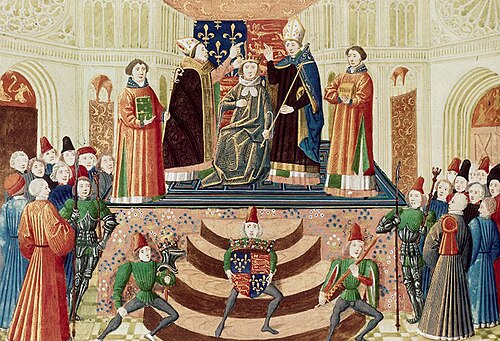
The coronation of the British monarch is a grand initiation ceremony where the sovereign is formally invested with regalia and crowned. While it is one of the most visually spectacular events in the world, it is important to note that a coronation is a symbolic formality. It does not mark the official start of a reign; legally, the monarch's reign begins the moment the previous sovereign dies or abdicates to ensure legal continuity.
Typically held several months after the accession to allow for mourning and elaborate planning, the ceremony is a joyous occasion. The most recent example was the coronation of King Charles III and Queen Camilla on May 6, 2023.
Key Facts
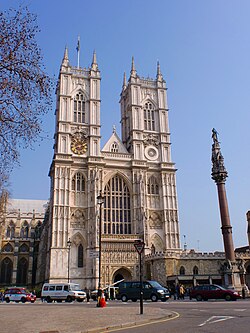
- Primary Location: Westminster Abbey has been the traditional site since 1066.
- Officiant: The ceremony is performed by the Archbishop of Canterbury.
- Legal Status: The monarch is king or queen from the moment of accession, regardless of when the coronation occurs.
- Key Artifact: The Stone of Destiny (Stone of Scone) is used in the anointing process.
- Musical Staple: Handel's "Zadok the Priest" has been performed at every coronation since 1727.
The Evolution of Coronation Traditions
English and Anglo-Saxon Origins
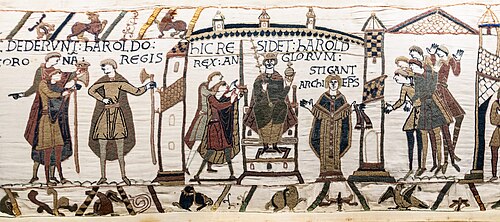
In the Anglo-Saxon era, coronations were held in various locations, including Winchester, Bath, Kingston upon Thames, and London. This changed in 1066 when Harold II was crowned at Westminster Abbey, establishing the venue for nearly all future ceremonies. While most followed this tradition, exceptions occurred during times of unrest; for instance, Henry III was crowned at Gloucester in 1216 before having a second ceremony at Westminster in 1220.
Scottish Traditions
Scottish coronations were traditionally held at Scone Abbey in Perthshire. These rituals were a blend of Pictish traditions and those of the kings of Dál Riata. A central element was the Stone of Destiny, upon which the monarch sat. Unlike English ceremonies, crowns were not used in Scotland until the inauguration of Alexander II in 1214. The process involved the recitation of the king's genealogy and the laying on of hands by a senior cleric.
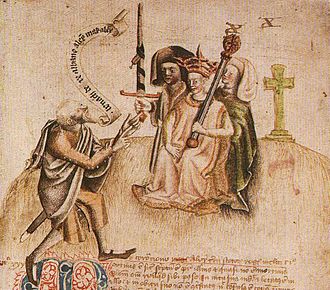
Modern Adaptations and the Commonwealth
Since 1937, the ceremony has expanded to reflect the monarch's role as sovereign of multiple independent nations, known since 1953 as the Commonwealth realms. To reflect modern sensibilities, the coronation oath for King Charles III in 2023 was amended to avoid reciting the specific realms other than the United Kingdom.
The Coronation Service: Step-by-Step
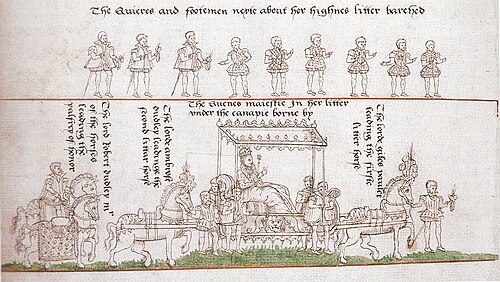
Recognition and the Oath
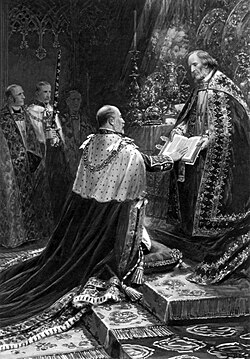
The service begins with the recognition of the monarch and the taking of the coronation oath. This is a solemn promise to govern the people and uphold the laws of the land.
The Anointing
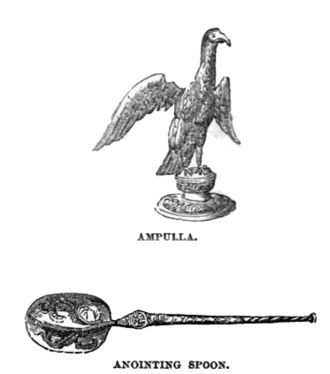
Following the singing of "Zadok the Priest," the sovereign removes their crimson robe and dons an anointing gown. They are then seated in the Coronation Chair, a medieval seat containing the Stone of Destiny in its base. The Stone, originally from Scotland, was brought to England by Edward I. While it now resides in Scotland (with a planned move to Perth City Hall in 2024), it is returned to Westminster Abbey for every coronation.
Investing and Crowning
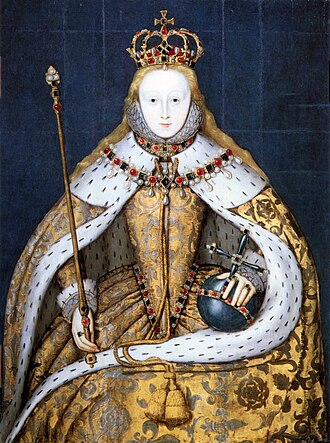
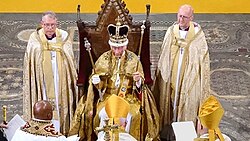
The monarch is invested with the regalia—including the orb and sceptre—before the climax of the service: the placing of the crown upon their head. This act symbolizes the formal investment of royal authority.
Enthronement and Homage
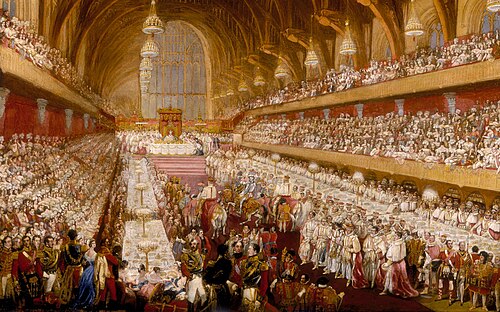
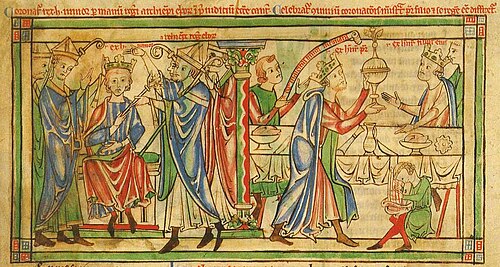
The ceremony concludes with the enthronement and the payment of homage, followed by a closing procession. Historically, this was followed by a grand banquet in Westminster Hall, though the last such banquet took place in 1821 for George IV.
Participants and Attire
Clergy and Nobility
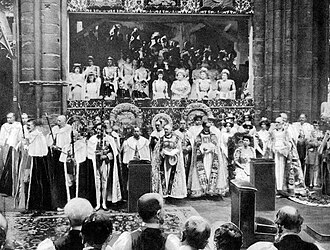
The Archbishop of Canterbury leads the service, supported by other clergy and members of the British nobility. While foreign monarchs traditionally did not attend the coronations of others, this precedent was broken in 2023, with 16 foreign monarchs attending the ceremony for King Charles III.
Ceremonial Dress
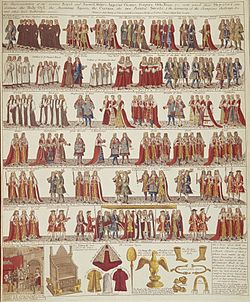
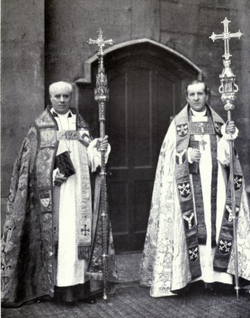
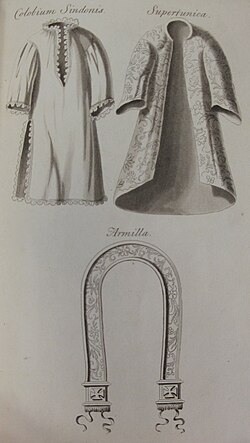
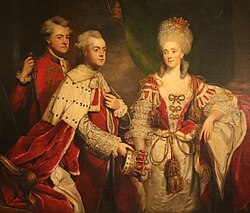
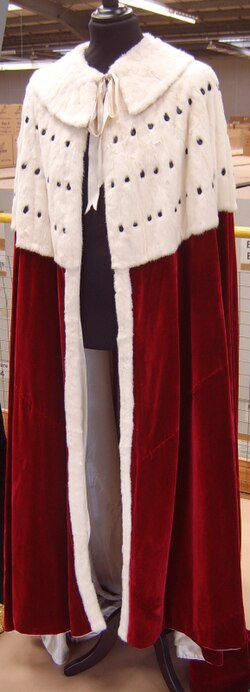
Participants wear elaborate robes and uniforms. The sovereign changes attire throughout the service, moving from the crimson robe to the anointing gown, and finally to the robes of estate. Peers also traditionally wear crimson robes and surcoats, though the use of coronets and specific robes has varied by era and decree.
Summary of Coronation Elements
| Element | Description | Significance |
|---|---|---|
| Westminster Abbey | Traditional venue since 1066 | Historical and spiritual center |
| Stone of Destiny | Ancient Scottish stone | Symbol of Scottish sovereignty |
| Zadok the Priest | Anthem by G.F. Handel | Musical continuity since 1727 |
| Regalia | Crown, Orb, and Sceptre | Symbols of royal power and duty |
| Anointing | Sacred oil application | Spiritual consecration of the monarch |
Frequently Asked Questions
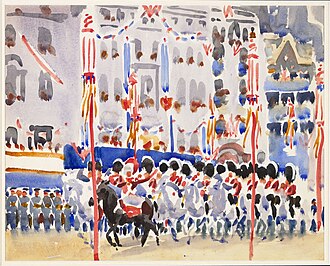

![George IV's long train was borne by the Master of the Robes and eight eldest sons of peers. The king (left) found the enormous weight of the robes very inconvenient.[125]](/images/ce/94/ce94a9908e97aa6417289fa54d3955e5f95918260c60082a8d176ef36bce7503.jpg)
Does the coronation make the person King or Queen?
No. The monarch becomes the sovereign immediately upon the death or abdication of their predecessor. The coronation is a formal ceremony of investiture and celebration, not a legal requirement for the start of the reign.
Why is the Stone of Destiny important?
The Stone of Destiny is an ancient symbol of Scottish monarchy. It was used in Scottish coronations at Scone Abbey before being taken to England by Edward I. It is now placed inside the Coronation Chair at Westminster Abbey for every ceremony.
Who is responsible for performing the coronation?
The Archbishop of Canterbury, the most senior cleric in the Church of England, performs the ceremony. This reflects the monarch's role as the supreme governor of the Church of England.
Why are there gaps of several months before a coronation?
The interval allows the nation to complete the period of mourning for the previous monarch and provides the necessary time to organize the highly complex and elaborate arrangements required for the event.
What is the significance of "Zadok the Priest"?
Composed by George Frideric Handel for George II in 1727, it is the only piece of music to have been featured in every single British coronation since its introduction, representing an unparalleled musical tradition.