Roseland Ballroom: The History of a New York City Icon
For nearly a century, the Roseland Ballroom stood as a cornerstone of New York City's nightlife. Located in the heart of Manhattan's theater district at 239 West 52nd Street, this multipurpose hall evolved from a segregated society dance club into a world-renowned concert venue. From the golden age of big bands to the modern era of pop superstars, Roseland mirrored the shifting cultural landscape of the city.
Key Facts
- Founded: 1917 in Philadelphia; moved to NYC in 1919.
- Final Location: 239 West 52nd Street, Manhattan.
- Maximum Capacity: 3,200 standing.
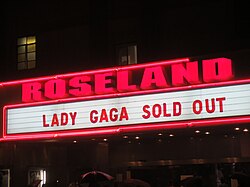
- Notable Final Act: Lady Gaga, who performed a residency in 2014.
- Current Site: Redeveloped into ARO, a 62-story apartment tower.
The Early Years: From Philadelphia to Broadway
The Roseland story began in 1917 in Philadelphia, Pennsylvania, founded by Louis Brecker with financial backing from Frank Yuengling. To avoid the restrictions of Philadelphia's blue laws (laws designed to forbid certain activities on Sundays), Brecker and Yuengling relocated the venue to Manhattan on December 31, 1919.
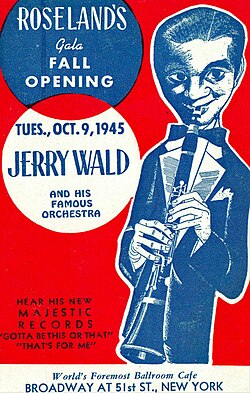
The original New York location was situated on the second floor of a five-story building at 1658 Broadway and 51st Street. Initially, it operated as a segregated dance club known as the "home of refined dancing," attracting high-society guests and celebrities such as Florenz Ziegfeld and Will Rogers.
Over time, the atmosphere shifted as hot jazz—the energetic style of jazz played by African American bands—gained popularity. The venue became a hub for legendary bandleaders, including Louis Armstrong, Count Basie (who performed the "Roseland Shuffle"), and Chick Webb. Many of these performances were broadcast live via radio networks, including NBC broadcasts in 1940 featuring a young Ella Fitzgerald.
Transition to West 52nd Street
In 1956, the original Broadway location was demolished, and the ballroom moved to its final home on West 52nd Street. This new site had a unique architectural history: it was originally built in 1922 for $800,000 as an ice-skating rink. After the original franchise went bankrupt in 1932, the space served as the Gay Blades Ice Rink before Louis Brecker converted it into a roller skating rink and eventually the new Roseland Ballroom.
Brecker was determined to preserve the traditional ballroom experience, famously banning rock and roll and disco to maintain a "cheek-to-cheek" dancing environment. However, after selling the building to Albert Ginsberg in 1981, the venue embraced "disco nights." This era was marked by volatility, including several violent incidents in the 1980s and early 1990s, which eventually led the venue to discontinue disco nights.
A Versatile Stage for Global Stars
In its later years, Roseland Ballroom became a premier multipurpose venue capable of hosting everything from movie premieres and political parties to massive concerts. Its flexible layout allowed it to accommodate thousands of guests depending on the event style.
| Event Type | Capacity |
|---|---|
| Standing (General Admission) | 3,200 (+ 300 upstairs) |
| Dance Party | 2,500 |
| Theatre Style | 1,300 – 1,500 |
| Buffet and Dancing | 1,500 |
| Sit-down Dinner | 800 – 1,000 |
The venue hosted a staggering array of talent. In the 1980s and 90s, it saw performances from Metallica, Nirvana, and Ozzy Osbourne. By the 2000s, it welcomed artists like Madonna, Shakira, and Beyoncé, whose 2011 Elements of 4 show sold out its first performance in just 22 seconds.
The Final Curtain and Redevelopment
The end of the Roseland Ballroom came in 2014. Lady Gaga was chosen as the final performer, completing a short residency that culminated on April 7, 2014. The final song performed at the venue was "G.U.Y."
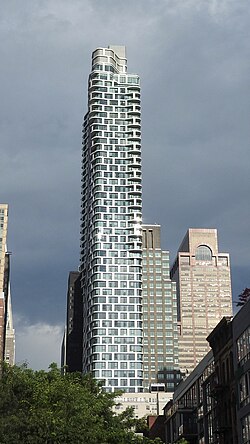
Following its closure, the low-rise structure was demolished to make way for modern urban development. The site was transformed into ARO, a 62-story residential tower featuring retail space where the ballroom's entrance once stood.
Frequently Asked Questions
When did the Roseland Ballroom close?
The venue officially closed its doors on April 7, 2014, following a final residency by Lady Gaga.
What was the building before it became a ballroom?
The West 52nd Street location was originally built in 1922 as an ice-skating rink, and later served as a roller skating rink before being converted into the ballroom.
Who was the last artist to perform at Roseland?
Lady Gaga was the final performer, closing the venue with the song "G.U.Y." on April 7, 2014.
What is currently located on the site of the Roseland Ballroom?
The site was redeveloped into ARO, a 62-story apartment tower with integrated retail space.
Which famous jazz musicians played at Roseland?
The venue hosted many legends of the big band and jazz eras, including Louis Armstrong, Count Basie, Chick Webb, and Ella Fitzgerald.