Rosario Central: A Legacy of Passion and Glory in Argentine Football
Founded on December 24, 1889, Club Atlético Rosario Central stands as one of the oldest and most storied sports institutions in Latin America. Established by British railway workers and named after the Central Argentine Railway company, the club has evolved from a pioneer in the city of Rosario into a powerhouse of the Argentine Primera División.
Known affectionately by their nicknames Canalla and Los Guerreros, Rosario Central is more than just a football club; it is a cultural landmark in the Santa Fe province. It holds the unique distinction of being the only team from its province to secure an international title organized by CONMEBOL.
Key Facts
- Founded: December 24, 1889
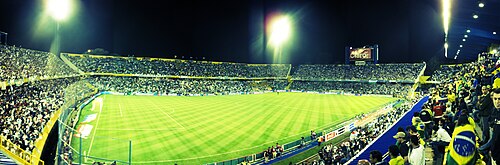
- Home Ground: Estadio Gigante de Arroyito (Capacity: 46,955)
- Major International Title: Copa Conmebol (1995)
- All-Time Top Scorer: Harry Hayes (217 goals)
- Recent Success: 2025 Liga Champions and 2023 Copa de la Liga winners
Early History and the Rosarian Era
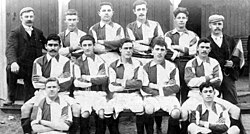
Rosario Central made its competitive debut on May 21, 1905, with a 3–1 victory over Rosario A.C. The club quickly established dominance in the local scene, winning its first official title, the Copa Nicasio Vila, in 1908. During this era, the team was an unbeaten force, scoring 48 goals while conceding only nine.
The early 20th century was marked by a spirit of independence. In 1913, the club helped found the dissident Federación Rosarina de Football, winning the league that same year. This period also saw the club's first foray into national success with the 1913 Copa de Competencia La Nación.
National Cup Dominance
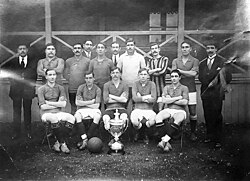
Between 1915 and 1920, Central became a formidable force in national competitions. They secured the Copa Ibarguren in 1915 and the Copa de Honor Municipalidad de Buenos Aires in 1916. By the end of the 1910s, the club had amassed five national cups, cementing its status as a national contender.
The Path to the Primera División
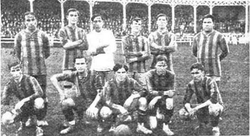
As football transitioned to professionalism in 1931, Rosario Central continued to excel in the local Torneo Gobernador Luciano Molinas, winning titles in 1937 and 1938. However, the journey was not without hardship. The club faced two significant relegations to the second division (Primera B) in 1941 and 1950.
Demonstrating remarkable resilience, the club achieved immediate promotions both times, returning to the top flight in 1942 and 1951 respectively.
Modern Era: International Glory and Resurrection
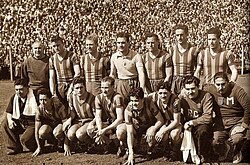
The 1990s marked a historic milestone for the club. In 1995, Rosario Central won the Copa CONMEBOL, the precursor to the current Copa Sudamericana. This victory remains a point of immense pride, as it is the only international title won by a Santa Fe province team.
In more recent years, the club has experienced a resurgence. A highlight was the 2017–18 Copa Argentina campaign, where the team navigated a challenging bracket to claim the trophy. This was followed by a dominant period under manager Miguel Ángel Russo, who led the team to the 2023 Copa de la Liga title.
Under Russo's leadership in 2023, the Gigante de Arroyito became an impenetrable fortress, as the team remained undefeated at home for the entire calendar year, eventually qualifying for the 2024 Copa Libertadores.
Stadium and Supporters
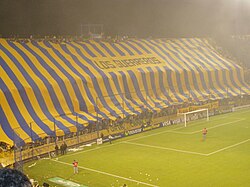
The heart of the club is the Estadio Gigante de Arroyito, a venue known for its electric atmosphere and a capacity of 46,955. The supporters are renowned for their passion and visual displays, often filling the stadium with massive flags and vibrant colors.
Club Legends and Records
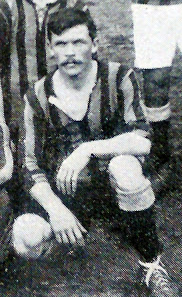
The history of Rosario Central is written by legendary figures. Harry Hayes stands as the all-time leading scorer with 217 goals, including a record 21 goals in the fierce Rosario derby against Newell's Old Boys.
| Category | Details |
|---|---|
| Full Name | Club Atlético Rosario Central |
| Founded | December 24, 1889 |
| League | Argentine Primera División |
| Stadium | Gigante de Arroyito |
| International Titles | Copa Conmebol (1995) |
| Domestic League Titles | 6 (including 2025 Liga) |
Frequently Asked Questions
Who founded Rosario Central?
The club was founded on December 24, 1889, by a group of British railway workers associated with the Central Argentine Railway company.
What is the significance of the Copa Conmebol title?
Won in 1995, it is the only international title won by any current team from the Santa Fe province, making Rosario Central a pioneer in the region.
Who is the all-time top scorer for the club?
Harry Hayes is the all-time top scorer with 217 goals. He also holds the record for the most goals scored in the Rosario derby with 21.
What is the 'Gigante de Arroyito'?
It is the home stadium of Rosario Central, known for its high capacity (46,955) and for being a difficult venue for visiting teams to win.
Which manager led the team to the 2023 Copa de la Liga?
Miguel Ángel Russo led the team to victory in the 2023 Copa de la Liga during his fifth stint as the club's manager.