Club Atlético Newell's Old Boys: A Legacy of Argentine Football
Based in the city of Rosario, Santa Fe, Club Atlético Newell's Old Boys is more than just a sports institution; it is a cornerstone of Argentine football history. Founded on November 3, 1903, the club was established to honor the life and work of Isaac Newell, an English teacher and a pioneer of the sport in Argentina.
Known affectionately by the nickname La Lepra (The Lepers), the club has evolved from a school-based team into a national powerhouse, competing in the Primera División and producing some of the most celebrated players in the history of the global game.
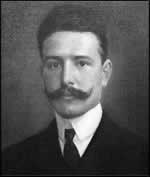
Key Facts
- Founded: November 3, 1903
- Home Ground: Estadio Marcelo Bielsa (Capacity: 42,000)
- Major Honors: 6 Argentine Primera División titles and 3 national cups
- International Reach: Twice runner-up in the Copa Libertadores (1988, 1992)
- Youth Academy: One of the most successful youth systems in AFA history
- Primary Rivalry: The Rosario derby against Rosario Central
The Origins of La Lepra
The club's foundation is deeply rooted in education. Claudio Newell, along with teachers and alumni of the Colegio Comercial Anglicano Argentino (an English commercial school founded by Isaac Newell), signed the act of foundation. The term "Old Boys" is a traditional English reference to former pupils of a school.
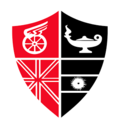
The club's visual identity was also derived from the school. The red and black colors of the kit were inspired by the coat of arms designed by Isaac Newell, which incorporated the colors of the flags of England (Isaac's birthplace) and the German Empire (the origin of his wife, Anna Jockinsen).
The unique nickname "La Lepra" emerged in the 1920s after the team participated in a charity match to support a leprosy clinic.
Rise Through the Ranks: From Liga Rosarina to Primera División
In 1905, Newell's president Víctor Heitz proposed the creation of the Liga Rosarina de Football (Rosarian Football League). Newell's dominated the early years of this regional competition, winning the first edition unbeaten and securing the Copa Nicasio Vila nine times between 1907 and 1930.
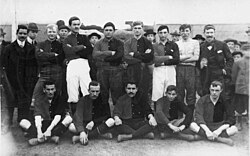
The club expanded its horizons by winning the Copa de Honor Municipalidad de Buenos Aires in 1911 and the Copa Dr. Carlos Ibarguren in 1921. However, the most significant transition occurred in 1939 when the club affiliated with the Argentine Football Association (AFA) to compete in the Primera División. They made their professional debut on March 19, 1939, with a 2–1 victory over San Lorenzo.
National Success and International Recognition
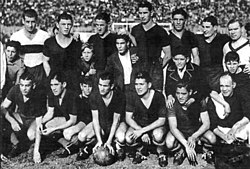
Newell's Old Boys has secured six Primera División championships, with titles spanning from the 1974 Metropolitano to the 2013 Final. While the club has yet to win an official international trophy, they have come remarkably close, finishing as runners-up in the Copa Libertadores in both 1988 and 1992.
The club is also renowned for its historic 1949 European tour, where they defeated prestigious sides such as Real Madrid and Valencia. Additionally, their reserve team once represented Argentina in a Pre-Olympic Tournament, finishing third in America.
A Factory for World-Class Talent
The club's youth divisions are among the most successful in Argentina. A staggering number of World Cup stars began their journeys here, including Gabriel Batistuta, Mauricio Pochettino, and Maxi Rodríguez. Notably, Lionel Messi spent his earliest years in the Newell's youth system before moving to Barcelona for growth hormone treatment, and Diego Maradona had a brief stint with the first team in 1993.
Stadium and Facilities
The club plays its home matches at the Estadio Marcelo Bielsa, located in the Parque Independencia neighborhood. Originally known as "El Coloso del Parque," the stadium was renamed in 2009 to honor Marcelo Bielsa, a legendary former player and manager who led the team to two championships.
| Category | Details |
|---|---|
| Full Name | Club Atlético Newell's Old Boys |
| Founded | November 3, 1903 |
| Stadium | Estadio Marcelo Bielsa (42,000 capacity) |
| League | Primera División |
| Key Honors | 6 Primera División Titles, 2 Copa Libertadores Finals |
| Other Sports | Basketball, Boxing, Field Hockey, Volleyball, American Football |
Frequently Asked Questions
Why is the club called "Newell's Old Boys"?
The club was named after Isaac Newell, an English teacher who founded the Colegio Comercial Anglicano Argentino. The term "Old Boys" refers to the former pupils of that school who formed the original team.
What is the origin of the nickname "La Lepra"?
The nickname "La Lepra" (The Lepers) was adopted after the club played a charity match in the 1920s to raise funds for a leprosy clinic.
Who is the stadium named after?
The stadium is named after Marcelo Bielsa, a former player and manager of the club who achieved significant success as both a coach and an athlete with the team.
Did Lionel Messi play for Newell's Old Boys?
Yes, Lionel Messi played in the club's youth system during his childhood before transferring to FC Barcelona to receive medical treatment for a growth hormone deficiency.
What are the club's primary colors and where did they come from?
The club's colors are red and black. They were taken from the emblem of the Colegio Comercial Anglicano Argentino, inspired by the flags of England and the German Empire.